Kids Bedding
What thread count should kids sheets be?
Between 200 and 400 is the whole useful range. Above it the number is mostly marketing, below it the fabric feels coarse - and on a child's bed the weave and the pocket depth both matter more than the count does.

We earn a commission from qualifying purchases made through links on this page, at no extra cost to you. How this site is funded.
The short answer
For children’s sheets, 200 to 400 thread countis the range worth paying attention to, and 300 in a percale weave is the sweet spot. Below about 200 the fabric feels coarse and wears through faster; above 400 the number usually reflects multi-ply yarn counting rather than a better sheet.
Two things matter more than the count on a child’s bed. The weave — percale breathes, sateen holds heat — and the fitted-sheet pocket depth, because a deep-pocket sheet on a thin bunk mattress has too much slack to stay put.
What thread count actually measures
Threads per square inch of fabric, counting warp and weft. Within a single-ply cotton sheet that is a reasonable proxy for how fine the yarn is and how smooth the result feels, which is why the number means something in the 200 to 400 band.
Where it stops meaning something is above that. A 600 or 1000 thread count is commonly reached by twisting several thinner strands into one yarn and counting each strand, so the fabric contains the same amount of cotton described with a bigger number. A genuinely high single-ply count exists and costs accordingly; the ones at supermarket prices are not it.
Thread count on microfiber means nothing at all
Microfiber is measured in GSM — grams per square meter — not thread count, because it is an extruded polyester fabric rather than a woven yarn count. A microfiber set advertising a thread count is describing something that does not apply to it. Plenty of good children’s sheets are microfiber; just ignore the number on them.
Weave is the decision the number hides
Percale is a plain one-over-one-under weave: crisp, matte, breathable, and the right choice for a child who sleeps hot. Sateen uses a three-or-four-over-one weave that puts more yarn surface on the face — smoother, slightly glossy, warmer, and noticeably less breathable.
At identical thread counts those two fabrics behave differently enough that the weave is the first thing to read. A 300 thread count percale and a 300 thread count sateen are not interchangeable on a child’s bed, and on a top bunk — where the warm air in the room collects — the percale wins clearly. Our cotton versus microfiber comparison covers the fiber choice that sits above this one.
| Spec on the listing | What it tells you | What to look for |
|---|---|---|
| Thread count 200-400 | Useful, if single-ply cotton | 300 percale is a safe default |
| Thread count 600+ | Usually multi-ply counting | Treat as marketing unless single-ply is stated |
| Thread count on microfiber | Nothing — wrong unit | Look for GSM instead |
| Percale | Crisp, matte, breathable | The pick for a hot sleeper or a top bunk |
| Sateen | Smooth, slightly glossy, warmer | A cold bedroom |
| Jersey knit | Soft, stretchy, grips the mattress | Spare sets and younger children |
| Pocket depth | Whether the sheet will stay on | Measure your mattress first |
| GOTS or OEKO-TEX | An audited claim rather than an adjective | Worth the premium if certification matters to you |
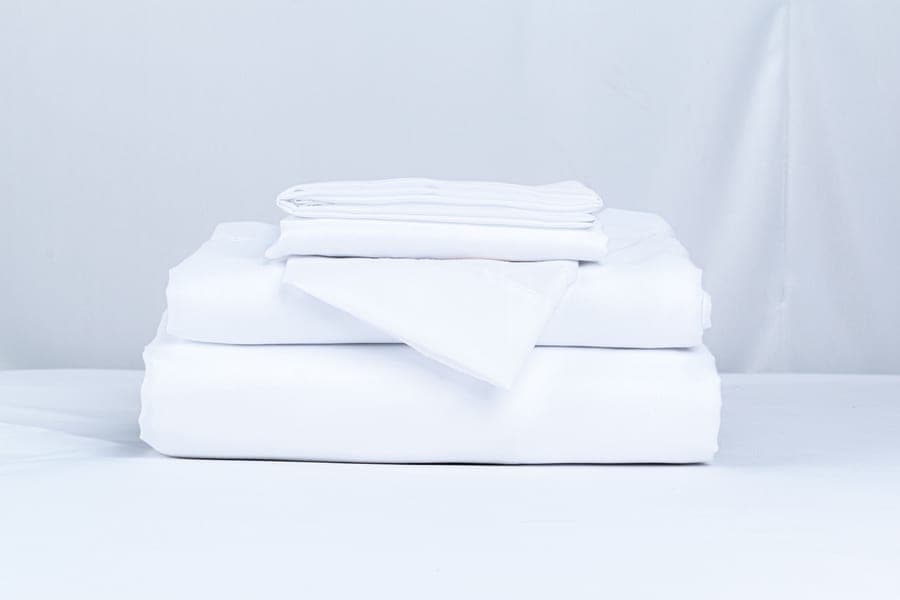
Pocket depth is the spec that fails on a bunk
Bunk and loft mattresses are thin by design — the frames in our registry specify ceilings of 6 to 8 inches, and some lofts call for 4 to 6 — while a lot of good twin sheet sets are made with deep pockets for a 12-inch mattress. Put one on a 6-inch bunk mattress and there is several inches of slack to gather, which comes untucked and bunches under the child.
So check the published pocket depth against your actual mattress before ordering, which is the reverse of the normal advice to buy generous. A jersey-knit sheet is the practical workaround because the fabric itself stretches and grips rather than relying on the pocket. Our top-bunk bedding guide covers it, and mattress thickness and guardrails explains why bunk mattresses are thin in the first place.
Certification, where it is worth paying for
Two labels mean something checkable. GOTS certifies that the cotton was audited through the supply chain rather than described as organic on the packet. OEKO-TEX Standard 100 tests the finished fabric for harmful substances. Neither is a comfort claim and neither tells you about temperature — but both are auditable, which is more than “premium” or “luxury” manage.
If a certification is the reason you are buying, search on the certification rather than on a brand. The sellers in this category turn over constantly; the label on the product is checkable and that is the whole point of paying the premium.
How many sets, which is the question behind the question
Three. Sheets are a consumable in a child’s bedroom and the real requirement is being able to strip a bed at two in the morning and still have a made bed — one on, one in the wash, one in the cupboard. A mid-range percale set plus two cheap jersey sets beats one expensive set every time, and it is the thing most buying guides never say.
Our sheet set roundup has the picks across cotton and microfiber, with the pocket depths where the manufacturer publishes them.
Key takeaways
- 200-400 is the useful range. 300 in percale is the default worth buying.
- Above 400 the count usually reflects multi-ply yarn counting, not a better sheet.
- Thread count does not apply to microfiber. Look for GSM.
- Percale breathes and sateen holds heat, at identical thread counts.
- Check pocket depth against a thin bunk mattress - deep pockets bunch.
What we'd buy
Every pick below carries the same spec block, so you can compare the numbers across this page and every other page on the site.
Hot sleepers and top bunks
Mellanni 100% Cotton Percale Sheet Set
Mellanni
Percale cotton, 300 thread count, deep pockets — the sheet to buy if your child sleeps hot.
| Guardrail height above mattress | Not applicable |
|---|---|
| Stated weight limit (per bunk) | Not applicable |
| Manufacturer minimum age | Not published by the manufacturer |
| Mattress thickness ceiling | Deep pocket; confirm against your mattress depth |
| Materials / construction | 100% cotton, 300 thread count percale weave |
What works
- Percale weave breathes far better than microfiber
- Real cotton rather than a polyester blend
- Deep pockets stay on through a restless night
- Gets softer with washing instead of pilling
What doesn’t
- Percale wrinkles; it comes out of the dryer looking lived-in
- Crisper than microfiber, which some children dislike at first
- Costs more than a microfiber set
The catch: Deep pockets are a problem on a bunk, not a feature. Bunk mattresses are thin, so a deep-pocket fitted sheet has a lot of slack to gather — check the pocket depth against your actual mattress before ordering.
Sensitive skin and certification-led buyers
GOTS-Certified Organic Cotton Percale Kids Sheet Set
Various (search by certification)
The certification is the product: GOTS means the cotton was audited, not just described as organic on the packet.
| Guardrail height above mattress | Not applicable |
|---|---|
| Stated weight limit (per bunk) | Not applicable |
| Manufacturer minimum age | Not published by the manufacturer |
| Mattress thickness ceiling | Confirm pocket depth against your mattress |
| Materials / construction | GOTS-certified organic cotton, percale weave |
What works
- GOTS is an audited standard rather than a marketing word
- Percale weave breathes well for a warm sleeper
- Hypoallergenic in practice for most sensitive-skin children
- Ages well — cotton percale improves with washing
What doesn’t
- Meaningfully more expensive than conventional cotton
- Limited pattern choice compared with licensed kids' bedding
- Wrinkles like all percale
The catch: Search on the certification, not the brand. The sellers in this category turn over constantly, but GOTS on the label is checkable, and that is the whole reason to pay the premium.
Younger children, and anyone mid-potty-training
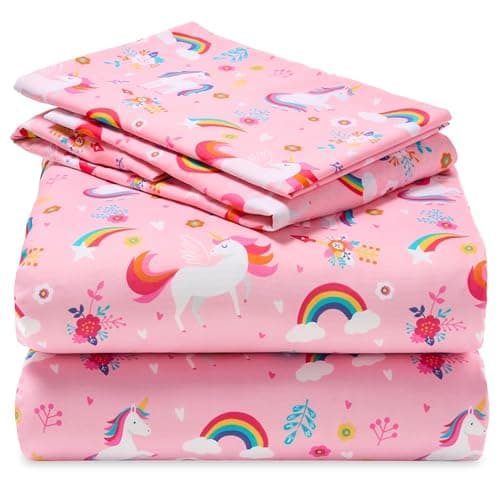
Joiedomi Kids Twin Sheet Set
Joiedomi
Soft microfiber in the patterns children actually ask for, cheap enough to own three sets.
| Guardrail height above mattress | Not applicable |
|---|---|
| Stated weight limit (per bunk) | Not applicable |
| Manufacturer minimum age | Not published by the manufacturer |
| Mattress thickness ceiling | Deep pocket fitted sheet |
| Materials / construction | Brushed microfiber, three-piece set |
What works
- Cheap enough that a 3 a.m. change is not a crisis
- Microfiber dries fast, which matters when you need the set back tonight
- Soft from the first wash with no break-in period
- Patterns children will choose themselves
What doesn’t
- Microfiber sleeps hotter than cotton
- Pills after enough wash cycles
- Polyester, which some parents avoid on principle
The catch: Microfiber traps heat. On a top bunk — where the warm air in the room already collects — a hot sleeper in microfiber sheets will be awake, and cotton is the fix.
Questions parents actually ask
What is a good thread count for kids sheets?
Between 200 and 400, with 300 in a percale weave the most useful default. Below 200 the fabric feels coarse; above 400 the number usually reflects how the yarn was counted rather than a better sheet.
Is a higher thread count better for children?
Not above about 400, and higher counts tend to be denser and warmer, which is the wrong direction for a child who sleeps hot. The weave matters more than the count.
Do microfiber sheets have a thread count?
Not meaningfully. Microfiber is an extruded polyester measured in GSM, so a thread count on a microfiber listing is describing a unit that does not apply to it.
Percale or sateen for a kids bed?
Percale for most children, and especially on a top bunk where warm air collects — it is crisper and more breathable. Sateen is smoother and warmer, which suits a cold bedroom.
What pocket depth do bunk bed sheets need?
Shallow. Bunk and loft mattresses run 4 to 8 inches depending on the frame, while many twin sets are cut for 12 inches. Measure your mattress and check the published pocket depth, or use a jersey knit that stretches to grip.
Sources
Read next
- Best kids sheet sets
The picks, with pocket depths where they are published.
- Cotton vs microfiber kids sheets
The fiber decision that sits above thread count.
- Kids bedding sizes guide
Crib, toddler, twin and full, measured.
- Bedding for a top bunk
Why pocket depth fails on a thin bunk mattress.
Back to Kids Bedding.