
Best Bed Rails
The best bed rails and guardrail extensions
Rails and extensions ranked on published height, fit range and install — plus which are unsafe on a bunk.
Top pick: Regalo Swing Down Bed Rail
The federal rules for children's bunk beds fit in about four sentences. This section translates them, shows you how to check a real bed against them, and tells you when the answer is simply not yet.
We earn a commission from qualifying purchases made through links on this page, at no extra cost to you. How this site is funded.
This is the section the rest of the site is built on. Every spec block on every product page checks its numbers against the rules explained here, and every roundup links back to them.
There are two separate authorities and they cover different things, which is where most of the confusion in this category comes from. The U.S. Consumer Product Safety Commission sets the construction rules — how many guardrails, how high, how they run, how big the gaps may be. The American Academy of Pediatrics gives the age guidance. The CPSC’s bunk bed guidance contains no age recommendation at all, so any site that attributes an age rule to the CPSC has blurred two sources together. We never do that: we cite the CPSC for construction and the AAP for age, and we link both.
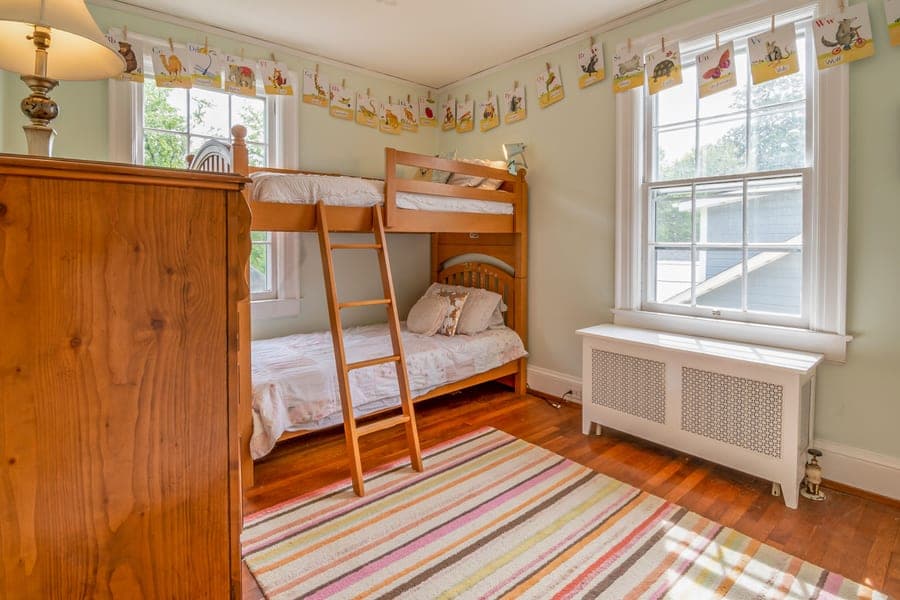
The construction rules, from the CPSC: children’s bunk beds must have at least two upper-bunk guardrails, with at least one rail on each side. The tops of those guardrails must sit no less than five inches above the top of the mattress. The guardrail on the wall side must run continuously from one end of the bed to the other. Children’s bunk beds fall under 16 CFR Part 1513; the adult standard is 16 CFR Part 1213, and the difference matters when you are buying second-hand.
The age guidance, from the AAP: do not allow a child younger than six years to sleep in the top bunk, because a child under six does not have the coordination to climb safely or to keep from falling out. The AAP also recommends a guardrail gap no wider than three and a half inches, and placing bunk beds in a corner with walls on two sides.
Best Bed Rails
Rails and extensions ranked on published height, fit range and install — plus which are unsafe on a bunk.
Top pick: Regalo Swing Down Bed Rail

Best Safety Add-Ons
The add-ons that change a real risk on a bunk — and the ones that are just clutter.
Top pick: Rechargeable Motion-Sensor Night Light
Compare
Two products, two problems: the low-bed rail and the bunk guardrail are not interchangeable.
Guide
The guardrail rule caps mattress thickness. The arithmetic, and what to buy instead of a plush mattress.

Guide
16 CFR 1513, 1213 and ASTM F1427 translated — and which one applies to your bed.
Guide
The 5-inch rule, measured from the mattress and not the frame — plus what to do if your bed fails.
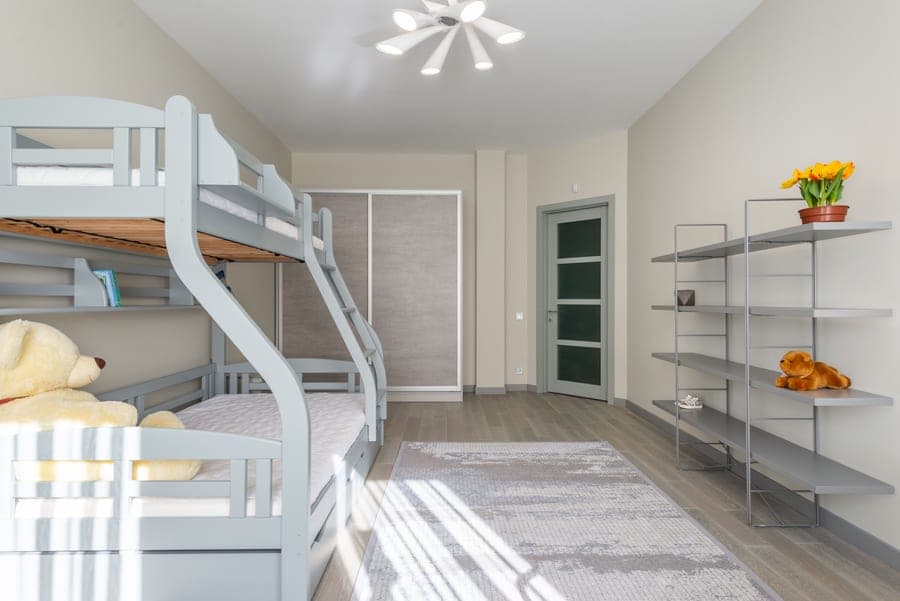
Guide
The AAP's under-6 guidance, what readiness looks like beyond age, and what to do meanwhile.
The rule that catches people out is that the five-inch clearance is measured above the mattress, not above the bed frame. A guardrail that is compliant with a six-inch mattress can be non-compliant with a ten-inch one, and nothing about the bed changes — you just put a thicker mattress on it. This is the single most common way a perfectly legal bunk bed ends up unsafe in a real bedroom, and it is entirely preventable with a tape measure. The mattress thickness page works the arithmetic through.
Three pages in this section carry no product recommendations at all, and that is deliberate. The standards reference, the guardrail height requirements and top-bunk age readiness exist to give you a straight answer, including when that answer is “not yet”. Attaching something to buy to a page whose job is to sometimes tell you not to buy would destroy the only reason to trust it.
And the maintenance item almost nobody does: check the CPSC recalls database for your bed’s brand once in a while. We check it for every product we feature and pull anything recalled the same day, but beds outlive websites, and a second-hand bunk in particular deserves a search before a child sleeps on it.