Sleep Safety
How thick can a bunk bed mattress be?
This is the single most common way a perfectly legal bunk bed ends up unsafe in a real bedroom — and it is entirely preventable with a tape measure.
We earn a commission from qualifying purchases made through links on this page, at no extra cost to you. How this site is funded.
The short answer
There is no single number — the ceiling is set by your bed. The CPSC requires the tops of a children’s bunk bed guardrails to sit no less than five inches above the top of the mattress, so the maximum mattress thickness is the guardrail height above the deck minus five inches. On a bed with a 14-inch guardrail, that is nine inches; on one with a 12.5-inch rail, it is seven and a half. Many manufacturers publish the ceiling directly — often 6 to 8 inches.
Why this rule exists and why it is so easy to break
The five-inch clearance is the amount of rail standing above the sleeping surface. It is what stops a child who rolls in their sleep from going over the top. Measured from the frame, a guardrail is a fixed object; measured from the mattress, it shrinks every time you make the mattress thicker.
That is the whole problem. Nothing about the bed changes. You buy a compliant bunk bed, it arrives with compliant guardrails, and then you put a comfortable ten-inch mattress on the top deck because that is what mattresses look like in a shop, and the bed silently stops meeting the standard it was certified against.
Worth being blunt about
A bunk bed that meets the federal standard on the showroom floor can fail it in your child’s bedroom without a single part changing. The variable is the mattress, and the mattress is the part nobody checks.
The arithmetic, worked through
Measure the guardrail from the surface the mattress will rest on — the slats or the deck — up to the top edge of the rail. Subtract five inches. What remains is the thickest mattress you may use.
| Guardrail height above the deck | Maximum mattress thickness | Typical bed |
|---|---|---|
| 10 in | 5 in | Budget metal frames |
| 12.5 in | 7.5 in | DHP Miles metal bunk |
| 14 in | 9 in | Max & Lily low bunk |
| 16 in | 11 in | Rare — some solid wood frames |
Now compare that against what the manufacturer publishes, because the two are not always the same and the manufacturer’s figure wins. Max & Lily specify a maximum of eight inches on their low bunk and recommend five, which is more conservative than the arithmetic alone would give you. DHP specify a window on their junior loft beds of over four inches and not exceeding six, which has a floor as well as a ceiling — the floor exists because a mattress that is too thin changes the geometry at the other end.
What a six-inch mattress is actually like
Parents worry that a thin mattress means an uncomfortable child. In practice a six-inch foam mattress is entirely adequate for a child under about twelve — the weight it has to support is low, and comfort at that weight is about surface feel rather than depth. Depth in adult mattresses exists to give heavier bodies enough material to sink into without bottoming out.
What you do want to check is firmness and material. A six-inch all-foam mattress is the standard answer. A six-inch innerspring exists and is usually worse, because a thin spring unit has very little foam above the coils.
How to apply this to a real listing
Product listings state mattress thickness inconsistently, so look for these in order. First, an explicit “maximum mattress thickness” or “recommended mattress” line — that is the manufacturer’s own ceiling and it is authoritative. Second, a guardrail height, from which you can do the arithmetic yourself. Third, nothing at all, which is the common case — in which case measure the rail when the bed arrives, before anyone sleeps on the top deck.
Our bunk bed sizes and dimensions guide has the mattress footprints to go with these thicknesses, and every spec block on this site records the ceiling where the manufacturer publishes one.
The bedding follow-on
A thin mattress needs a fitted sheet cut for a thin mattress. A deep-pocket sheet on a six-inch bunk mattress gathers into folds under the sleeper, which is uncomfortable and works loose. See bedding for a top bunk for the pocket depths, and bear in mind that a mattress topper counts toward your thickness total exactly the way mattress does.
Key takeaways
- Maximum mattress thickness = guardrail height above the deck, minus five inches.
- The manufacturer's published ceiling always beats your own arithmetic.
- A mattress topper counts toward the total. So does a thick mattress protector.
- Six inches of foam is genuinely comfortable for a child; depth is an adult requirement.
- If nothing is published, measure the rail yourself before the first night.
What we'd buy
Every pick below carries the same spec block, so you can compare the numbers across this page and every other page on the site.
Younger siblings sharing a room
Max & Lily Twin Over Twin Low Bunk Bed
Max & Lily
The clearest published safety numbers of any bunk we looked at, on a frame low enough that a fall is a short one.
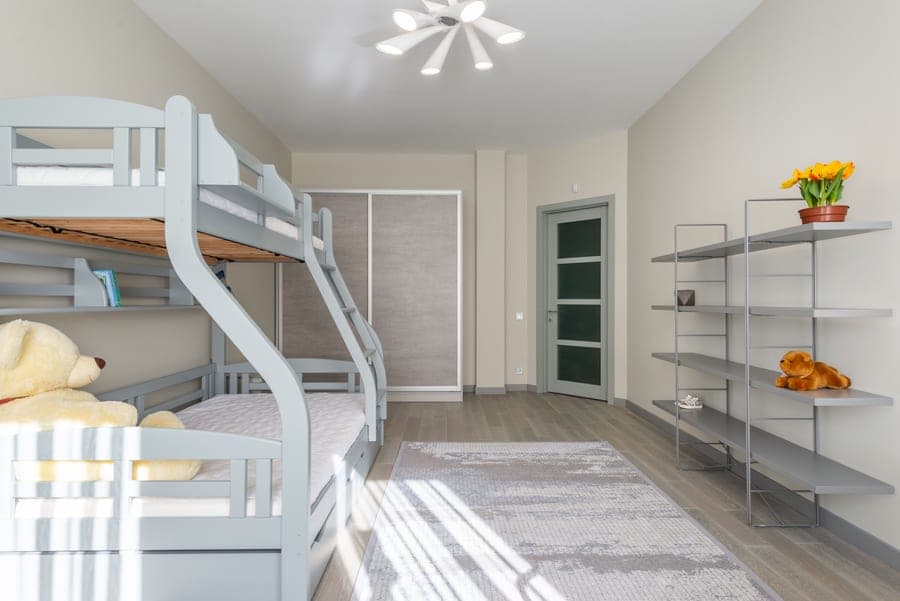
| Guardrail height above mattress | 14 in above the deck |
|---|---|
| Stated weight limit (per bunk) | 400 lb per sleeping surface |
| Manufacturer minimum age | Not published by the manufacturer |
| Mattress thickness ceiling | 8 in maximum (5 in recommended) |
| Materials / construction | Solid New Zealand pine, GREENGUARD Gold certified finish |
What works
- Publishes a guardrail height, a weight limit and a mattress ceiling — most brands publish one of the three
- 400 lb per surface is the highest stated capacity in this roundup, and it holds through the teen years
- Low overall height means the top deck sits well under a standard bunk
- Reversible, removable ladder with grooved treads and rounded edges
What doesn’t
- The 8 in mattress ceiling rules out most plush mattresses
- Solid pine is heavy to move once assembled
- No minimum age published, so the AAP's under-6 guidance is the only age rule you get
The catch: That 8 in ceiling is not a suggestion. Put a 10 in mattress on the top deck and the 14 in rail drops to 4 in of clearance, which is below the federal 5 in minimum. The bed stops being compliant and nobody tells you.
A first loft on a budget
DHP Jett Junior Twin Metal Loft Bed
DHP
The rare budget loft that publishes its weight limit, its mattress range and an age rule, in writing.
| Guardrail height above mattress | Full-length guardrails (height not published) |
|---|---|
| Stated weight limit (per bunk) | 200 lb |
| Manufacturer minimum age | Manufacturer states children under 6 should not use the upper bunk |
| Mattress thickness ceiling | Over 4 in and not exceeding 6 in |
| Materials / construction | Powder-coated metal frame with built-in ladder |
What works
- Publishes a mattress range with both a floor and a ceiling, which almost nobody does
- States an age rule for the upper deck rather than leaving it to you
- Built-in ladder and full-length guardrails
- Short frame height for a loft, so the fall distance is smaller
What doesn’t
- 200 lb capacity is low for a bed a teenager might keep
- The 4-6 in mattress window rules out most mattresses on the market
- Metal frames need their fasteners re-checked periodically
The catch: The mattress window is genuinely narrow. Under 4 in and the guardrail geometry is wrong; over 6 in and the rail no longer clears it. You will be shopping for the mattress around the bed, not the other way round.
The crib-to-toddler-bed handover
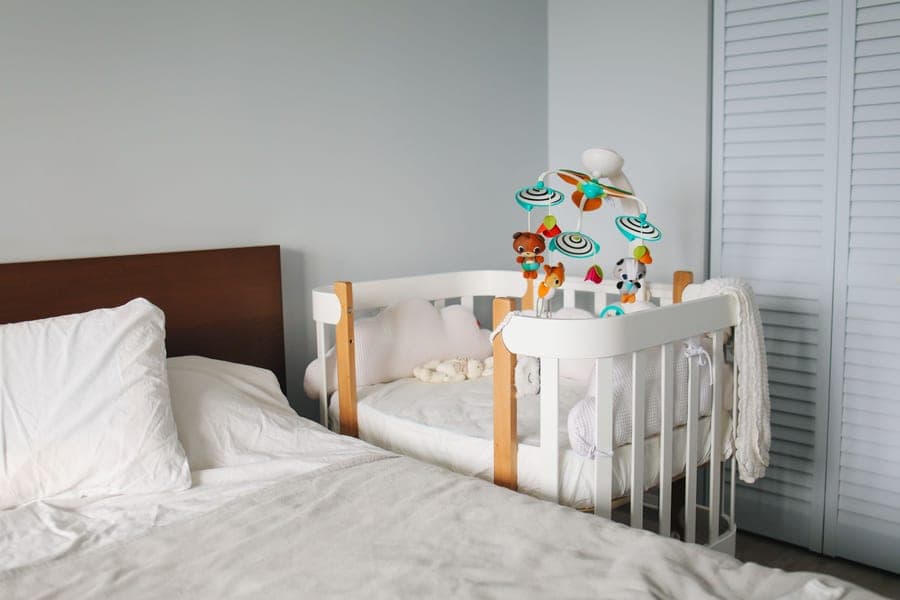
Graco Premium Foam Crib & Toddler Mattress
Graco
A firm, washable, dual-use crib and toddler mattress with both of the certifications parents actually look for.
| Guardrail height above mattress | Not applicable |
|---|---|
| Stated weight limit (per bunk) | Not published by the manufacturer |
| Manufacturer minimum age | Not published by the manufacturer |
| Mattress thickness ceiling | Not applicable |
| Materials / construction | Foam core, waterproof machine-washable OEKO-TEX Standard 100 certified cover, GREENGUARD Gold certified |
What works
- The cover comes off and goes in the washing machine, which matters more than anything else at this age
- Firm support appropriate for infants and toddlers
- GREENGUARD Gold and OEKO-TEX Standard 100 certified
- Fits both the crib and the toddler bed it converts into
What doesn’t
- Foam traps more heat than a breathable-core mattress
- Firm enough that older toddlers may find it unforgiving
- Thin relative to a twin mattress, which is by design but still a surprise
The catch: Foam holds heat. If your child sleeps hot, a breathable-core mattress handles it better, and you will pay roughly twice as much for that.
Questions parents actually ask
How thick can a bunk bed mattress be?
As thick as the guardrail height above the deck minus five inches, or whatever lower ceiling the manufacturer publishes. Common published ceilings are six and eight inches.
Can I put a mattress topper on a top bunk?
Only if the mattress plus the topper still leaves five inches of guardrail above the sleeping surface. A two-inch topper on a six-inch mattress uses up the same clearance an eight-inch mattress would.
Is a 6 inch mattress comfortable enough for a child?
For most children under about twelve, yes. Mattress depth exists to support heavier bodies; comfort for a light sleeper is about the surface material rather than the total thickness.
What size mattress goes on a bunk bed?
Usually a standard twin, 38 by 75 inches. Check the length too — some frames specify 74 to 75 inches, and a 75-inch mattress in a frame built for 74 does not sit flat.
Does the mattress thickness rule apply to the bottom bunk?
No. The guardrail requirement applies to the upper bunk, so the bottom bunk can take whatever thickness the frame physically accommodates — which is usually limited by headroom under the top deck rather than by any rule.
What if my bed doesn't publish a guardrail height?
Measure it. Tape measure from the slat surface to the top edge of the rail, subtract five inches, and that is your ceiling. Do it before the first night rather than after.
Sources
Read next
- Bunk bed sizes and dimensions
The mattress footprints that go with these thicknesses.
- Guardrail height requirements
The rule this arithmetic comes from.
- Bedding for a top bunk
Sheet pocket depths for a thin mattress.
Back to Sleep Safety.