Sleep Safety
Anchoring kids furniture to the wall
Tip-over is one of the few genuinely serious furniture risks in a bedroom, and the anchor in the box is the part most often left in the box. Here is which pieces need it, how to fix into what you actually have, and the rental workaround.
We earn a commission from qualifying purchases made through links on this page, at no extra cost to you. How this site is funded.
The short answer
Anchor anything in a child’s room that is taller than it is deep, has drawers or pull-out bins, or that a child could plausibly climb — dressers, bookcases, toy organizers, tall shelving and desks with hutches. The anchor supplied in the box is part of the product, not an accessory.
Fix into wall studs wherever possible. In standard US framing studs sit 16 inches on center. Drywall plugs alone will not hold a tipping load; into masonry, use proper masonry anchors.
Why this is on a safety site rather than a DIY one
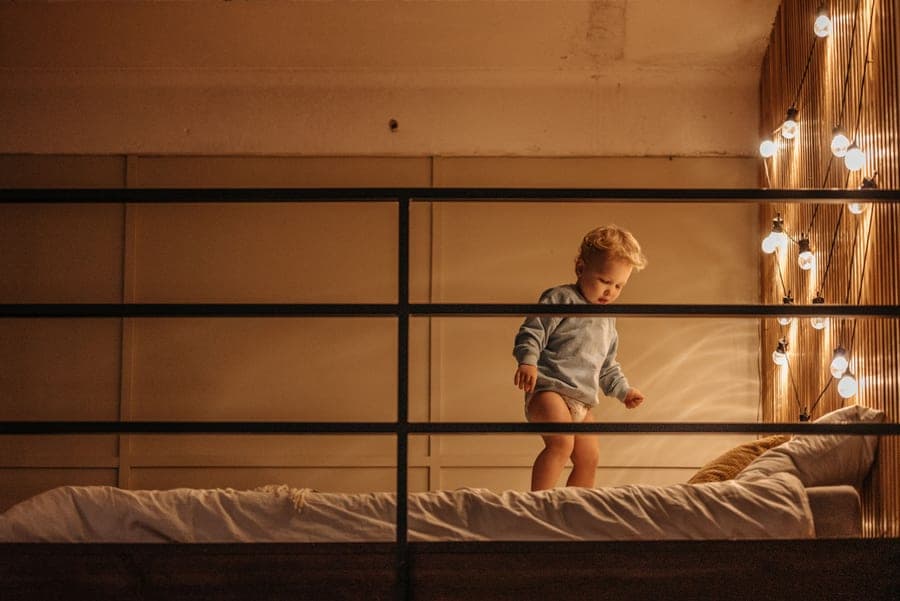
Furniture tip-over is a mechanical event with a short chain of causes: a child opens a drawer or climbs a shelf, the center of mass moves forward and past the front edge of the base, and the piece rotates. Nothing about it requires the furniture to be badly made — a perfectly sound bookcase with an open bottom drawer and a toddler standing on it is unstable by geometry.
Which is why the fix is a bracket and two screws rather than a better bookcase, and why the manufacturers that take it seriously ship the bracket in the box. One storage unit in our registry includes an anti-tip kit as standard; that is a signal worth reading when you are comparing two similar products. If you want recall history on a specific piece, the CPSC recalls database is linked in the sources below.
What needs anchoring, and what does not
| Piece | Anchor? | Why |
|---|---|---|
| Dresser or chest of drawers | Always | Open drawers move the center of mass forward; it is the classic case |
| Bookcase or tall shelving | Always | Climbable, and top-heavy once loaded |
| Toy organizer with pull-out bins | Always | Bins act like drawers and children lean on them |
| Desk with a hutch | Always | Tall, and the hutch is loaded above the work surface |
| Low front-facing bookshelf | Yes if it can be climbed | Low units are safer, not safe |
| Bunk or loft bed | Depends on the frame | See the bunk anchoring guide — it is a different question |
| A desk with no hutch | No | Wider than tall, nothing to climb |
| A bed frame at floor level | No | No tipping geometry |
| A TV on any furniture | Always, and mount the TV too | Two separate tipping objects |

Finding something to screw into
Studs. The reliable fixing. In most US framing the studs are 16 inches on center, sometimes 24 in newer construction. An inexpensive magnetic or electronic stud finder is worth owning; failing that, the screws holding a baseboard or a light switch box will usually give you one stud, and the rest follow at 16-inch intervals.
Drywall with no stud where you need one. This is the common case, because the furniture position is decided by the room rather than by the framing. A plastic expansion plug is not adequate for a tipping load. A toggle bolt or a proper heavy-duty drywall anchor rated for the load is, and the rating is published on the packet — read it rather than assuming.
Masonry or plaster over brick. Use masonry anchors and a masonry bit. Plaster is brittle and will crumble around an undersized hole, so drill at the stated diameter rather than freehanding it.
Strap length and angle. The strap or bracket should be short and roughly horizontal, fixed near the top of the piece. A long slack strap lets the furniture tip far enough to throw its contents before it is caught, which is most of the hazard in a child’s room anyway.
Corner placement is not a substitute
Putting a bookcase in a corner, or leaning it slightly back, reduces the chance of a tip without removing it. Neither is an anchor and neither should be reported to yourself as one. The same reasoning applies to “it is very heavy” — mass is what makes a tip-over dangerous, not what prevents it.
When you cannot drill
Renting, or a wall you are not allowed to touch, is a real constraint and there are two honest answers.
Ask. Two small screw holes in a plasterboard wall are not a remodel, and most landlords will agree to a child-safety fixing when it is put to them as that. Filling two holes costs almost nothing at the end of a tenancy.
Change the furniture, not the wall. If drilling is genuinely out, choose pieces whose geometry does not tip: units wider than they are tall, low front-facing shelving, under-bed drawers, fabric cubes in existing built-in shelving. This is the better answer than an adhesive strap, because adhesive mounts are not rated for a tipping load and depend on a wall surface you cannot inspect.
Remove the climbing route. Keep the tempting objects off the top of tall furniture. A great deal of climbing in children’s rooms is goal-directed, and the goal is usually visible from floor level.
The per-shelf load nobody checks
Anchoring stops a piece tipping; it does nothing about overloading, and the two failure modes get conflated. One toy organizer in our registry publishes a 20 lb limit per level, which is less than it sounds: a single bin of wooden blocks can get close to it. Overloading an engineered-wood frame is how it starts to lean, which is also why the anchor is in the box.
The practical rule is weight low. Books and blocks on the bottom two shelves, soft and light things at the top. That reduces the tipping moment and the shelf load at the same time, and it costs nothing. Our toy storage guide goes through what children actually use.
Beds are a separate question
A bunk or loft bed sometimes needs fixing to the wall and sometimes does not, and the reasoning is different from a bookcase: it depends on the frame’s own geometry, whether it carries a high deck, and whether integrated storage shifts the center of gravity. We have a dedicated page for it — do bunk beds need to be anchored to the wall — because treating a bed like a dresser gets the answer wrong in both directions.
While you have the drill out
Two things worth doing in the same half hour, because they are the other two mechanical hazards in a child’s bedroom. Cords: corded window blinds within reach of a bed, a crib or climbable furniture are a strangulation hazard, and cordless is what to fit in a child’s room — see blackout curtains versus blinds. And the route to the door: a low warm-white light so a child who can now leave the bed at night can see the floor.
Key takeaways
- Anchor anything taller than it is deep, with drawers or bins, or that can be climbed.
- Studs sit 16 in on center in most US framing. Plastic drywall plugs will not hold a tipping load.
- Keep the strap short and near the top. A slack strap lets the contents come out first.
- A corner, or sheer weight, is not an anchor.
- Anchoring does not fix overloading. One registry unit publishes 20 lb per level — load heavy things low.
What we'd buy
Every pick below carries the same spec block, so you can compare the numbers across this page and every other page on the site.
Toy chaos at floor level
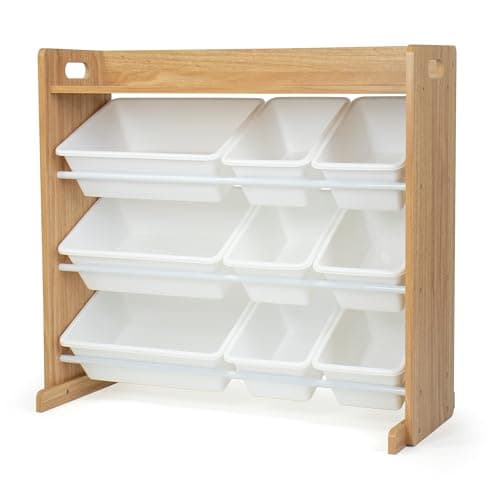
Humble Crew Toy Storage Organizer with Shelf and 9 Bins
Humble Crew
Nine removable bins and an anti-tip kit in the box — the storage unit that publishes a per-shelf load and ships the anchor.
| Guardrail height above mattress | Not applicable |
|---|---|
| Stated weight limit (per bunk) | Each level supports up to 20 lb |
| Manufacturer minimum age | Not published by the manufacturer |
| Mattress thickness ceiling | Not applicable |
| Materials / construction | Engineered wood frame with reinforced steel dowels; BPA- and phthalate-free bins; wall anchor anti-tip kit included |
What works
- Publishes a per-level weight limit, which storage furniture rarely does
- Anti-tip wall anchor kit is in the box
- Bins lift out, so tidying is a child-sized job
- BPA- and phthalate-free bins
What doesn’t
- 20 lb per level is reached fast by wooden blocks or die-cast cars
- Bins hide what is inside, so things get lost in them
- Engineered wood frame flexes if it is not anchored
The catch: 20 lb per level is not a lot. A single bin of wooden blocks can get close, and overloading an engineered-wood frame is exactly how it starts to lean — which is also why the anchor is in the box.
Pre-readers and early readers
Humble Crew Kids Bookshelf, 6-Tier
Humble Crew
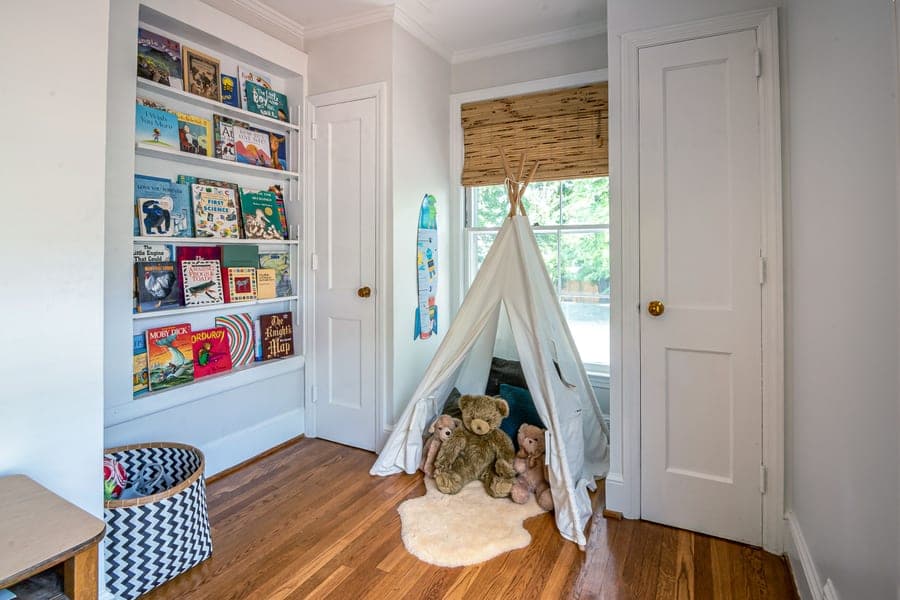
Front-facing tiers at toddler height, which is the difference between books being read and books being shelved.
| Guardrail height above mattress | Not applicable |
|---|---|
| Stated weight limit (per bunk) | Not published by the manufacturer |
| Manufacturer minimum age | Not published by the manufacturer |
| Mattress thickness ceiling | Not applicable |
| Materials / construction | Engineered wood frame with reinforced steel dowels |
What works
- Front-facing display means a child picks by cover, not by spine
- Low enough for a two-year-old to serve themselves
- Narrow footprint against a wall
- Holds a genuinely useful number of picture books
What doesn’t
- Front-facing storage is inefficient — it holds fewer books per foot
- Outgrown once a child reads chapter books
- Engineered wood, not solid
The catch: Front-facing shelving trades capacity for visibility. It is the right trade for a three-year-old and the wrong one for a nine-year-old with a hundred books.
A desk that is also the bookshelf
Kids Desk with Hutch and Shelving
Various (search by configuration)
Vertical storage above the work surface, for a room where the desk has to hold everything.

| Guardrail height above mattress | Not applicable |
|---|---|
| Stated weight limit (per bunk) | Not published by the manufacturer |
| Manufacturer minimum age | Not published by the manufacturer |
| Mattress thickness ceiling | Not applicable |
| Materials / construction | Engineered wood with laminate finish; wall anchor typically included |
What works
- Shelves above the desk replace a separate bookcase
- Keeps the working surface clear because there is somewhere for things to go
- Usually includes an anti-tip wall anchor
- Fits a narrow wall better than a desk plus a bookcase side by side
What doesn’t
- The hutch makes the desk feel enclosed for a small child
- Tall furniture must be anchored, without exception
- Rarely adjustable in height
The catch: Anything this tall in a child's room gets anchored to the wall, every time, no exceptions. Tip-over is one of the genuinely serious furniture risks in a bedroom and the anchor in the box is not optional.
Questions parents actually ask
What furniture needs to be anchored in a kids room?
Anything taller than it is deep, anything with drawers or pull-out bins, and anything a child could climb: dressers, bookcases, tall shelving, toy organizers and desks with hutches. Plus any TV, which gets mounted as well as the furniture it stands on.
How do you anchor furniture to a wall without studs?
With a toggle bolt or a heavy-duty drywall anchor rated for the load — the rating is printed on the packet. Standard plastic expansion plugs are not adequate for a tipping load.
How far apart are wall studs?
Sixteen inches on center in most US framing, sometimes 24 inches in newer construction. Find one with a stud finder, a baseboard screw or a switch box, and the rest follow at that spacing.
Can you anchor furniture in a rental?
Usually, if you ask — two small screw holes presented as a child-safety fixing is a reasonable request and cheap to fill later. If drilling is genuinely out, choose furniture that cannot tip rather than relying on an adhesive strap.
Is putting a bookcase in a corner enough?
No. A corner reduces the chance of a tip-over without removing it, and neither corner placement nor sheer weight is an anchor. Weight is what makes a tip-over dangerous rather than what prevents one.
Sources
Read next
- Do bunk beds need to be anchored?
A bed is a different question from a bookcase.
- Toy storage that works
What to buy, and how to load it so it stays stable.
- Best kids bookshelves
Including the units that ship an anti-tip kit.
- Best kids desks for small spaces
Where the hutch question - and the anchor - comes up.
Back to Sleep Safety.