Kids Bedding
Blackout curtains vs blinds for a kids room
Both are sold as blackout and only one of them usually delivers it, because darkness in a bedroom is decided at the edges of the window rather than in the middle of the panel.

We earn a commission from qualifying purchases made through links on this page, at no extra cost to you. How this site is funded.
How we chose
We are a small publisher, not a testing lab. We don’t buy, assemble or sleep in the beds we write about, and we won’t pretend otherwise. What we do instead is read the published specifications and check them against the rules that actually govern children’s beds in the United States: the federal standard for children’s bunk beds (16 CFR Part 1513), the ASTM F1427 requirements it incorporates, and the American Academy of Pediatrics’ guidance on upper-bunk age. Where a manufacturer publishes no number, we write “not published by the manufacturer” rather than guess — that absence is itself worth knowing. We read owner feedback at volume for the things specs can’t tell you, and we label it as signal, not proof.
We earn a commission when you buy through our links. It never changes an ordering. Our full editorial policy.
Decide for me
Buy blackout curtains if the goal is a genuinely dark room for sleep. A lined curtain panel on a wrap-around or return-style rod covers the frame, the reveal and the gap above the window, which is where the light actually gets in.
Buy blinds if you need daytime light control without losing the window, if the wall has no room for a rod and stacked fabric, or if a radiator sits directly under the sill. Then accept that you will probably want a curtain over them as well.
Whichever you choose, buy cordless. A looped cord within reach of a bed or a crib is a strangulation hazard, and it is the one point on this page that is not a preference.
Darkness is decided at the edges
This is the thing that makes most blackout purchases disappointing. A blackout-lined panel or an opaque blind slat both block light through the material almost completely. What neither does automatically is cover the perimeter: the gap between panel and wall, the gap at the top where the rod sits forward of the frame, and the slot either side of a blind where it clears the reveal.
A blind fitted inside the reveal always leaves a few millimeters of light down each side, by design — it has to clear the frame to move. That line is thin and in a dark room at 5 a.m. in June it is enough to wake a child who is on the edge of waking anyway. Curtains can cover the whole aperture, but only if the rod extends past the frame on both sides and the panels are wide enough to overlap rather than meet.
Buy the rod at the same time, or do not bother
Blackout panels on a straight rod always leak at the sides, and that gap is where the morning gets in. A wrap-around or return-style rod brings the fabric back to the wall and is the single cheapest upgrade to a blackout curtain’s actual performance. Budget for it alongside the panels, not afterwards.
| Blackout curtains | Blinds | |
|---|---|---|
| Achievable darkness | Near-total with a wrap-around rod | Side light leak is structural |
| Cost per window | Low — panels plus a rod | Higher, especially made-to-measure |
| Wall space needed | Rod plus stacked fabric either side | Almost none, fits the reveal |
| Daytime light control | Open or closed | Variable, by slat angle or lift |
| Thermal effect | Lined panels noticeably reduce drafts | Minimal unless cellular |
| Child safety | No cord; keep tiebacks short | Must be cordless — looped cords are a hazard |
| Washing | Machine or dry clean | Wipe only |
| Noise | Fabric dampens a little | None |
The safety point that overrides the preference
Corded window coverings are a recognized strangulation hazard in children’s bedrooms, and the risk is specific: a looped cord or chain within a child’s reach, near a bed, a crib or any piece of furniture they can climb. The industry has moved substantially to cordless mechanisms for exactly this reason, and cordless is what to buy for a child’s room without weighing it against anything else.
It is worth checking what is already on the window too, not just what you are buying. If an existing blind has a cord, either replace the blind or fit a cord cleat high on the wall and use it every time — and be honest about whether “every time” is realistic in your household. The same applies to long curtain tiebacks.
Room-darkening is not blackout, and the labels blur it
“Room darkening” and “blackout” are marketing terms rather than measured grades, and a panel sold as one is frequently the other. The practical test is to hold the fabric up to a window in daylight: a true blackout lining shows no light through the material at all, while a room-darkening panel glows.
Cut-out patterns make this explicit. A star-cut-out panel is a lovely thing in a child’s room and the cut-outs are, by definition, holes — it darkens a room well and it will not black it out. If you are fighting a 5 a.m. summer sunrise, the solid panel is the one that does the job, and the patterned one is the compromise you make when the child will not accept a plain dark room. Our blackout curtain roundup separates the two.
Sizing, which is where curtains go wrong
Panel width is the figure people get wrong, and it is not the window width. For a curtain to hang with any fullness and to overlap at the center when closed, the combined panel width wants to be roughly 1.5 to 2 times the width of the window. Buying two panels the exact width of the window gives you a flat, taut cover with no overlap and a line of light down the middle.
Length is simpler and has one child-specific rule: floor-length panels in a toddler’s room are something to pull on and climb. Sill-length or just below is the safer choice until they are older. Our curtain sizing guide has the measurements and the standard drop lengths.
Why any of this matters for sleep
Light is the strongest signal in the system that sets a child’s sleep timing, which is why a dark room is a sleep intervention rather than a decorating choice. The two situations where it changes things most are summer bedtimes with a 9 p.m. sunset and summer mornings with a 5 a.m. sunrise — the second being the one families often treat as a behavior problem. Our guide to blackout and children’s sleep goes through the evidence.
The counterpart is the night light, and the spec there is warm white rather than cool white. A bright cool light wakes a child properly, and a properly awake child at 2 a.m. is a different problem from a child who needed to see the floor.
Key takeaways
- Both block light through the material. Only curtains can cover the perimeter.
- A wrap-around or return rod is the cheapest real improvement to blackout performance.
- Combined panel width should be 1.5-2x the window width, or you get a light line down the middle.
- Blinds fitted in the reveal leak down both sides structurally - it is not a defect.
- Buy cordless, always. A looped cord near a bed is a strangulation hazard, not a preference.
What we'd buy
Every pick below carries the same spec block, so you can compare the numbers across this page and every other page on the site.
Summer bedtimes and early sunrises
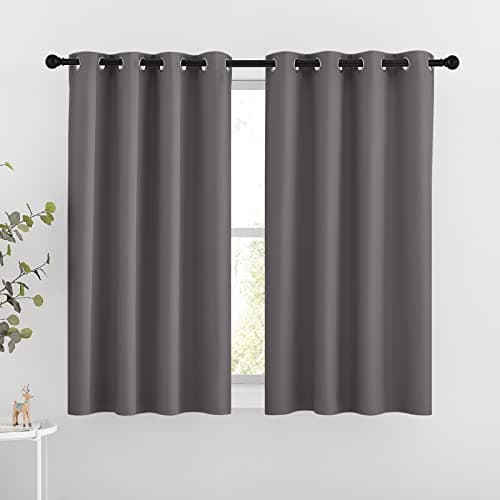
NICETOWN Blackout Curtains for Kids Room
NICETOWN
Triple-weave microfiber that measurably darkens a room, at a price that lets you do every window.
| Guardrail height above mattress | Not applicable |
|---|---|
| Stated weight limit (per bunk) | Not applicable |
| Manufacturer minimum age | Not published by the manufacturer |
| Mattress thickness ceiling | Not applicable |
| Materials / construction | Triple-weave microfiber with thermal insulating layer |
What works
- Blocks enough light to make a 9 p.m. sunset survivable
- Thermal layer also helps with a hot west-facing room
- Available in the full range of drop lengths
- Cheap enough to do the whole house
What doesn’t
- Panels alone leak light around the edges without a wrap-around rod
- Microfiber holds creases straight out of the packet
- Colors read darker in the room than on screen
The catch: Blackout panels on a straight rod always leak at the sides — that gap is where the morning gets in. Budget for a wrap-around or return-style rod at the same time or you will not get the result you bought them for.
A compromise between dark and fun
BGment Star Blackout Curtains
BGment
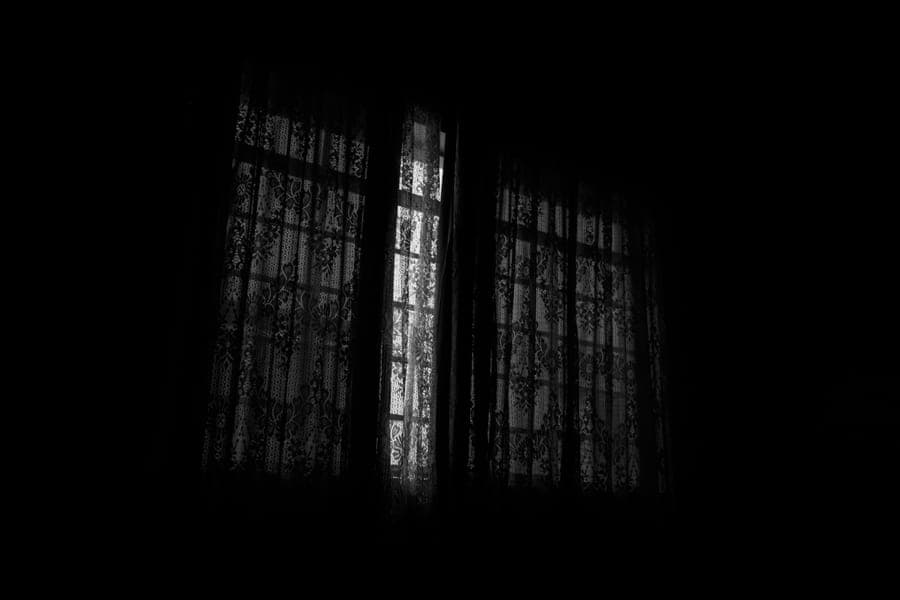
Room-darkening panels with a cut-out star pattern, for the child who will not accept a plain dark room.
| Guardrail height above mattress | Not applicable |
|---|---|
| Stated weight limit (per bunk) | Not applicable |
| Manufacturer minimum age | Not published by the manufacturer |
| Mattress thickness ceiling | Not applicable |
| Materials / construction | Room-darkening polyester with cut-out star detail |
What works
- Gets a reluctant child to accept a dark room
- Stars glow softly rather than casting real light
- Standard rod pocket and grommet options
- Priced like ordinary curtains
What doesn’t
- Room-darkening, not true blackout — the cut-outs pass light by design
- Less thermal benefit than a solid triple-weave panel
- The novelty wears off before the curtains do
The catch: Cut-outs and blackout are opposites. These darken a room well; they will not black it out, and if you are fighting a 5 a.m. summer sunrise you want the solid panel instead.
A lit route down from the top bunk
Rechargeable Motion-Sensor Night Light
Various (search by spec)
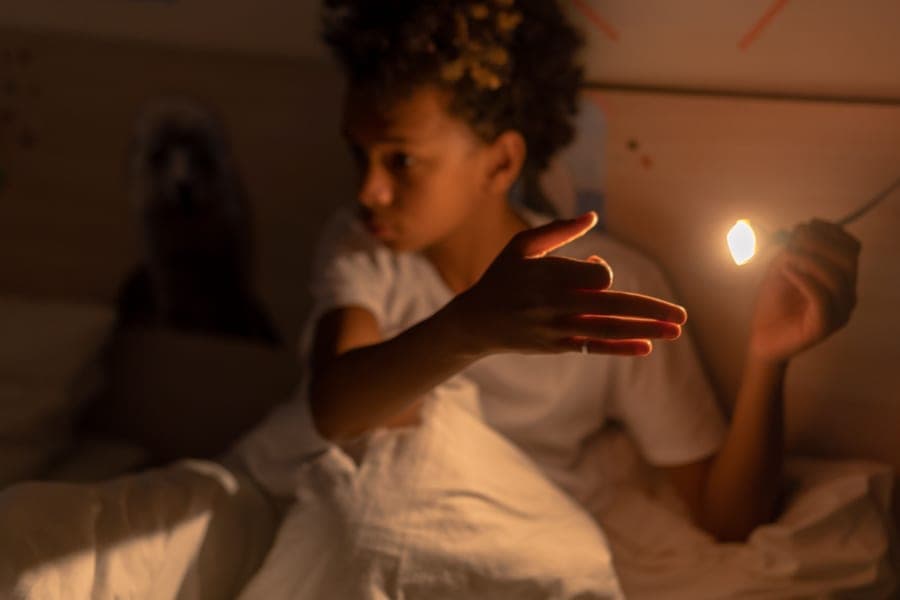
The cheapest safety upgrade for a bunk: light on the ladder before a foot goes on it.
| Guardrail height above mattress | Not applicable |
|---|---|
| Stated weight limit (per bunk) | Not applicable |
| Manufacturer minimum age | Not published by the manufacturer |
| Mattress thickness ceiling | Not applicable |
| Materials / construction | Rechargeable LED with adhesive or magnetic mount |
What works
- Lights the ladder and the floor at the bottom of it automatically
- Warm color temperature does not wake the room the way a white light does
- No wiring, so it mounts anywhere on the frame
- Costs less than almost any other change you can make to a bunk
What doesn’t
- Rechargeable means remembering to recharge it
- Adhesive mounts fail on textured or painted surfaces
- Motion sensors can trigger from the bed and wake the sleeper
The catch: This is a generic category rather than a single model — search on the specification (rechargeable, motion sensor, warm white) rather than on a brand, because the brands turn over constantly and the spec does not.
Questions parents actually ask
Are blackout curtains or blinds better for a kids room?
Curtains, if the goal is darkness — they can cover the whole window aperture including the perimeter, which a blind fitted inside the reveal cannot. Blinds win on wall space and daytime light control.
Why do my blackout curtains still let light in?
Almost always at the edges rather than through the fabric. A straight rod leaves the sides open and panels bought at exactly the window width have no overlap at the center. A wrap-around rod and 1.5 to 2 times the window width in panel fixes both.
Are blinds safe in a child's bedroom?
Cordless blinds, yes. Corded ones are a recognized strangulation hazard when the cord or chain is within reach of a bed, a crib or climbable furniture. Buy cordless and check what is already fitted.
Is room darkening the same as blackout?
No, and the labels are used loosely. Hold the fabric to a window in daylight: true blackout lining shows no light through the material, room-darkening fabric glows. Cut-out patterns are holes by design and cannot be blackout.
Can you use blackout curtains and blinds together?
Yes, and it is the most reliable combination — the blind gives you daytime control and the curtain covers the perimeter at night. It is also the most expensive, so it is worth trying the curtain and the right rod first.
Sources
Read next
- Best blackout curtains for kids rooms
The picks, and which ones are actually blackout.
- What size blackout curtains do you need?
The panel width rule and the standard drop lengths.
- Blackout and kids sleep
Why a dark room is a sleep intervention, not decor.
- When can a toddler use a pillow and blanket?
The other bedroom safety question parents ask at the same stage.
Back to Kids Bedding.