Kids Bedding
What size blackout curtains do you need?
Most blackout curtains fail on size, not on fabric. Two panels the exact width of the window will leak light down both sides and across the top — here is the arithmetic that fixes it.
We earn a commission from qualifying purchases made through links on this page, at no extra cost to you. How this site is funded.
The short answer
For a genuinely dark room, your two panels together should total at least twice the width of the window, and the rod should extend 6 to 12 inches past the frame on each side. For length, curtains are sold in a handful of standard drops — commonly 63, 84, 95 and 108 inches — measured from the rod to the hem; pick the one that reaches the floor or sits a couple of inches below the sill, and measure from where the rod will be rather than from the top of the window.
Why width is the number that matters
A blackout panel blocks light through the fabric. It does nothing about light coming around the fabric, and in a child’s bedroom at 6 a.m. in June, around is where all of it comes from. If two panels add up to exactly the window width, they hang flat, meet in a thin seam down the middle, and stop at the frame on both sides — three leak paths in one installation.
The fix is fullness and overlap. Total panel width of twice the window gives you enough fabric to gather, so the panels overlap in the middle and still reach past the frame when closed. A rod that extends 6 to 12 inches beyond the frame on each side moves the side leak off the glass and onto the wall, where it does not matter.
| Window width | Minimum total panel width | Rod length |
|---|---|---|
| 36 in | 72 in across two panels | 48-60 in |
| 48 in | 96 in across two panels | 60-72 in |
| 60 in | 120 in across two panels | 72-84 in |
| 72 in | 144 in across two panels | 84-96 in |
What to look for: length, and where you measure from
Measure from the rod position down, not from the top of the window frame. Mounting the rod 4 to 6 inches above the frame is what closes the gap at the top — the single biggest leak path in most rooms, because light coming over the rod lands directly on the ceiling and lights the whole room indirectly. Having moved the rod up, you then need a longer panel than the window suggests, which is the mistake most people make once and never again.
Then choose between the two honest options. Sill length— ending an inch or two below the sill — suits a radiator or a desk under the window and keeps the fabric out of a toddler’s reach. Floor length blocks more light, because the gap under a sill-length panel is a light shelf, and it looks better. In a bedroom where darkness is the point, floor length wins; where there is furniture under the window, sill length is the practical call.
Cords, chains and anything a child can reach
Keep cords, chains and long tiebacks out of reach of a child’s bed and crib, and never place a bed where a cord can be reached from it. This is a strangulation hazard, not a tidiness issue. Cordless operation or a wand is the right choice in a child’s room, and floor-length panels should clear the floor rather than pool on it where they can be pulled.
The three leak paths, in order of how much they cost you
Over the top of the rod. The worst one, and the one nobody looks for. Light passes over the rod, hits the ceiling and lights the room by reflection. A wrap-around or return rod that curves back to the wall at each end solves it; mounting a plain rod high and using a longer panel reduces it.
Down the sides. Second worst, and the reason the rod needs to extend past the frame. Even a triple-weave blackout panel is only as dark as its edges.
Up from the sill or the floor. The least important of the three and the easiest to live with, which is why sill-length panels remain a reasonable choice in a room with a radiator.
Blackout, room-darkening, and the one that is not either
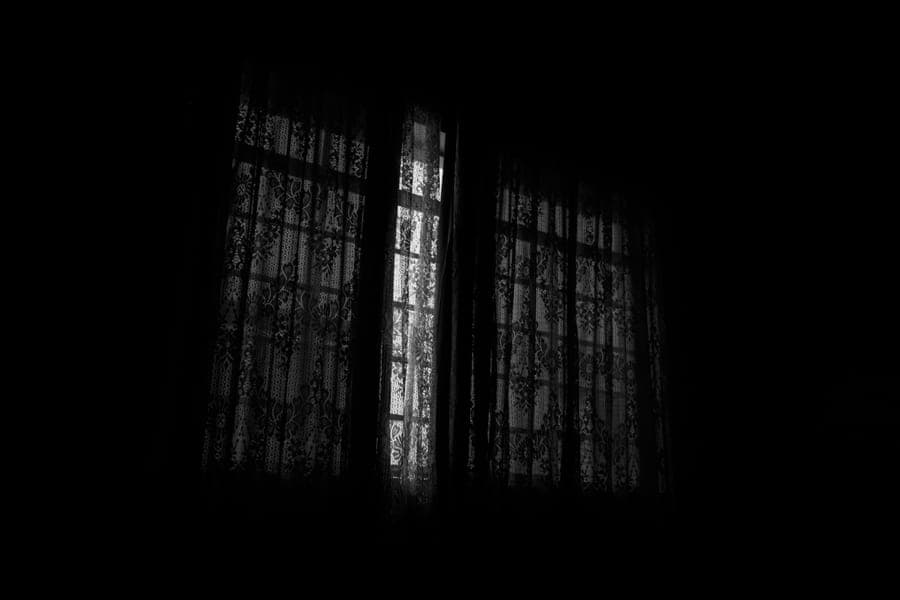
The labels are not interchangeable. A triple-weave microfiber blackout panel with a thermal layer is the darkest option and also helps with a hot west-facing room. A room-darkening panel reduces light without eliminating it. And a panel with decorative cut-outs — the star curtains a lot of children ask for by name — passes light through the cut-outs by design, because that is the feature. Cut-outs and blackout are opposites, and it is worth knowing which compromise you are making before the first bright morning rather than after.
If what you are really trying to fix is a 5 a.m. wake-up, the curtains are one of three variables and not the only one. Our blackout and kids sleep page covers what darkness does and does not do, and our curtain roundup has the panels themselves.
Key takeaways
- Two panels should total at least twice the window width, so they gather and overlap.
- Extend the rod 6-12 in past the frame on each side and mount it 4-6 in above it.
- Measure the drop from the rod position, not from the top of the window.
- Light over the rod is the biggest leak path — a wrap-around rod or a high mount fixes it.
- Cut-out and star panels pass light by design. They are a compromise, not a blackout.
What we'd buy
Every pick below carries the same spec block, so you can compare the numbers across this page and every other page on the site.
Summer bedtimes and early sunrises
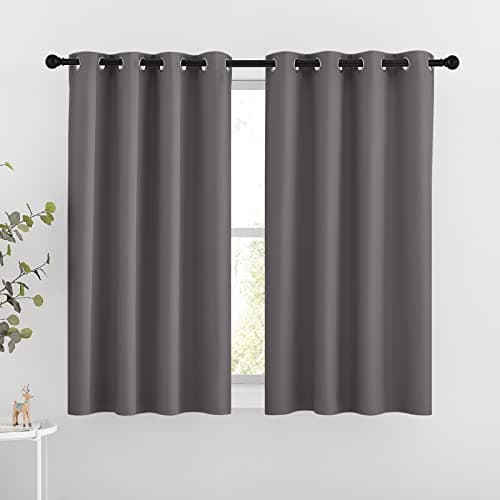
NICETOWN Blackout Curtains for Kids Room
NICETOWN
Triple-weave microfiber that measurably darkens a room, at a price that lets you do every window.
| Guardrail height above mattress | Not applicable |
|---|---|
| Stated weight limit (per bunk) | Not applicable |
| Manufacturer minimum age | Not published by the manufacturer |
| Mattress thickness ceiling | Not applicable |
| Materials / construction | Triple-weave microfiber with thermal insulating layer |
What works
- Blocks enough light to make a 9 p.m. sunset survivable
- Thermal layer also helps with a hot west-facing room
- Available in the full range of drop lengths
- Cheap enough to do the whole house
What doesn’t
- Panels alone leak light around the edges without a wrap-around rod
- Microfiber holds creases straight out of the packet
- Colors read darker in the room than on screen
The catch: Blackout panels on a straight rod always leak at the sides — that gap is where the morning gets in. Budget for a wrap-around or return-style rod at the same time or you will not get the result you bought them for.
A compromise between dark and fun
BGment Star Blackout Curtains
BGment
Room-darkening panels with a cut-out star pattern, for the child who will not accept a plain dark room.
| Guardrail height above mattress | Not applicable |
|---|---|
| Stated weight limit (per bunk) | Not applicable |
| Manufacturer minimum age | Not published by the manufacturer |
| Mattress thickness ceiling | Not applicable |
| Materials / construction | Room-darkening polyester with cut-out star detail |
What works
- Gets a reluctant child to accept a dark room
- Stars glow softly rather than casting real light
- Standard rod pocket and grommet options
- Priced like ordinary curtains
What doesn’t
- Room-darkening, not true blackout — the cut-outs pass light by design
- Less thermal benefit than a solid triple-weave panel
- The novelty wears off before the curtains do
The catch: Cut-outs and blackout are opposites. These darken a room well; they will not black it out, and if you are fighting a 5 a.m. summer sunrise you want the solid panel instead.
Questions parents actually ask
How wide should blackout curtains be for a kids room?
Your two panels together should total at least twice the window width. A 48-inch window wants about 96 inches of total panel. That gives the fabric enough fullness to overlap in the middle and still cover past the frame when closed.
What length blackout curtains should I buy?
Panels are sold in standard drops — 63, 84, 95 and 108 inches are the common ones — measured from the rod to the hem. Measure from where the rod will sit, which should be 4 to 6 inches above the frame, and choose floor length for maximum darkness or just below the sill if there is furniture or a radiator underneath.
Should kids curtains touch the floor?
Floor length blocks more light, because the gap beneath a sill-length panel acts as a light shelf. In a child’s room, have them clear the floor rather than pool on it — fabric on the floor gets pulled, and anything that can be pulled near a bed is worth avoiding.
Why do my blackout curtains still let light in?
Almost always the edges rather than the fabric. Check the top of the rod first, then the sides. A wrap-around rod and panels wide enough to reach past the frame fix both, and they fix them better than buying a darker fabric.
Are blackout curtains safe in a child's bedroom?
Yes, with one condition: keep cords, chains and long tiebacks out of reach of the bed or crib, and do not place a bed where a cord can be reached from it. Cordless operation is the right default in a child’s room.
Sources
Read next
- Best blackout curtains for kids rooms
The panels themselves, once you know the size.
- Blackout and kids sleep
What darkness does, and what it does not.
- Toddler bed transition troubleshooting
When the 5 a.m. wake-up is not about the light.
- Best kids sheet sets
The other half of a bedroom that sleeps well.
Back to Kids Bedding.