Kids Bedding
Light, darkness and children's sleep
If your child wakes at five in June and sleeps until seven in December, you do not have a sleep problem. You have a window.
We earn a commission from qualifying purchases made through links on this page, at no extra cost to you. How this site is funded.
The short answer
Light is the strongest environmental signal a body clock responds to. A bedroom that is bright at 8 p.m. in June makes falling asleep harder, and a bedroom that is bright at 5 a.m. makes staying asleep harder. Fixing the window is usually faster and more effective than any change to a bedtime routine.
The seasonal test
Before trying anything else, ask one question: does your child’s waking time move with the seasons? If they wake at five in June and seven in December, the variable is daylight, not behavior, and no amount of consistency at bedtime will change it.
This is the single most common misdiagnosis in a child’s bedroom. Families spend weeks on routines and reward charts for a problem that a curtain rod solves in an afternoon.
The two problems light causes
Trouble falling asleep in summer. A bright room at bedtime works against the body’s wind-down. In June, sunset is well after most children’s bedtime, and a west-facing bedroom is the worst case — bright and warm at exactly the wrong hour.
Early waking. Light in the early morning ends sleep, and once it has ended it, going back to sleep in a bright room is difficult. This is the one that wears families down, because 5 a.m. is nobody’s idea of a morning.
How dark is dark enough
The practical test: stand in the room with the curtains closed at midday, wait two minutes for your eyes to adjust, and see whether you can read a book. If you can, it is not dark. If you can make out furniture shapes but not read, that is roughly where you want to be.
Absolute darkness is not necessary and not always desirable — many children want enough light to orient if they wake. A warm, dim night light achieves that far better than a leaky curtain does, because you control where it is and how bright.
| Source | How much it matters | Fix |
|---|---|---|
| Gap at the sides of the curtains | The biggest single leak | Wrap-around or return rod |
| Short curtains above the sill | Large | Floor-length panels |
| Gap under the door | Moderate | Draft excluder |
| Street lamp aligned with a gap | Large if present | Blackout blind in the recess |
| Electronics LEDs | Small but noticeable in a dark room | Tape over them |
| A bright hallway light | Moderate | Dim it at bedtime |
Blackout curtains, then the rod
Blackout fabric on a straight rod leaks around both sides, and that gap is where the morning gets in. Buy the wrap-around rod at the same time as the panels — otherwise you will conclude that blackout curtains do not work, which is the wrong conclusion. Our curtain picks cover the hanging properly.
The other half: light in the morning
Darkness at night is half the story. Bright light shortly after waking is what anchors a body clock at the right time, so a child who sleeps in a genuinely dark room should get proper daylight in the morning — outside if possible, or at a window.
This is why blacking out a room is not a one-way intervention. A dark bedroom and a bright morning work together; a dark bedroom and a dim indoor day do not.
Night lights, done properly
A night light is a reasonable thing to want and it is worth choosing carefully.
- Warm color, not cool. A warm amber or red-shifted light is far less disruptive than a white or blue one.
- Dim. Enough to orient, not enough to read by.
- Low and out of the eyeline. Near the floor is better than beside the head.
- On the route, not just in the room. A light at the top and bottom of a bunk bed ladder does more for safety than a lamp beside the bed.
When it is not light
If waking time does not move with the seasons, the room is genuinely dark, and the problem persists, then the cause is something else — being too hot, needing the bathroom, or a transition that has not settled. Our transition troubleshooting guide has the environmental checklist. Persistent sleep difficulty is a conversation for your pediatrician, and we are not qualified to have it.
Key takeaways
- If waking time moves with the seasons, it is light — not behavior.
- Side leakage around a straight rod is the biggest single light leak.
- Dark enough = you can see shapes but cannot read at midday.
- A warm, dim, low night light is compatible with a dark room.
- Pair a dark bedroom with real daylight in the morning.
What we'd buy
Every pick below carries the same spec block, so you can compare the numbers across this page and every other page on the site.
Summer bedtimes and early sunrises
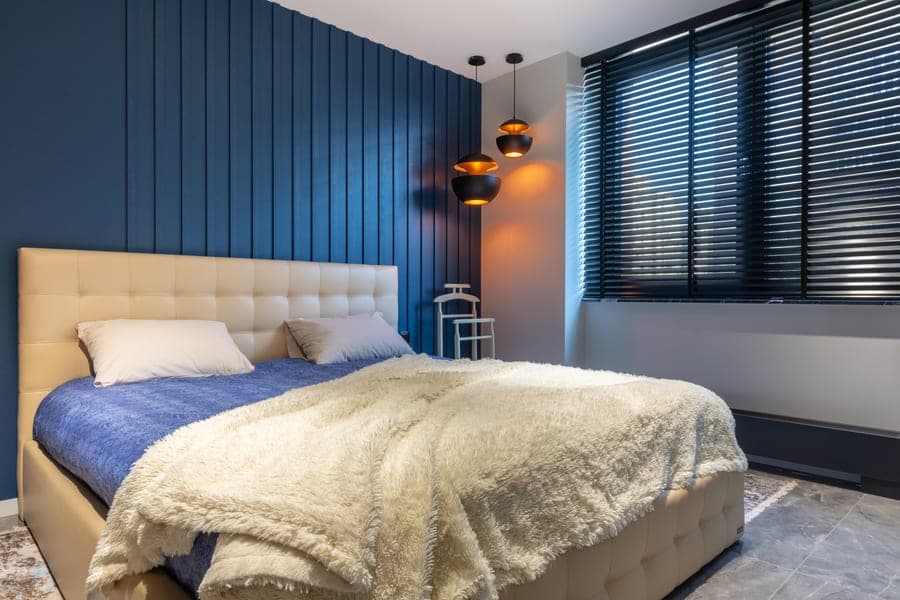
NICETOWN Blackout Curtains for Kids Room
NICETOWN
Triple-weave microfiber that measurably darkens a room, at a price that lets you do every window.
| Guardrail height above mattress | Not applicable |
|---|---|
| Stated weight limit (per bunk) | Not applicable |
| Manufacturer minimum age | Not published by the manufacturer |
| Mattress thickness ceiling | Not applicable |
| Materials / construction | Triple-weave microfiber with thermal insulating layer |
What works
- Blocks enough light to make a 9 p.m. sunset survivable
- Thermal layer also helps with a hot west-facing room
- Available in the full range of drop lengths
- Cheap enough to do the whole house
What doesn’t
- Panels alone leak light around the edges without a wrap-around rod
- Microfiber holds creases straight out of the packet
- Colors read darker in the room than on screen
The catch: Blackout panels on a straight rod always leak at the sides — that gap is where the morning gets in. Budget for a wrap-around or return-style rod at the same time or you will not get the result you bought them for.
A compromise between dark and fun
BGment Star Blackout Curtains
BGment
Room-darkening panels with a cut-out star pattern, for the child who will not accept a plain dark room.
| Guardrail height above mattress | Not applicable |
|---|---|
| Stated weight limit (per bunk) | Not applicable |
| Manufacturer minimum age | Not published by the manufacturer |
| Mattress thickness ceiling | Not applicable |
| Materials / construction | Room-darkening polyester with cut-out star detail |
What works
- Gets a reluctant child to accept a dark room
- Stars glow softly rather than casting real light
- Standard rod pocket and grommet options
- Priced like ordinary curtains
What doesn’t
- Room-darkening, not true blackout — the cut-outs pass light by design
- Less thermal benefit than a solid triple-weave panel
- The novelty wears off before the curtains do
The catch: Cut-outs and blackout are opposites. These darken a room well; they will not black it out, and if you are fighting a 5 a.m. summer sunrise you want the solid panel instead.
A lit route down from the top bunk
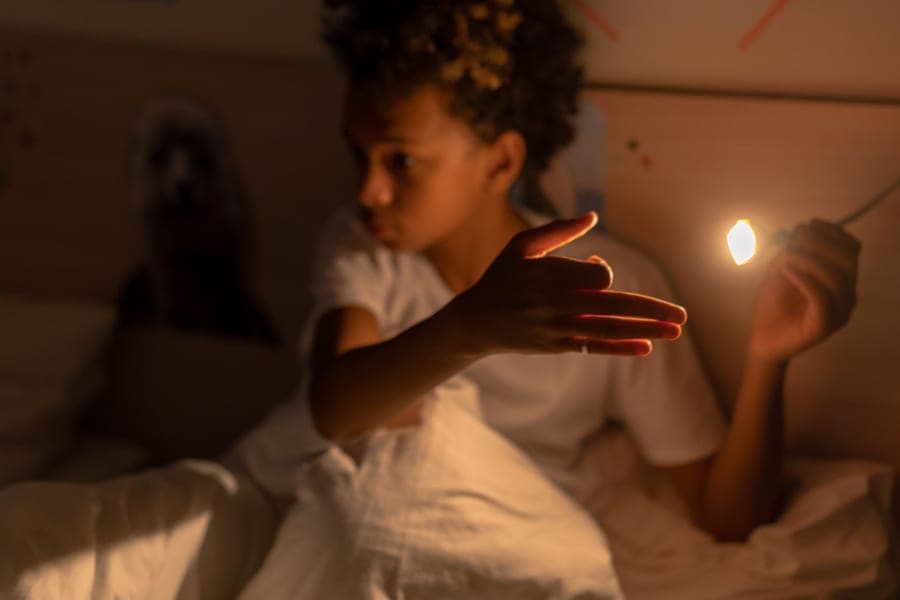
Rechargeable Motion-Sensor Night Light
Various (search by spec)
The cheapest safety upgrade for a bunk: light on the ladder before a foot goes on it.
| Guardrail height above mattress | Not applicable |
|---|---|
| Stated weight limit (per bunk) | Not applicable |
| Manufacturer minimum age | Not published by the manufacturer |
| Mattress thickness ceiling | Not applicable |
| Materials / construction | Rechargeable LED with adhesive or magnetic mount |
What works
- Lights the ladder and the floor at the bottom of it automatically
- Warm color temperature does not wake the room the way a white light does
- No wiring, so it mounts anywhere on the frame
- Costs less than almost any other change you can make to a bunk
What doesn’t
- Rechargeable means remembering to recharge it
- Adhesive mounts fail on textured or painted surfaces
- Motion sensors can trigger from the bed and wake the sleeper
The catch: This is a generic category rather than a single model — search on the specification (rechargeable, motion sensor, warm white) rather than on a brand, because the brands turn over constantly and the spec does not.
Questions parents actually ask
Do blackout curtains help kids sleep?
Where light is the cause — which is most early-morning waking and a lot of summer bedtime trouble — yes, substantially.
How dark should a child's bedroom be?
Dark enough that at midday with the curtains closed you can make out furniture but not read a book.
Why does my child wake up at 5am in summer?
Daylight. If waking time moves with the seasons, the window is the cause and the fix is a properly hung blackout panel.
Is a night light bad for sleep?
A warm, dim, low-placed one is fine and helps a child orient. A bright or cool-white one works against you.
Should kids get morning light?
Yes — bright light shortly after waking anchors the body clock. A dark bedroom works best alongside a bright morning.
Do blackout curtains make a room stuffy?
They can reduce air movement if they cover a window you would otherwise open. Air the room during the day, and a thermal panel will keep it cooler in summer anyway.
Sources
Read next
- Best blackout curtains for kids' rooms
The panels, and how to hang them so they work.
- Toddler bed transition troubleshooting
When it turns out not to be the light.
- Best kids bedding sets
The other environmental variable: temperature.
Back to Kids Bedding.