Kids Bedding
When can a toddler use a pillow and blanket?
Not in the first year - that one is settled guidance, not a preference. After the first birthday the answer shifts to the bed the child is in, and most families land on a pillow somewhere between 18 months and two years.

We earn a commission from qualifying purchases made through links on this page, at no extra cost to you. How this site is funded.
The short answer
Not during the first 12 months. The American Academy of Pediatrics’ safe-sleep guidance is to keep pillows, loose blankets, quilts, bumpers and soft toys out of an infant’s sleep space entirely — a firm, flat surface with a fitted sheet and nothing else.
After the first birthday the hard restriction lifts. In practice most families introduce a small, flat pillow and a light blanket somewhere between 18 months and two years, and the natural moment is the move out of the crib into a toddler bed — because the crib is the sleep space the guidance is written about.
Why the first year is different
The concern in the first twelve months is suffocation and re-breathing risk: an infant who cannot reliably move an object away from their face or reposition their own head, in a space containing something soft enough to conform around it. A pillow, a loose blanket and a crib bumper are all the same category of object from that point of view, which is why the guidance covers them together rather than separately.
That is also why the guidance is about the sleep space rather than the child’s preferences. A baby who seems to sleep better propped or covered is not evidence against it. If you want the primary source, the AAP’s own parent-facing guidance is linked in the sources at the foot of this page — it is worth reading directly rather than through a summary.
What to use instead, in the first year
A wearable blanket or a sleep sack. This is the standard answer and it is a good one: warmth that cannot ride up over the face, and nothing loose in the crib.
Room temperature rather than bedding. Most of the time the reason parents reach for a blanket is that the room is cold. Dressing the child one layer more than you would wear yourself, and treating the room as the variable, solves it without putting anything in the crib.
A fitted sheet that actually fits. This is the one bedding item that belongs in the crib, and the pocket depth matters. Toddler and crib fitted sheets are sold at 28 by 52 inches, and the better listings publish an 8-inch pocket — our bedding sizes guide has the figures.
| Age | Pillow | Blanket | Comforter |
|---|---|---|---|
| 0-12 months | No | No — use a sleep sack | No |
| 12-18 months | Not needed; no clear benefit | A light, breathable blanket if the room is cold | Generally not yet |
| 18 months - 2 years | A small, flat toddler pillow | Yes | A light toddler comforter |
| 2-4 years | Yes | Yes | Yes |
| Top bunk, any age 6+ | Yes | Yes, but it slides | Zip-together bedding works better |

What a toddler pillow should actually be
Small and flat. An adult pillow is too thick for a toddler’s proportions and pushes the head forward, and it is also simply a large soft object in a small bed. A dedicated toddler pillow is typically around 13 by 18 inches and shallow.
The sizing catch worth knowing: toddler bedding sets often include a pillow sham at a standard adult pillow size. One set we list ships a 19 by 26 inch sham — a standard pillow size, not a toddler one — so it will not fit the small flat pillow a toddler bed actually uses. You are effectively buying a three-piece set with a decorative extra, and the pillowcase you need is a separate purchase. Our toddler bedding roundup flags which sets ship a usable pillowcase.
The blanket that stays on is a different product
If the actual problem is a toddler who kicks everything onto the floor by midnight, a heavier blanket is the wrong fix. A comforter with elastic at the corners and a top sheet fitted at one end is the design answer. The trade is that a fitted comforter cannot be turned sideways or folded back — excellent for the first year in a toddler bed, less useful after.
Fiber matters more than weight
A toddler who is too warm wakes up, and a toddler who wakes up gets out of bed — which is how a bedding choice becomes a sleep problem. Cotton percale breathes; brushed microfiber is softer and traps heat. If your child runs hot, the softness that sells most toddler sets is working against you and a cotton percale set is the better buy even at a higher price. If the bedroom is genuinely cold, the reverse holds.
One listing in our registry is unusually frank about this: its comforter is described by the manufacturer as being for autumn and winter, with heating or air conditioning alongside it. That is a seasonal weight admitted in the specification, and it is the kind of detail worth looking for. Our cotton versus microfiber comparison covers the fiber question in full.
If the bed is a bunk or a loft
The age question is already answered for you: the AAP advises against any child under six on an upper bunk, so a toddler is not up there. What changes once a child is on a raised deck is that loose bedding stops working — a comforter slides off, hangs over the guardrail and ends up on the floor. Our top-bunk bedding guide covers the zip-together alternative.
A note that matters more than it sounds: a mattress topper is not a bedding decision on a bunk. It raises the sleeping surface and eats into the guardrail clearance the federal standard requires above it — see mattress thickness and guardrails.
Key takeaways
- No pillow, loose blanket, quilt or bumper in the sleep space for the first 12 months.
- Use a wearable blanket and manage room temperature instead.
- Most families introduce a small flat pillow between 18 months and two years.
- A toddler pillow is about 13 x 18 in. Check whether the set's pillowcase actually fits it.
- Fiber beats weight: a too-warm toddler wakes up, and then gets out of bed.
What we'd buy
Every pick below carries the same spec block, so you can compare the numbers across this page and every other page on the site.
A child who kicks the covers off because they are too warm
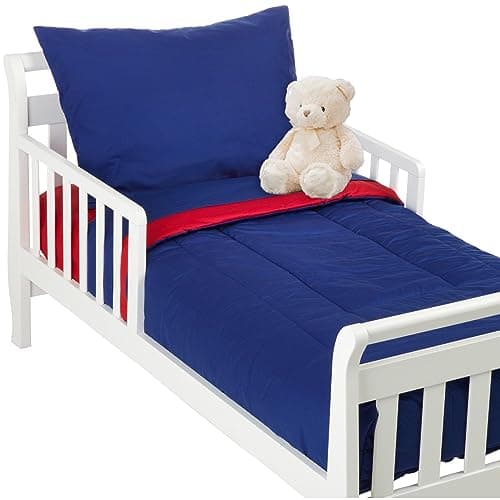
American Baby Company 100% Cotton Percale 4-Piece Toddler Bedding Set
American Baby Company
The only set here that is 100% cotton percale throughout, which is the fiber that keeps a hot sleeper asleep.
| Guardrail height above mattress | Not applicable |
|---|---|
| Stated weight limit (per bunk) | Not applicable |
| Manufacturer minimum age | Not published by the manufacturer |
| Mattress thickness ceiling | Fits standard 28 x 52 in toddler and crib mattresses |
| Materials / construction | 100% cotton percale throughout: comforter, top sheet, fitted sheet and pillow sham |
What works
- Cotton percale breathes in a way microfiber does not, which is the single biggest sleep-quality difference in this roundup
- Comforter and top sheet are both fitted at one end, so they stay on a bed that gets thrashed
- Published to fit a standard 28 x 52 in mattress, the same size as a standard crib
- Machine wash cold and tumble dry low, which is what a toddler bed actually needs
What doesn’t
- The fourth piece is a 19 x 26 in pillow sham, not a toddler pillowcase - that is a standard adult pillow size
- Roughly double the price of the microfiber sets
- Percale starts crisp rather than soft and needs a few washes to relax
- Cotton creases, and it takes longer to dry than microfiber when you need the bed back tonight
The catch: The 19 by 26 inch pillow sham is the catch, and it is worth understanding before you order. That is a standard pillow size, not a toddler one, so it will not fit the small flat pillow most toddler beds use. You are buying a three-piece set with a decorative extra, and the pillowcase you actually need is a separate purchase.
The second and third set every toddler bed needs
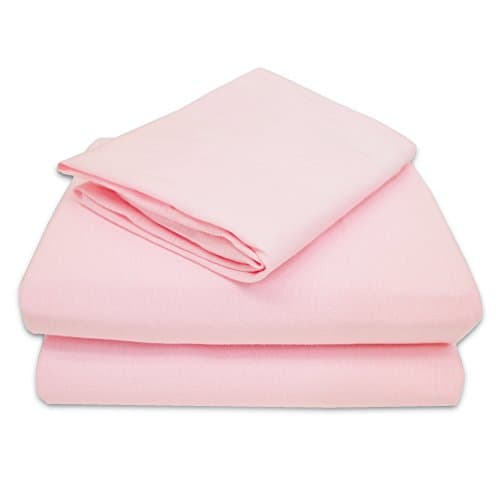
American Baby Company 3-Piece Cotton Jersey Toddler Sheet Set
American Baby Company
The spare set. Cotton jersey, three pieces, cheap enough that a 2 a.m. change is an inconvenience rather than a crisis.
| Guardrail height above mattress | Not applicable |
|---|---|
| Stated weight limit (per bunk) | Not applicable |
| Manufacturer minimum age | Not published by the manufacturer |
| Mattress thickness ceiling | Sized for all standard 28 x 52 in toddler and crib mattresses |
| Materials / construction | 100% natural cotton jersey knit |
What works
- Cheapest entry on the page by a wide margin, which is the point of a spare set
- Cotton jersey is stretchy, so the fitted sheet grips rather than bunching
- Contoured fitted sheet plus a flat sheet fitted at one end and a pillowcase
- Built for repeated washing, which is the only test toddler sheets face
What doesn’t
- Three pieces, not four - there is no comforter, so this is not a complete bedding set
- Jersey knit is warmer than percale and pills sooner
- Plain colors only, which a toddler with opinions may object to
- No fiber certification stated
The catch: This is a sheet set, not a bedding set, and we have included it deliberately. Every other entry here is a one-off purchase; this is the one you buy twice, because the real requirement in a toddler bed is being able to strip it at two in the morning and still have a made bed. Pair it with a comforter you already own.
A restless sleeper, and the parent who remakes the bed every morning
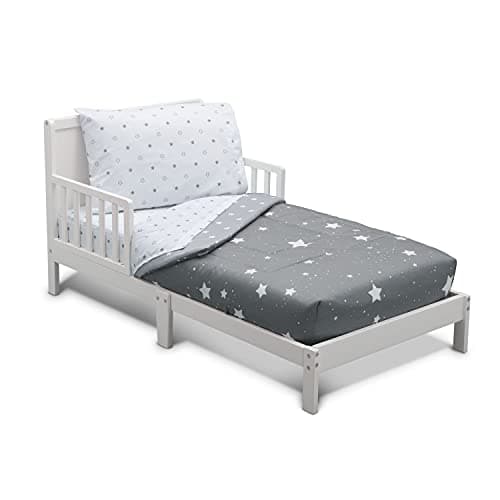
Delta Children 4-Piece Reversible Toddler Bedding Set
Delta Children
Elastic on the comforter and on the top sheet, which is the only real answer to a toddler who kicks everything onto the floor by midnight.
| Guardrail height above mattress | Not applicable |
|---|---|
| Stated weight limit (per bunk) | Not applicable |
| Manufacturer minimum age | Not published by the manufacturer |
| Mattress thickness ceiling | Fits a standard 27 x 52 in crib or toddler mattress |
| Materials / construction | Comforter 100% polyester with polyester fill; sheets and pillowcase 80% polyester, 20% cotton |
What works
- Elastic corners on both the comforter and the flat top sheet, so neither ends up on the floor
- Published piece dimensions: quilt 51.5 x 27 in, pillowcase 27.5 x 18.3 in
- Reversible comforter gives the bed two looks from one purchase
- A standard pillowcase size is included rather than a decorative sham
What doesn’t
- Polyester comforter with a poly-cotton sheet blend, so it sleeps warmer than the cotton sets
- The published fit is 27 x 52 in, an inch narrower than the 28 x 52 most other sets quote
- The fitted comforter means it only works one way up on the bed
- No fiber certification stated on the listing
The catch: The elastic that makes this set stay on is the same elastic that makes it inflexible. A comforter fitted at the corners cannot be turned sideways, folded back at the top or used on a different bed, and if your child wants it over their head it will fight them. Brilliant for the first year in a toddler bed, less useful afterward.
Questions parents actually ask
When can a baby sleep with a pillow?
Not in the first 12 months. The AAP’s safe-sleep guidance keeps pillows, loose blankets, quilts and bumpers out of an infant’s sleep space entirely — a firm flat surface with a fitted sheet and nothing else.
When can a toddler have a blanket?
After the first birthday the restriction lifts. Many families introduce a light, breathable blanket between 12 and 18 months, often at the move into a toddler bed. Before that, a wearable blanket does the same job without anything loose.
What size pillow does a toddler need?
Small and flat, typically around 13 by 18 inches. An adult pillow is too thick for a toddler’s proportions. Watch for bedding sets whose included sham is a standard adult size and will not fit it.
Does a toddler need a pillow at all?
No. There is no requirement and no clear benefit — plenty of children sleep well without one for years. It is a comfort choice once the first year has passed.
What bedding works for a toddler who kicks the covers off?
A comforter with elastic at the corners and a top sheet fitted at one end, rather than a heavier blanket. Also check temperature — a toddler who is too warm kicks the covers off and then wakes up.
Sources
Read next
- Best toddler bedding sets
Which sets ship a pillowcase that actually fits a toddler pillow.
- Cotton vs microfiber kids sheets
The fiber decision, which matters more than weight.
- When to move from crib to toddler bed
The transition that usually brings the pillow question with it.
- Bedding for a top bunk
What changes when the bed is raised.
Back to Kids Bedding.