Desks & Storage
Toy storage that actually gets used
Children put things away when putting them away is easier than not. Every working storage system in a child's room follows from that one sentence.

We earn a commission from qualifying purchases made through links on this page, at no extra cost to you. How this site is funded.
The short answer
Storage a child uses is low (they can reach it), open (no lid to lift, no door to open), and few (three categories, not twelve). A beautiful cabinet with sorted compartments is a system the adult maintains. A bin a four-year-old can carry to the mess is a system the child maintains.
Why most toy storage fails
It is too high. A shelf above a child’s reach is a shelf a parent manages, and it is also a shelf that invites climbing.
It has a lid. Every additional action between a child and putting something away halves the chance it happens. A lid is an action. A door is an action. A latch is two.
It is too finely sorted. Twelve labeled compartments require a child to make twelve decisions. Three bins require three, and three is achievable.
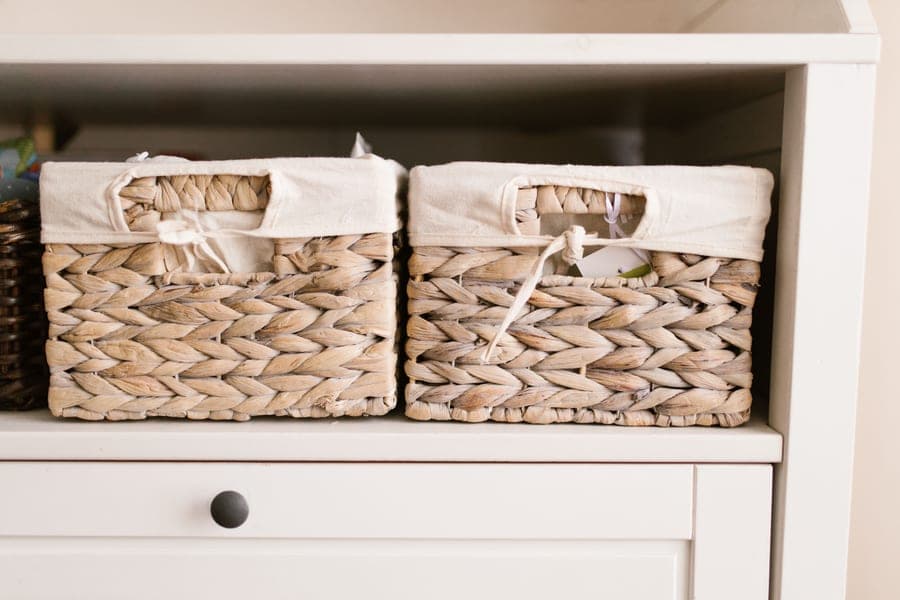
It is opaque. Fabric bins hide everything inside them, so toys go in and are never seen again. That is fine for a rotation system and bad for the toys a child actually plays with.
What works
| Type | Best for | Watch out for |
|---|---|---|
| Open bins at floor level | Everyday toys, blocks, cars | Opaque bins hide things |
| Front-facing book shelving | Picture books for pre-readers | Low capacity per foot |
| Rolling under-bed drawers | Bulk and out-of-rotation toys | Clearance under low bunks |
| Cube shelving with fabric bins | Sorting into 3-6 categories | Non-woven bins sag and tear |
| A single large toy box | Nothing, really | Everything ends up at the bottom |
| Closed cabinets | Craft supplies an adult manages | Children will not use them |
Anchor every tall unit, before you load it
Cube shelving, bookcases, dressers, anything with height. Furniture tip-over is one of the genuinely serious hazards in a child’s bedroom, and the failure mode is a child standing on the bottom shelf to reach the top one. The anti-tip strap in the box is not optional, and if a unit ships without one, buy it separately. Check the CPSC recalls database for second-hand units.
Under-bed storage, and the measurement people skip
The space under a bed is the cheapest storage in the room, and it is also the one where purchases most often go wrong.
Measure the clearance at the lowest point under the bed, not at the edge. Bed frames have rails, and the rail is lower than the slats. Most under-bed drawers are sized for a normal bed and are too tall for a bunk.
Under a low bunk there is frequently no usable clearance at all, which is a genuine trade against the standard-height version and is worth knowing before you buy the bed.
The bin material question
Non-woven polypropylene bins — the cheap collapsible ones — are effectively disposable. They sag within a year and fray within two, and then they go in a bin liner. Cotton canvas costs roughly double and lasts several times as long, which makes it the cheaper option over any real period.
Clear plastic bins are the most functional and the least attractive. They are the right answer for a playroom and a debatable one for a bedroom.
The rotation trick
The single most effective thing you can do to a child’s room is have fewer toys in it. Put two thirds in a box in a cupboard, swap the box every few weeks, and both the tidying problem and the “nothing to play with” problem get smaller at the same time.
This is also what makes a bedroom that doubles as a classroom workable, and it costs nothing.
Key takeaways
- Low, open, few. Every extra action between child and bin halves the chance it happens.
- Three categories, not twelve. Children can make three decisions.
- Anchor every tall unit to the wall before you load it.
- Measure under-bed clearance at the lowest point, not at the edge.
- Non-woven bins are disposable; cotton canvas costs double and lasts far longer.
What we'd buy
Every pick below carries the same spec block, so you can compare the numbers across this page and every other page on the site.
Toy chaos at floor level
Humble Crew Toy Storage Organizer with Shelf and 9 Bins
Humble Crew
Nine removable bins and an anti-tip kit in the box — the storage unit that publishes a per-shelf load and ships the anchor.
| Guardrail height above mattress | Not applicable |
|---|---|
| Stated weight limit (per bunk) | Each level supports up to 20 lb |
| Manufacturer minimum age | Not published by the manufacturer |
| Mattress thickness ceiling | Not applicable |
| Materials / construction | Engineered wood frame with reinforced steel dowels; BPA- and phthalate-free bins; wall anchor anti-tip kit included |
What works
- Publishes a per-level weight limit, which storage furniture rarely does
- Anti-tip wall anchor kit is in the box
- Bins lift out, so tidying is a child-sized job
- BPA- and phthalate-free bins
What doesn’t
- 20 lb per level is reached fast by wooden blocks or die-cast cars
- Bins hide what is inside, so things get lost in them
- Engineered wood frame flexes if it is not anchored
The catch: 20 lb per level is not a lot. A single bin of wooden blocks can get close, and overloading an engineered-wood frame is exactly how it starts to lean — which is also why the anchor is in the box.
Cube shelving and under-bed storage
Collapsible Fabric Storage Cubes
Various (search by size)
The cheapest storage that actually gets used, because a child can carry one to where the mess is.
| Guardrail height above mattress | Not applicable |
|---|---|
| Stated weight limit (per bunk) | Not published by the manufacturer |
| Manufacturer minimum age | Not published by the manufacturer |
| Mattress thickness ceiling | Not applicable |
| Materials / construction | Non-woven fabric or cotton canvas with carry handles |
What works
- Light enough for a small child to lift and carry full
- Collapses flat when not needed
- Fits standard 11 in cube shelving and most under-bed gaps
- Costs very little per bin
What doesn’t
- Non-woven fabric bins sag and tear within a couple of years
- No published load rating anywhere in the category
- Opaque, so everything gets forgotten in them
The catch: Non-woven bins are disposable — cheap, and they sag, fray and end up in a bin liner. Cotton canvas costs roughly double and lasts several times as long, which makes it the cheaper option over any real period.
Bunk beds and any bed with clearance
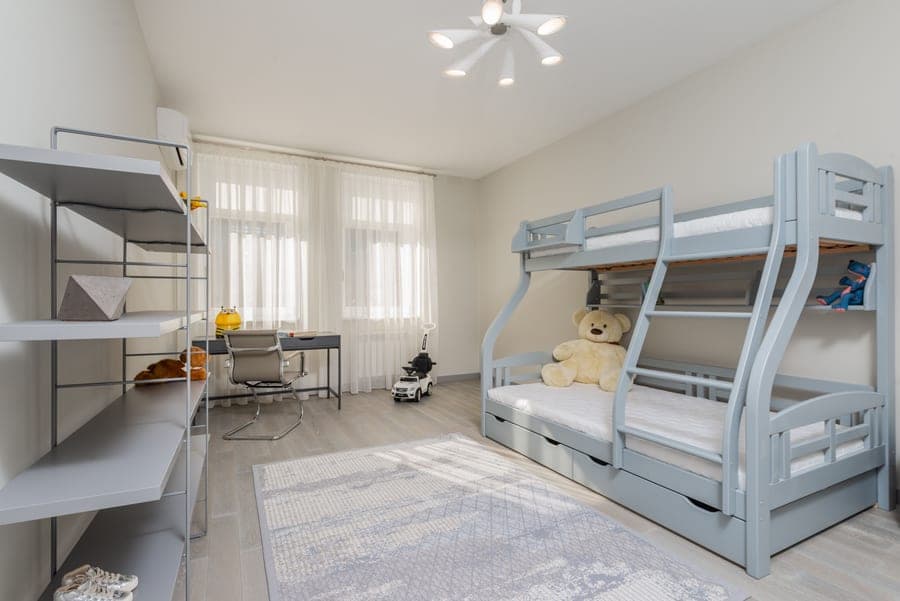
Rolling Under-Bed Storage Drawers
Various (search by height)
Turns the dead space under a bottom bunk into the drawers the room does not otherwise have.
| Guardrail height above mattress | Not applicable |
|---|---|
| Stated weight limit (per bunk) | Not published by the manufacturer |
| Manufacturer minimum age | Not published by the manufacturer |
| Mattress thickness ceiling | Not applicable |
| Materials / construction | Plastic or fabric body on low-profile casters |
What works
- Uses space that is otherwise completely wasted
- Wheels mean a child can pull it out without help
- Lower cost per unit of storage than any piece of furniture
- No assembly to speak of
What doesn’t
- Clearance under a low bunk is often less than the drawers need
- Casters catch on carpet and thick rugs
- Plastic bodies crack at the corners with rough handling
The catch: Measure the clearance first, and measure it under the bed at its lowest point, not at the edge. Low bunks in particular often have less room under them than a standard under-bed drawer needs.
Pre-readers and early readers
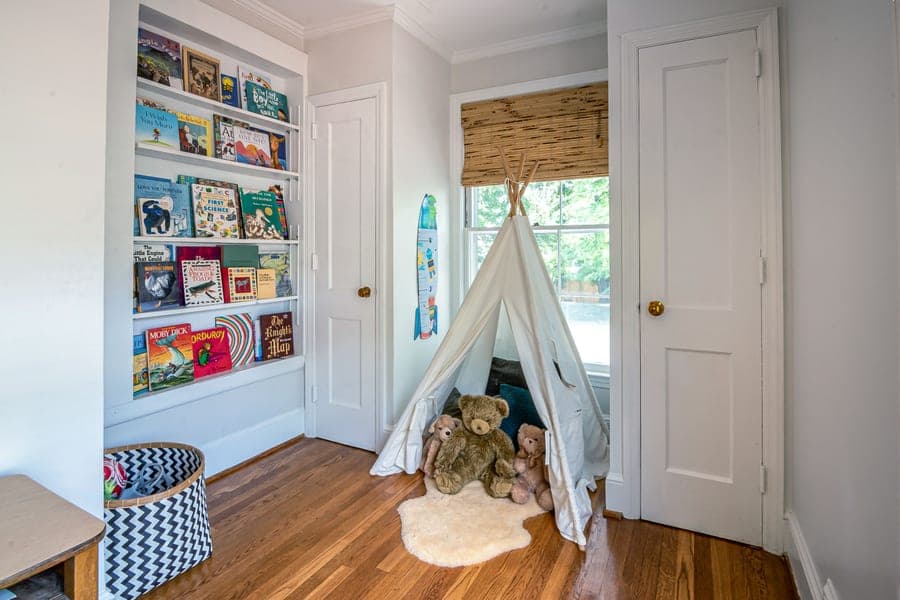
Humble Crew Kids Bookshelf, 6-Tier
Humble Crew
Front-facing tiers at toddler height, which is the difference between books being read and books being shelved.
| Guardrail height above mattress | Not applicable |
|---|---|
| Stated weight limit (per bunk) | Not published by the manufacturer |
| Manufacturer minimum age | Not published by the manufacturer |
| Mattress thickness ceiling | Not applicable |
| Materials / construction | Engineered wood frame with reinforced steel dowels |
What works
- Front-facing display means a child picks by cover, not by spine
- Low enough for a two-year-old to serve themselves
- Narrow footprint against a wall
- Holds a genuinely useful number of picture books
What doesn’t
- Front-facing storage is inefficient — it holds fewer books per foot
- Outgrown once a child reads chapter books
- Engineered wood, not solid
The catch: Front-facing shelving trades capacity for visibility. It is the right trade for a three-year-old and the wrong one for a nine-year-old with a hundred books.
Questions parents actually ask
What is the best toy storage for kids?
Low, open bins at floor level, sorted into three or four broad categories rather than many specific ones.
Why won't my child put their toys away?
Usually because the storage requires too many steps or too many decisions. Fewer bins, no lids, at their height.
Do storage units need to be anchored to the wall?
Every tall one, before you load it. Tip-over is a serious and preventable hazard in a child’s bedroom.
What fits under a bunk bed for storage?
Rolling drawers, if there is clearance. Measure at the lowest point under the bed — low bunks often have none.
Are fabric storage bins any good?
Cotton canvas, yes. Non-woven polypropylene sags and frays within a couple of years and costs about half as much.
Is a toy box a good idea?
A single deep box means everything ends up at the bottom and nothing gets found. Several shallow bins work far better.
Sources
Read next
- Best kids bookshelves
The same principle, applied to books.
- Best bunk beds for small rooms
Where under-bed clearance becomes the deciding factor.
- What fits under a loft bed
Measured clearances for the space below a deck.
Back to Desks & Storage.