Bunk Beds
The best bunk beds for small rooms
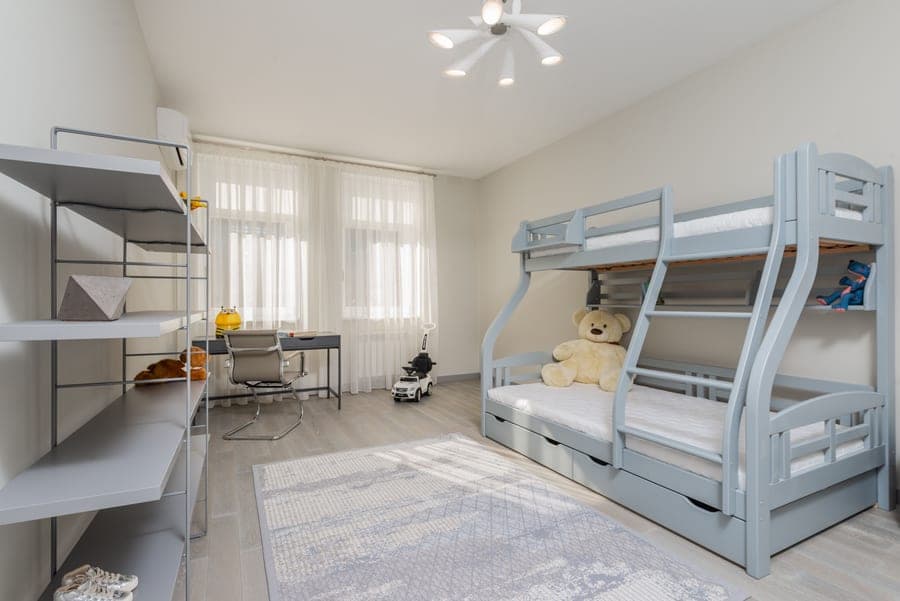
A bunk bed saves floor space only if you pick the right one. A staircase model can cancel out every inch you were trying to save.
We earn a commission from qualifying purchases made through links on this page, at no extra cost to you. How this site is funded.
Quick picks
The short version. Tap any row for the full write-up and its spec block.
| # | Product | Best for | Score | Price |
|---|---|---|---|---|
| 1 |  DHP Miles Low Metal Bunk Bed, Twin Over Twin Publishes its guardrail height and both weight limits, which is more than most metal frames manage, and the bottom bunk sits on the floor. | Small rooms on a budget | 8.0 | |
| 2 | Harper & Bright Designs Bunk Bed with Storage Staircase A staircase whose treads are drawers — genuinely the best storage-per-square-foot answer in a small shared room. | Small rooms with nowhere to put clothes | 7.2 | |
| 3 |  Harper & Bright Designs Twin Over Twin Bunk Bed with Trundle Three sleeping surfaces in a twin-over-twin footprint, which is the cheapest way to solve a sleepover problem. | Rooms that need a third bed occasionally | 6.9 | |
| 4 | Rolling Under-Bed Storage Drawers Turns the dead space under a bottom bunk into the drawers the room does not otherwise have. | Bunk beds and any bed with clearance | 7.8 |
How we chose
We are a small publisher, not a testing lab. We don’t buy, assemble or sleep in the beds we write about, and we won’t pretend otherwise. What we do instead is read the published specifications and check them against the rules that actually govern children’s beds in the United States: the federal standard for children’s bunk beds (16 CFR Part 1513), the ASTM F1427 requirements it incorporates, and the American Academy of Pediatrics’ guidance on upper-bunk age. Where a manufacturer publishes no number, we write “not published by the manufacturer” rather than guess — that absence is itself worth knowing. We read owner feedback at volume for the things specs can’t tell you, and we label it as signal, not proof.
We earn a commission when you buy through our links. It never changes an ordering. Our full editorial policy.
The whole argument for a bunk bed in a small room is that two beds occupy one bed’s footprint. That is true of a plain twin-over-twin bunk and progressively less true of everything else, which is worth knowing before you buy the one with the staircase.
The footprints, honestly
| Configuration | Approximate footprint | Notes |
|---|---|---|
| Twin over twin, ladder | ~42 x 80 in | The baseline. One bed's floor area, two beds. |
| Twin over full, ladder | ~55 x 80 in | About a foot wider. That foot is often the walkway. |
| Twin over twin, staircase | ~42 x 95 in | Roughly 15-18 in longer for the stairs. |
| Twin over twin + trundle | ~42 x 80 in closed | Needs clear floor beside it when open. |
| Two separate twins | ~76 x 80 in | What you are comparing against. |
Measure your room before you read any further. The number that matters is not the bed’s footprint, it is what is left over — and a bedroom needs a clear route from the door to the bed, and space for a drawer to open.
The staircase trap
Staircase bunks are genuinely better to climb and they are frequently the wrong choice in the room that most needs a bunk bed. Fifteen to eighteen inches along one end is a lot in a small bedroom, and it is fixed to one side, so it also decides your layout. If the room is tight, a ladder plus a lit ladder solves the same problem for a fraction of the floor area.
Go up, not out
The space in a small bedroom that is genuinely free is vertical. Two ways to use it:
Under the bottom bunk. A standard-height bunk usually leaves eight to twelve inches of clearance underneath, which takes rolling drawers. Measure at the lowest point of the frame, not at the edge — most under-bed drawers are sized for a normal bed and are too tall for a bunk.
Above and beside. Wall shelves at top-bunk height replace the bedside table that the room has no space for. Anchor anything you hang, and keep it out of sitting-up range.
What to avoid in a small room
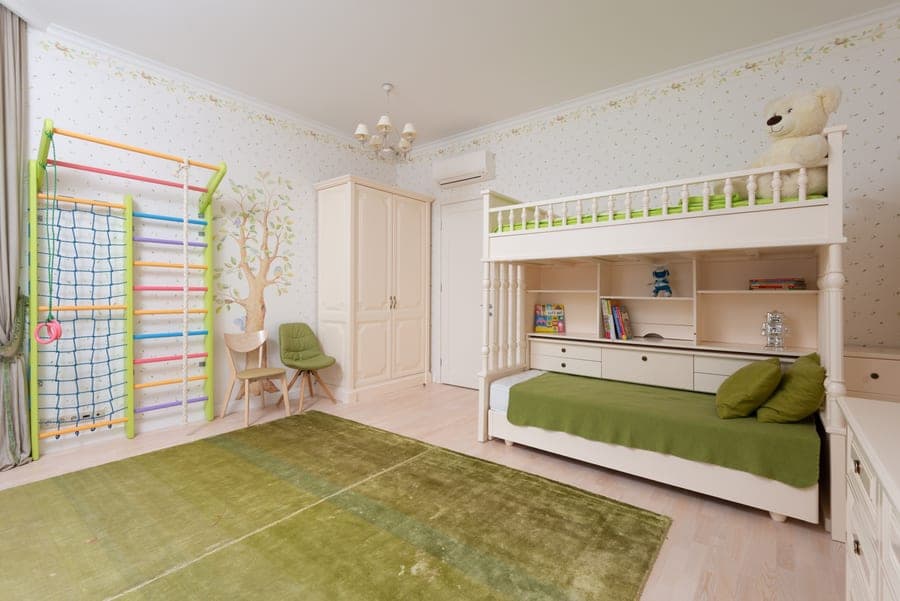
- Twin over full, unless you genuinely need the full. The extra foot of width is usually taken from the only walkway.
- Built-in desks under a bunk. They sound efficient and produce a bed you cannot get into and a desk with no light.
- Slides. They are wonderful and they need three feet of clear floor to land in.
- Anything with a fixed side. In a tight room, a reversible ladder is worth real money, because it lets you decide the layout after you see the bed in the space.
The alternative worth considering
If the room holds one child rather than two, a loft bed frees more floor than a bunk does, because it frees the whole area under the bed rather than filling it with a second mattress. That is a different product for a different problem, and in a genuinely small single bedroom it is usually the better one. Our bunk vs loft comparison settles which applies to you.
The picks, in full
Every pick below carries the same spec block, so you can compare the numbers across this page and every other page on the site.
#1 · Small rooms on a budget
DHP Miles Low Metal Bunk Bed, Twin Over Twin
DHP
Publishes its guardrail height and both weight limits, which is more than most metal frames manage, and the bottom bunk sits on the floor.
| Guardrail height above mattress | 12.5 in above the deck |
|---|---|
| Stated weight limit (per bunk) | 200 lb top bunk / 250 lb bottom bunk |
| Manufacturer minimum age | Not published by the manufacturer |
| Mattress thickness ceiling | 6 in (the frame is specified for 6 in mattresses) |
| Materials / construction | Powder-coated metal frame with metal slats, no box spring required |
What works
- Publishes a guardrail height and separate top and bottom weight limits
- Metal slats support the mattress without a box spring
- Low profile with the bottom bunk close to the floor
- One of the least expensive bunks that still publishes real numbers
What doesn’t
- 200 lb top-bunk limit is half what the solid-wood options state
- Metal frames are more prone to creaking than pine as fasteners loosen
- The 6 in mattress specification is tight for an older child
The catch: The 200 lb top-bunk limit is the one to watch. It is fine for a child and it is not fine for a parent who climbs up to read at bedtime, which is a thing parents do without thinking about the sticker.
#2 · Small rooms with nowhere to put clothes
Harper & Bright Designs Bunk Bed with Storage Staircase
Harper & Bright Designs
A staircase whose treads are drawers — genuinely the best storage-per-square-foot answer in a small shared room.
| Guardrail height above mattress | Not published by the manufacturer |
|---|---|
| Stated weight limit (per bunk) | Not published by the manufacturer |
| Manufacturer minimum age | Not published by the manufacturer |
| Mattress thickness ceiling | Not published by the manufacturer |
| Materials / construction | Solid wood and engineered wood with drawer staircase |
What works
- Staircase drawers replace a dresser in a room that has no space for one
- Stairs are far easier to climb at night than a ladder
- Handrail on the staircase side
- Stronger value than buying a bunk and a dresser separately
What doesn’t
- No published guardrail, weight or mattress figures
- The staircase is fixed to one side, so room layout is decided for you
- Drawer glides are the first thing to wear at this price point
The catch: The staircase is fixed left or right depending on the variant you order, and it cannot be reversed after the fact the way a ladder can. Work out which wall the bed goes against before you choose, not after.
#3 · Rooms that need a third bed occasionally
Harper & Bright Designs Twin Over Twin Bunk Bed with Trundle
Harper & Bright Designs
Three sleeping surfaces in a twin-over-twin footprint, which is the cheapest way to solve a sleepover problem.
| Guardrail height above mattress | Not published by the manufacturer |
|---|---|
| Stated weight limit (per bunk) | Not published by the manufacturer |
| Manufacturer minimum age | Not published by the manufacturer |
| Mattress thickness ceiling | Not published by the manufacturer |
| Materials / construction | Solid wood frame with slat support |
What works
- The trundle adds a third bed without adding a footprint
- Solid wood rather than the particleboard common at this price
- Trundle rolls away completely when not in use
- Priced below the solid-pine specialists
What doesn’t
- None of the four safety numbers we track is published for this model
- Trundle mattresses have to be thin to clear the bottom bunk
- Assembly is long — three beds' worth of hardware
The catch: The listing is quiet on every spec that matters for a top bunk. That is common at this price and it is still a real cost: you are buying a bed whose compliance you have to verify yourself with a tape measure rather than read off the page.
#4 · Bunk beds and any bed with clearance
Rolling Under-Bed Storage Drawers
Various (search by height)
Turns the dead space under a bottom bunk into the drawers the room does not otherwise have.
| Guardrail height above mattress | Not applicable |
|---|---|
| Stated weight limit (per bunk) | Not published by the manufacturer |
| Manufacturer minimum age | Not published by the manufacturer |
| Mattress thickness ceiling | Not applicable |
| Materials / construction | Plastic or fabric body on low-profile casters |
What works
- Uses space that is otherwise completely wasted
- Wheels mean a child can pull it out without help
- Lower cost per unit of storage than any piece of furniture
- No assembly to speak of
What doesn’t
- Clearance under a low bunk is often less than the drawers need
- Casters catch on carpet and thick rugs
- Plastic bodies crack at the corners with rough handling
The catch: Measure the clearance first, and measure it under the bed at its lowest point, not at the edge. Low bunks in particular often have less room under them than a standard under-bed drawer needs.
Questions parents actually ask
What is the best bunk bed for a small room?
A plain twin-over-twin with a ladder and a reversible configuration. Every added feature — stairs, a full bottom bunk, a slide — costs floor area, which is the thing you were trying to save.
How much space do you need around a bunk bed?
Enough to walk past it and enough to stand at the ladder. As a rule, keep at least 24 inches clear on the access side and leave the space beside the ladder free of furniture.
Do bunk beds with stairs take up more space?
Yes — typically 15 to 18 inches more along one end. In a small room that is frequently the difference between a bunk that fits and one that does not.
Can you put a bunk bed under a sloped ceiling?
Sometimes, if the high side has enough clearance for the top sleeper to sit up. A low bunk is usually the better answer under a slope.
Are bunk beds with storage drawers worth it?
In a small room, usually yes — built-in drawers replace a dresser the room has no space for. Check that there is clearance in front of the bed to open them.
Sources
Read next
- Bunk bed vs loft bed
For one child in a small room, a loft usually wins.
- Stairs vs ladder
The floor-space cost of an easier climb, measured.
- Toy storage that works
What actually fits under a bunk, and what children put back.
Back to Bunk Beds.