Bunk Beds
Bunk bed vs loft bed
These solve two different problems and get shopped as if they were the same product. One question decides it: how many children sleep in this room?
We earn a commission from qualifying purchases made through links on this page, at no extra cost to you. How this site is funded.
How we chose
We are a small publisher, not a testing lab. We don’t buy, assemble or sleep in the beds we write about, and we won’t pretend otherwise. What we do instead is read the published specifications and check them against the rules that actually govern children’s beds in the United States: the federal standard for children’s bunk beds (16 CFR Part 1513), the ASTM F1427 requirements it incorporates, and the American Academy of Pediatrics’ guidance on upper-bunk age. Where a manufacturer publishes no number, we write “not published by the manufacturer” rather than guess — that absence is itself worth knowing. We read owner feedback at volume for the things specs can’t tell you, and we label it as signal, not proof.
We earn a commission when you buy through our links. It never changes an ordering. Our full editorial policy.
Decide for me
Two children share the room → bunk bed. It is the only one of the two that sleeps two people, and it does it in one bed’s footprint.
One child, small room → loft bed. It frees the entire area under the bed rather than filling it with a second mattress, which is more floor than a bunk gives you.
One child, plenty of room → neither, probably. A normal bed at floor level is easier to make, easier to get into and has no age restriction. Raised beds solve constraints; if you have no constraint, do not buy one.
The specs side by side
| Bunk bed | Loft bed | |
|---|---|---|
| Sleeps | Two | One |
| Floor freed | None — the bottom bunk fills it | The whole area under the deck |
| Ceiling needed | ~7 ft for a standard bunk | 8 ft+ for a high loft; less for a low loft |
| Age guidance on the raised deck | AAP: no child under 6 | Same reasoning, and decks are often higher |
| Guardrail requirement | Yes, on the upper bunk | Yes, on the deck |
| Typical price | Lower per sleeping surface | Higher per sleeping surface |
| Resale / longevity | Useful as long as two children share | Useful as long as the child wants a desk under a bed |
Safety
Effectively identical, and people are frequently surprised by that. A loft deck is the upper bunk of a bunk bed with nothing underneath it: the same five-inch guardrail clearance applies, the same mattress thickness arithmetic applies, and the AAP’s reasoning about coordination applies just as well.
If anything the loft deserves slightly more caution, because high lofts put the deck higher than a standard bunk does, and because there is no bottom bunk to break a fall or to serve as an intermediate step.
Durability
A bunk bed is a more rigid structure — the bottom bunk ties the four posts together at two heights, which is why bunks generally feel more solid than lofts of the same material. Lofts rely more on diagonal bracing, and a loft that develops a wobble usually has a loose brace rather than a loose leg.
Cost
Per sleeping surface, a bunk is cheaper: you are buying one frame and getting two beds. A plain loft costs roughly what a plain bunk costs and sleeps half as many people. What a loft buys instead is the floor, and whether that is worth the same money depends entirely on how short of floor you are.
Space
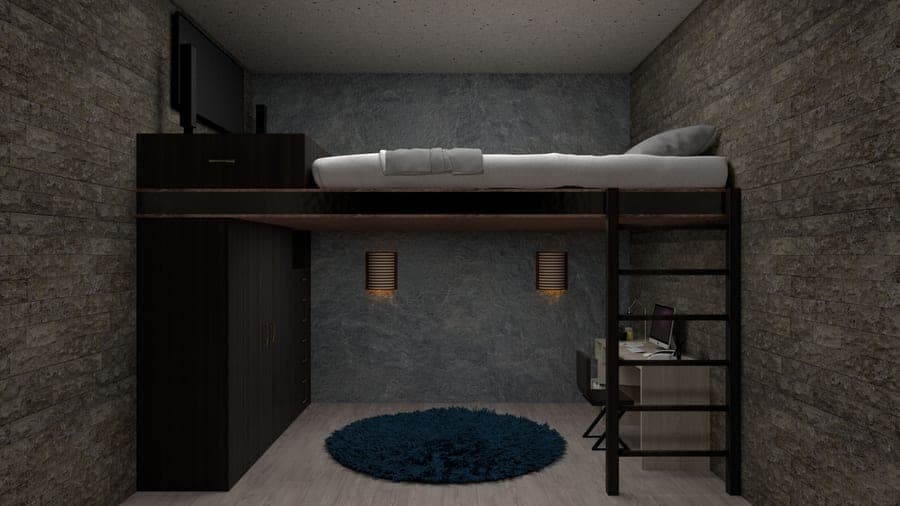
This is where the real distinction lives. A bunk bed does not free any floor — it stacks two beds into one bed’s area, which is a huge gain if you needed two beds and no gain at all if you needed one. A loft frees roughly nineteen square feet for a twin, and that space can become a desk, a play area or storage.
The corollary: a bunk bed in a single child’s room is usually the wrong purchase. Parents buy them for sleepovers, and then a mattress sits unused underneath for six years.
Who should choose neither
A family with a child under six and no second child. Neither product’s raised deck is appropriate yet, and a bunk bought now will have one mattress in it until the child is old enough to move up — at which point you may well want a different bed anyway. A normal twin with a rail is the honest answer, and it is cheaper.
What we'd buy
Every pick below carries the same spec block, so you can compare the numbers across this page and every other page on the site.
Younger siblings sharing a room
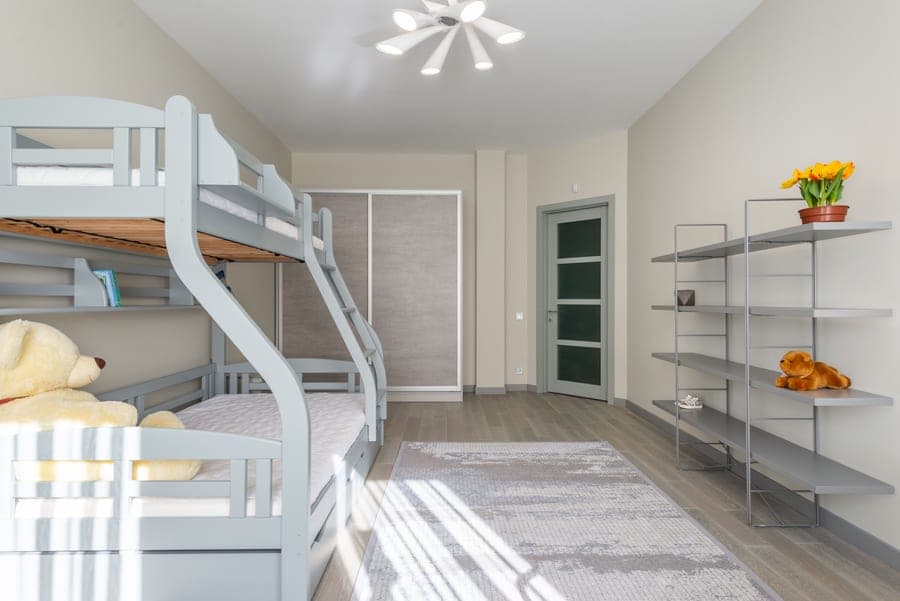
Max & Lily Twin Over Twin Low Bunk Bed
Max & Lily
The clearest published safety numbers of any bunk we looked at, on a frame low enough that a fall is a short one.
| Guardrail height above mattress | 14 in above the deck |
|---|---|
| Stated weight limit (per bunk) | 400 lb per sleeping surface |
| Manufacturer minimum age | Not published by the manufacturer |
| Mattress thickness ceiling | 8 in maximum (5 in recommended) |
| Materials / construction | Solid New Zealand pine, GREENGUARD Gold certified finish |
What works
- Publishes a guardrail height, a weight limit and a mattress ceiling — most brands publish one of the three
- 400 lb per surface is the highest stated capacity in this roundup, and it holds through the teen years
- Low overall height means the top deck sits well under a standard bunk
- Reversible, removable ladder with grooved treads and rounded edges
What doesn’t
- The 8 in mattress ceiling rules out most plush mattresses
- Solid pine is heavy to move once assembled
- No minimum age published, so the AAP's under-6 guidance is the only age rule you get
The catch: That 8 in ceiling is not a suggestion. Put a 10 in mattress on the top deck and the 14 in rail drops to 4 in of clearance, which is below the federal 5 in minimum. The bed stops being compliant and nobody tells you.
Homework space in a room with no room for a desk
Max & Lily Twin Low Loft Bed with Pull-Out Desk
Max & Lily
The pull-out desk solves the clearance problem that defeats most low lofts — it slides away when nobody is working.
| Guardrail height above mattress | Not published by the manufacturer |
|---|---|
| Stated weight limit (per bunk) | 400 lb |
| Manufacturer minimum age | Not published by the manufacturer |
| Mattress thickness ceiling | Not published by the manufacturer |
| Materials / construction | Solid New Zealand pine, GREENGUARD Gold certified finish |
What works
- Desk surface measures 41 in wide by 22.75 in deep at 34.25 in high
- Pulls away completely, so the space underneath is not permanently a desk
- Desk and ladder can both be assembled on either side
- Same 400 lb frame rating as the plain low loft
What doesn’t
- 34.25 in is a tall work surface for a young child without a raised chair
- Pull-out mechanism is one more thing to loosen over time
- Guardrail height is not published
The catch: That 34.25 in desk height is adult counter height, not kid desk height. A seven-year-old will be working with their shoulders up around their ears unless you pair it with a properly raised seat and a footrest.
Questions parents actually ask
Is a loft bed or a bunk bed better?
Neither is better in general. A bunk sleeps two in one footprint; a loft frees the floor under one bed. The number of children sharing the room decides it.
Can you convert a bunk bed into a loft bed?
Some bunk beds separate into two standalone beds, which is not the same thing. Very few convert to a loft, and improvising one by removing the lower bunk compromises the frame’s rigidity.
Are loft beds safe for kids?
Under the same conditions as a top bunk: a compliant guardrail, a mattress thin enough to leave five inches of it, and a child old enough per the AAP’s guidance. See loft bed age and safety.
Which is cheaper, a bunk bed or a loft bed?
A bunk is cheaper per sleeping surface because one frame gives two beds. A plain loft and a plain bunk cost roughly the same as objects.
Do loft beds need higher ceilings than bunk beds?
High lofts generally do, because the deck sits higher to make room for a desk underneath. Low lofts need less headroom than a standard bunk.
Sources
Read next
- Best bunk beds for kids
If the answer is a bunk, start here.
- Best loft beds for kids
If the answer is a loft, start here.
- Loft bed ceiling height
The arithmetic that decides whether a loft fits your room.
Back to Bunk Beds.