Loft Beds
Loft bed vs a separate desk and bed
The loft wins on square feet and loses on almost everything else. Whether that trade is worth it depends on how short of floor you really are.
We earn a commission from qualifying purchases made through links on this page, at no extra cost to you. How this site is funded.
How we chose
We are a small publisher, not a testing lab. We don’t buy, assemble or sleep in the beds we write about, and we won’t pretend otherwise. What we do instead is read the published specifications and check them against the rules that actually govern children’s beds in the United States: the federal standard for children’s bunk beds (16 CFR Part 1513), the ASTM F1427 requirements it incorporates, and the American Academy of Pediatrics’ guidance on upper-bunk age. Where a manufacturer publishes no number, we write “not published by the manufacturer” rather than guess — that absence is itself worth knowing. We read owner feedback at volume for the things specs can’t tell you, and we label it as signal, not proof.
We earn a commission when you buy through our links. It never changes an ordering. Our full editorial policy.
Decide for me
Loft bed if the room is genuinely small — under about 90 square feet — and the child is old enough for a raised deck. It is the only way to get a bed and a desk into a room that has space for one of them.
Separate desk and bed if the room can take both, if the child is under about eight, or if the room has to change over the next few years. Two pieces of furniture can be rearranged; a loft cannot.
A low loft with a play space below plus a desk elsewhere is the compromise most families actually end up wanting, and it is rarely presented as an option.
Space, which is the only argument for the loft
A twin loft frees roughly nineteen square feet. In a 90-square-foot bedroom that is over a fifth of the room, and it is the difference between a bedroom with a desk and a bedroom with a bed in it. In a 140-square-foot bedroom it is a nice-to-have.
Measure before you decide. Floor area minus the bed footprint is the number, and if what is left already fits a desk and a chair, the loft is solving a problem you do not have.
Flexibility
This is the loft’s real cost and it gets almost no attention. A loft bed decides the layout of the room permanently: the bed is here, the desk is under it, and nothing can move. A separate bed and desk can be rearranged when the child changes, when a sibling arrives, or when the desk turns out to be in the wrong light.
Children’s rooms change more than adults’ do. A room that was right at seven is frequently wrong at eleven.
Ergonomics
A separate desk wins, straightforwardly. You choose the height, the chair and the lighting independently, rather than accepting whatever the bed frame dictated. A built-in loft desk at 34 inches with the deck as a ceiling and no task light is a worse place to do homework than a plain desk by a window.
Cost
| Loft with built-in desk | Separate bed and desk | |
|---|---|---|
| Bed | Included | Twin frame |
| Desk | Included | Bought separately |
| Chair | Bought separately | Bought separately |
| Task lighting | Essential extra | Often unnecessary |
| Floor area used | One bed's footprint | Bed plus desk footprint |
| Rearrangeable | No | Yes |
The totals land closer than people expect. A solid-pine high loft with a desk costs roughly what a good twin frame plus a good adjustable desk costs, and the loft still needs a chair and a light.
Age
The loft has an age floor and the separate arrangement does not. If your child is six, a separate desk and a normal bed works today; a loft is a purchase for a room they will have in two years. Some families are happy buying ahead. Many discover the bed sits unused on top while the child sleeps on a mattress on the floor beneath it.
Who should choose neither
A child who does not do homework at a desk. Plenty of primary-school children work at the kitchen table, and a desk in the bedroom becomes a shelf. If that is your household, buy the bed you actually want — a plain twin, or a low bunk if a sibling is sharing — and put the money into storage instead.
What we'd buy
Every pick below carries the same spec block, so you can compare the numbers across this page and every other page on the site.
Homework space in a room with no room for a desk
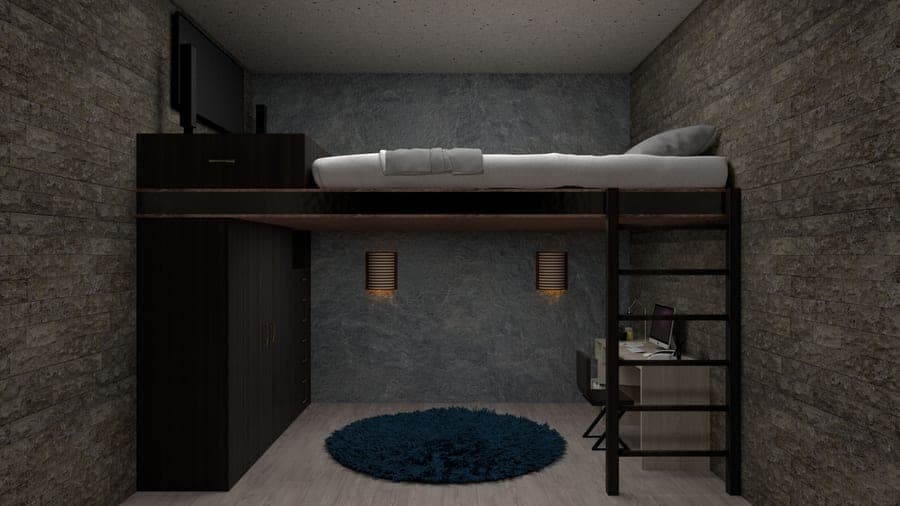
Max & Lily Twin Low Loft Bed with Pull-Out Desk
Max & Lily
The pull-out desk solves the clearance problem that defeats most low lofts — it slides away when nobody is working.
| Guardrail height above mattress | Not published by the manufacturer |
|---|---|
| Stated weight limit (per bunk) | 400 lb |
| Manufacturer minimum age | Not published by the manufacturer |
| Mattress thickness ceiling | Not published by the manufacturer |
| Materials / construction | Solid New Zealand pine, GREENGUARD Gold certified finish |
What works
- Desk surface measures 41 in wide by 22.75 in deep at 34.25 in high
- Pulls away completely, so the space underneath is not permanently a desk
- Desk and ladder can both be assembled on either side
- Same 400 lb frame rating as the plain low loft
What doesn’t
- 34.25 in is a tall work surface for a young child without a raised chair
- Pull-out mechanism is one more thing to loosen over time
- Guardrail height is not published
The catch: That 34.25 in desk height is adult counter height, not kid desk height. A seven-year-old will be working with their shoulders up around their ears unless you pair it with a properly raised seat and a footrest.
Primary-school homework
Solid Wood Kids Desk with Drawer
Various (search by size)
A plain wooden desk at a child's height, which is all a seven-year-old doing homework actually needs.

| Guardrail height above mattress | Not applicable |
|---|---|
| Stated weight limit (per bunk) | Not published by the manufacturer |
| Manufacturer minimum age | Not published by the manufacturer |
| Mattress thickness ceiling | Not applicable |
| Materials / construction | Solid or engineered wood with a drawer |
What works
- Correct height for a young child out of the box
- Nothing electrical or mechanical to fail
- A drawer keeps the surface clear
- Inexpensive enough to replace when outgrown
What doesn’t
- Fixed height, so it is outgrown in a few years
- Weight limits are rarely published in this category
- Small surface once a laptop is on it
The catch: A fixed-height desk is a three-to-four-year purchase. That is fine if you buy it knowing that, and frustrating if you bought it expecting it to last through secondary school.
Parents who want to buy once
Max & Lily Twin Bed with Guard Rails
Max & Lily
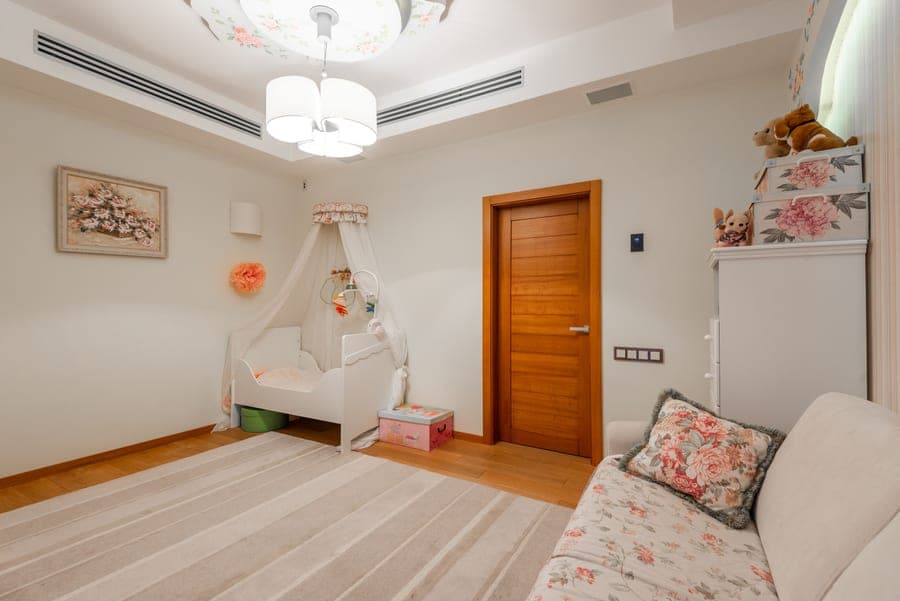
Skips the toddler bed entirely: a low twin with rails on it, so you buy one frame instead of two.
| Guardrail height above mattress | Not published by the manufacturer |
|---|---|
| Stated weight limit (per bunk) | 400 lb |
| Manufacturer minimum age | Not published by the manufacturer |
| Mattress thickness ceiling | Not published by the manufacturer |
| Materials / construction | Solid New Zealand pine, GREENGUARD Gold certified finish |
What works
- A twin mattress from day one means no second bed purchase at five
- Rails come off when they stop being needed
- 400 lb capacity will outlast childhood
- Solid pine rather than a plastic-clad toddler frame
What doesn’t
- A twin footprint is much bigger than a toddler bed
- Costs several times what a crib-mattress toddler bed costs
- Higher off the floor than a toddler bed
The catch: It is a twin, which means it is a twin-sized object in the room from the day your two-year-old moves in. If the room is small, the toddler bed genuinely buys you three years of floor space.
Questions parents actually ask
Is a loft bed worth it for a small room?
In a room under about 90 square feet, usually yes — it frees around nineteen square feet. In a larger room the gain is marginal against the loss of flexibility.
Do children actually use the desk under a loft bed?
They use it if it is the right height and it is properly lit. Both of those are usually the buyer’s job rather than the bed’s.
Can you take the desk out from under a loft bed?
If it is a separate piece, yes. If it is integrated into the frame, generally no — which is the flexibility cost.
What is the minimum room size for a loft bed?
There is no minimum floor area — the constraint is ceiling height. The floor question is whether the room is small enough that a loft is worth its downsides.
Is a loft bed harder to make?
Considerably, which is a real daily cost. All-in-one zip bedding is the usual answer; see bedding for a top bunk.
Sources
Read next
- What fits under a loft bed
Measure before you commit the space.
- Best kids desks
If you split them, this is the desk half.
- Low loft vs full loft beds
If you go loft, this decides which one.
Back to Loft Beds.