Toddler Beds
Floor bed vs toddler bed
A floor bed makes the fall distance zero and makes the room the boundary instead of the bed. That is the whole trade, and it is bigger than it sounds.

We earn a commission from qualifying purchases made through links on this page, at no extra cost to you. How this site is funded.
How we chose
We are a small publisher, not a testing lab. We don’t buy, assemble or sleep in the beds we write about, and we won’t pretend otherwise. What we do instead is read the published specifications and check them against the rules that actually govern children’s beds in the United States: the federal standard for children’s bunk beds (16 CFR Part 1513), the ASTM F1427 requirements it incorporates, and the American Academy of Pediatrics’ guidance on upper-bunk age. Where a manufacturer publishes no number, we write “not published by the manufacturer” rather than guess — that absence is itself worth knowing. We read owner feedback at volume for the things specs can’t tell you, and we label it as signal, not proof.
We earn a commission when you buy through our links. It never changes an ordering. Our full editorial policy.
Decide for me
Floor bed if you are willing to make the whole room safe rather than the bed, if your child is an early climber, and if you are comfortable with them getting up freely. The fall distance is essentially zero, which is a real safety gain.
Toddler bed if you want the bed itself to signal where sleep happens, if the room cannot be fully childproofed, or if you want to keep using the crib mattress in a frame that looks like a bed.
Either works. This is one of the few genuinely two-sided decisions in children’s furniture, and families who choose well on temperament do better than families who choose on philosophy.
What a floor bed actually is
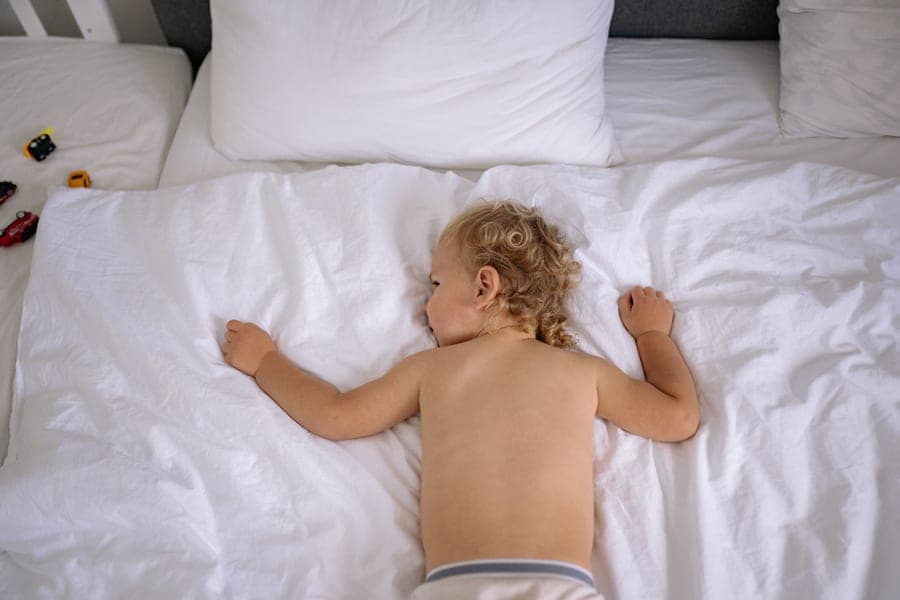
A mattress on the floor, or on a frame a few inches above it, with no rails. Associated with the Montessori approach, where the point is that a child can get in and out unaided and choose when to sleep.
The consequence is that the room becomes the boundary rather than the bed. That is the part to think hardest about, because it is a much bigger commitment than the mattress arrangement suggests.
| Floor bed | Toddler bed | |
|---|---|---|
| Fall distance | Essentially zero | A few inches |
| Rails | None | Integrated, usually on all sides |
| Child can get out freely | Yes, by design | Yes, but the frame signals a boundary |
| Room must be fully childproofed | Yes, without exception | Strongly advisable |
| Cost | A mattress, optionally a low frame | A frame plus the mattress |
| Uses the crib mattress | Yes | Yes |
| Outgrown when | Never — swap to a bigger mattress | Around 4-5, at the crib mattress limit |
If you choose a floor bed, the room is the bed
A child who can leave the bed at will can reach everything in the room, at night, unsupervised. Every piece of tall furniture anchored to the wall. Cords out of reach. Outlets covered. Nothing climbable near a window. A gate on the door or the stairs. This is not optional with a floor bed — it is the trade you are making for the zero fall distance.
Safety
The floor bed removes the only hazard a toddler bed has, which is falling out of it. It replaces that with a supervision question, which is a different kind of risk and one that depends entirely on how well the room is prepared.
Neither is obviously safer in the abstract. A well-childproofed room with a floor bed is safer than a toddler bed in a room with an unanchored dresser. The reverse is also true.
Sleep
Anecdotally, families report both outcomes. Some children treat the floor bed’s freedom as permission to roam and take weeks to settle; others settle faster because they are not fighting a boundary. We have no data on which is more common and we are not going to invent any — what we can say is that a child who already climbs out of the crib has demonstrated that a boundary is not stopping them.
Cost and longevity
The floor bed is cheaper, potentially by the entire price of a frame, and it does not have a size limit — when the crib mattress is outgrown you put a twin mattress down instead. That makes it the more economical route by a clear margin.
A toddler bed is outgrown at the crib mattress limit and then replaced. It buys three years of a frame that looks like a bed.
Space
A floor bed with a crib mattress uses the same footprint as a toddler bed. A floor bed that has been upgraded to a twin mattress uses a twin’s footprint, which arrives earlier than the equivalent moment with a toddler bed. In a very small room, that is a point for the toddler bed.
Who should choose neither
A family whose child is nearly four. Skip both and go to a low twin with removable rails — you get the same low height, no size limit and one purchase.
What we'd buy
Every pick below carries the same spec block, so you can compare the numbers across this page and every other page on the site.
The first bed out of the crib
Dream On Me Emma 3-in-1 Convertible Toddler Bed
Dream On Me
Publishes a weight limit, runs four side rails and sits low enough that falling out is barely an event.
| Guardrail height above mattress | Four integrated side safety rails (height not published) |
|---|---|
| Stated weight limit (per bunk) | 50 lb |
| Manufacturer minimum age | Not published by the manufacturer |
| Mattress thickness ceiling | Uses a standard crib mattress |
| Materials / construction | Solid pinewood, GREENGUARD Gold certified |
What works
- Low-to-floor design means a roll-out is inches, not feet
- Four side rails come with the bed rather than as an accessory
- Takes the crib mattress you already own
- Converts to a table and two chairs when the bed is outgrown
What doesn’t
- 50 lb limit is reached by a lot of five-year-olds
- Crib-mattress footprint is genuinely small for a tall four-year-old
- Conversion to table and chairs is charming but rarely used
The catch: The 50 lb limit is the real lifespan of this bed, and it is shorter than the marketing implies. Plenty of children hit 50 lb around age five, which is well before they are ready for a twin.
The crib-to-toddler-bed handover
Graco Premium Foam Crib & Toddler Mattress
Graco
A firm, washable, dual-use crib and toddler mattress with both of the certifications parents actually look for.
| Guardrail height above mattress | Not applicable |
|---|---|
| Stated weight limit (per bunk) | Not published by the manufacturer |
| Manufacturer minimum age | Not published by the manufacturer |
| Mattress thickness ceiling | Not applicable |
| Materials / construction | Foam core, waterproof machine-washable OEKO-TEX Standard 100 certified cover, GREENGUARD Gold certified |
What works
- The cover comes off and goes in the washing machine, which matters more than anything else at this age
- Firm support appropriate for infants and toddlers
- GREENGUARD Gold and OEKO-TEX Standard 100 certified
- Fits both the crib and the toddler bed it converts into
What doesn’t
- Foam traps more heat than a breathable-core mattress
- Firm enough that older toddlers may find it unforgiving
- Thin relative to a twin mattress, which is by design but still a surprise
The catch: Foam holds heat. If your child sleeps hot, a breathable-core mattress handles it better, and you will pay roughly twice as much for that.
Parents who want to buy once
Max & Lily Twin Bed with Guard Rails
Max & Lily
Skips the toddler bed entirely: a low twin with rails on it, so you buy one frame instead of two.
| Guardrail height above mattress | Not published by the manufacturer |
|---|---|
| Stated weight limit (per bunk) | 400 lb |
| Manufacturer minimum age | Not published by the manufacturer |
| Mattress thickness ceiling | Not published by the manufacturer |
| Materials / construction | Solid New Zealand pine, GREENGUARD Gold certified finish |
What works
- A twin mattress from day one means no second bed purchase at five
- Rails come off when they stop being needed
- 400 lb capacity will outlast childhood
- Solid pine rather than a plastic-clad toddler frame
What doesn’t
- A twin footprint is much bigger than a toddler bed
- Costs several times what a crib-mattress toddler bed costs
- Higher off the floor than a toddler bed
The catch: It is a twin, which means it is a twin-sized object in the room from the day your two-year-old moves in. If the room is small, the toddler bed genuinely buys you three years of floor space.
Questions parents actually ask
Are Montessori floor beds safe?
The fall distance is essentially zero, which removes the main hazard of a toddler bed. It requires the whole room to be childproofed, because the child can get up and move freely at night.
At what age can a child use a floor bed?
Families use them from around six months through to preschool. The practical gate is whether the room is fully safe for an unsupervised child at night.
Do floor beds help with sleep?
Reports go both ways and we have no data that would let us pick one. What is reliably true is that a child who already climbs out of a crib is not being held by a boundary.
Can you use a crib mattress on the floor?
Yes, and it is the usual starting point. Ventilation underneath is worth attending to — a slatted low frame is better than a mattress directly on carpet.
Do you need a rail on a floor bed?
No — the point of a floor bed is that there is nowhere to fall to. Adding a rail recreates the boundary the design removes.
Sources
Read next
- Best toddler beds
If you go with a frame.
- Best toddler mattresses
Either way, this is the mattress decision.
- When to move from crib to toddler bed
The timing, before the format.
Back to Toddler Beds.