Bunk Beds
The best heavy-duty bunk beds
Most bunk bed listings never print a weight limit at all. These five do - and the published figures run from 250 lb to 400 lb per sleeping surface, which is the difference between a bed a teenager outgrows and one that holds an adult sitting on the edge of it.
We earn a commission from qualifying purchases made through links on this page, at no extra cost to you. How this site is funded.
Quick picks
The short version. Tap any row for the full write-up and its spec block.
| # | Product | Best for | Score | Price |
|---|---|---|---|---|
| 1 | 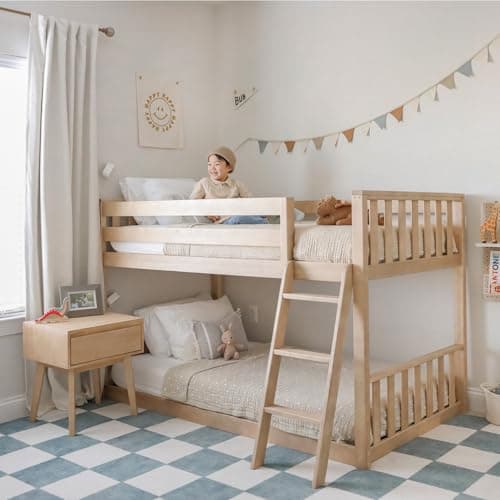 Max & Lily Twin Over Twin Low Bunk Bed The clearest published safety numbers of any bunk we looked at, on a frame low enough that a fall is a short one. | Younger siblings sharing a room | 8.8 | |
| 2 | 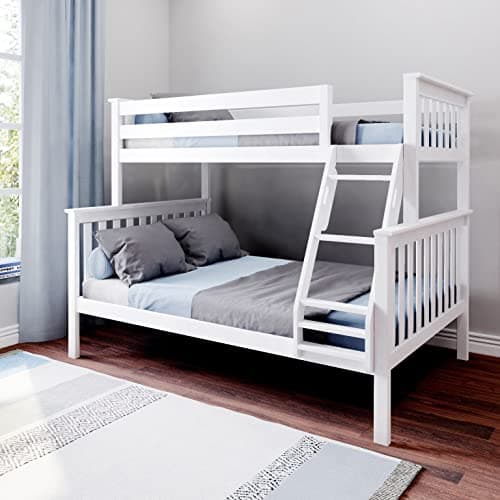 Max & Lily Twin Over Full Bunk Bed A full-size bottom bunk that an adult can actually sleep in, which quietly makes this a ten-year bed rather than a five-year one. | A younger and an older sibling, or a room that hosts guests | 7.9 | |
| 3 | 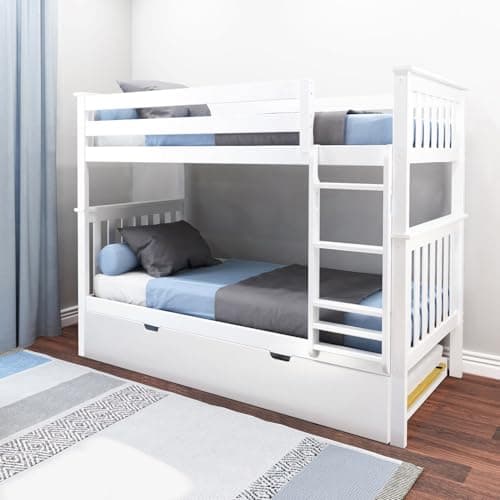 Max & Lily Twin Over Twin Bunk Bed With Trundle The only trundle bunk we found that publishes a rail height, a per-surface weight limit and a separate mattress ceiling for the trundle itself. | A shared room that hosts a third child most weekends | 8.7 | |
| 4 | 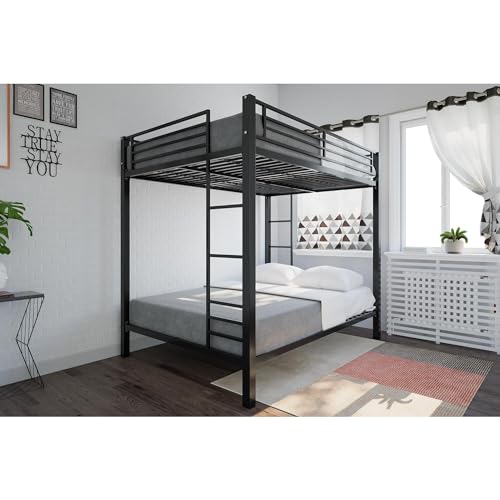 DHP Full Over Full Metal Bunk Bed The long-running metal full over full, and one of the few listings in the category that prints a hard mattress maximum rather than a suggestion. | A straightforward steel frame from a brand with a warranty | 7.5 | |
| 5 | 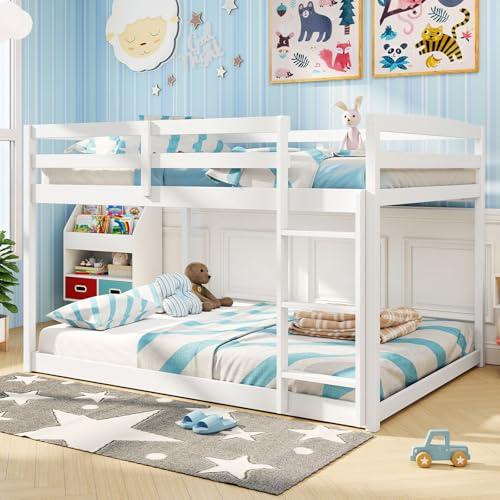 GIANTEX Full Over Full Bunk Bed, Solid Wood Solid pine, 51.5 in tall, anti-tip kits in the box - the cheapest frame here and the one that ships the hardware most brands make you buy. | The lowest price in the category without dropping to steel | 8.1 |
How we chose
We are a small publisher, not a testing lab. We don’t buy, assemble or sleep in the beds we write about, and we won’t pretend otherwise. What we do instead is read the published specifications and check them against the rules that actually govern children’s beds in the United States: the federal standard for children’s bunk beds (16 CFR Part 1513), the ASTM F1427 requirements it incorporates, and the American Academy of Pediatrics’ guidance on upper-bunk age. Where a manufacturer publishes no number, we write “not published by the manufacturer” rather than guess — that absence is itself worth knowing. We read owner feedback at volume for the things specs can’t tell you, and we label it as signal, not proof.
We earn a commission when you buy through our links. It never changes an ordering. Our full editorial policy.
The short answer
The heavy-duty bunk bed to buy is the Max & Lily Twin Over Twin Low Bunk Bed. It publishes 400 lb per sleeping surface - the highest stated capacity in our registry - on a solid New Zealand pine frame, and it prints a guardrail height and a mattress ceiling alongside it so you can check compliance before you spend anything. It suits a household where the bed has to last from primary school to the teens.
The budget pick is the GIANTEX Full Over Full Bunk Bed, the cheapest frame here that states a capacity at all. Its listing gives 250 lb and 350 lb without saying which figure belongs to which deck, which is a real limitation - but it is still more than most of the category publishes, and two anti-tip kits are in the box.
“Heavy duty” is not a regulated term
No standard defines it. Every bunk bed sold for children in the United States is built to the same federal construction rule whatever its capacity, so a heavier-rated frame is not a safer frame in the regulatory sense. What a published capacity gives you is information: a number you can hold the bed to, instead of a guess.
Why the number is usually missing
Across the bunk beds in our registry, the majority publish no weight limit at all. Several publish one figure for the whole bed without saying whether it applies per deck or in total. A few publish different numbers in different places on the same listing - the Harper & Bright full over full gives 600 lb per deck in one row and 400 lb in Amazon’s maximum-weight field, which is not a contradiction you can resolve from outside the company.
That is why this page exists. Filtering the category by published capacity does not find the strongest beds - nobody can tell you that without destructive testing we have not done and do not claim to have done. It finds the beds whose manufacturers were willing to commit to a number, which is the only honest proxy a buyer has.
The published capacities, side by side
| Bed | Stated capacity | Frame | Guardrail height | Mattress ceiling |
|---|---|---|---|---|
| Max & Lily twin over twin low bunk | 400 lb per sleeping surface | Solid New Zealand pine | 14 in above the deck | 8 in max, 5 in recommended |
| Max & Lily twin over full | 400 lb per sleeping surface | Solid New Zealand pine | Not published | Not published |
| Max & Lily twin over twin + trundle | 400 lb per sleeping surface | Solid knot-free pine | 14 in above the slats | 8 in bunks, 5 in trundle |
| DHP Sidney full over full | 300 lb maximum recommendation | Powder-coated steel | Not published | 6 in on the upper bunk |
| GIANTEX full over full | 250 lb and 350 lb, decks unnamed | Solid pine and plywood | Not published | Not published |
Three frames publish 400 lb per surface and also tell you what the surface is. Two publish a single figure for the bed. That is the scoreboard, and it maps almost exactly onto price.
Per surface or per bed - the distinction that matters
“400 lb per sleeping surface” and “400 lb maximum weight” look similar and mean very different things. The first says each deck carries 400 lb independently. The second, on a two-deck bed, can reasonably be read as 400 lb for the whole frame - and if two children and a parent are on it at bedtime, that total arrives faster than people expect.
When a listing gives one number without naming the surface, read it as the conservative interpretation. The GIANTEX gives two numbers and names neither deck; the safe reading is 250 lb on the upper bunk. That is still enough for a child and a parent sitting on the edge, and it is not enough for two adults.
Steel versus solid pine
Only one steel frame made this page. That is not a verdict on metal - our metal bunk roundup covers the category properly - it is a consequence of what gets published. Steel bunk beds in this price band tend to publish a single maximum-weight recommendation, and wood frames from brands that position on specification tend to publish per-surface figures.
The practical difference is noise and movement rather than strength. A steel frame with square posts, like the DHP Sidney, is rigid when the bolts are tight and starts to announce itself when they loosen. Solid pine is heavier, quieter, and considerably harder to move once it is up. Our metal versus wood comparison goes through the trade properly.
Capacity does not replace the five-inch rule
A 400 lb deck with a 10-inch mattress on it is still non-compliant, because the guardrail has to stand five inches above the top of the mattress. Capacity and clearance are separate checks and you have to pass both. The mattress thickness guide has the arithmetic.
Who this page is actually for
Three buyers, in our experience of the questions this category attracts. The first is a parent of a child who will be a teenager in this bed - the capacity question is really a longevity question, and 400 lb per surface answers it. The second is a parent who climbs up at bedtime, which the stated figures treat very differently. The third is a household where the lower bunk doubles as a sofa during the day, which loads one deck far more than the design assumed.
If the bed also has to survive the children splitting up, the separable frames overlap with this list - the Max & Lily trundle model appears on both. And if the budget is the constraint rather than the capacity, the under-$300 roundup includes the GIANTEX and the DHP.
Key takeaways
- Most bunk bed listings publish no weight limit. The five here do, and the figures run 250 lb to 400 lb.
- 'Per sleeping surface' and 'maximum weight' are different claims. Read a single unnamed figure conservatively.
- Three Max & Lily frames publish 400 lb per surface - the highest stated capacity in our registry.
- Capacity is independent of the five-inch guardrail rule. Passing one does not pass the other.
- Re-tighten the bolts after a week and then twice a year. A loose heavy-duty frame is not a heavy-duty frame.
The picks, in full
Every pick below carries the same spec block, so you can compare the numbers across this page and every other page on the site.
#1 · Younger siblings sharing a room
Max & Lily Twin Over Twin Low Bunk Bed
Max & Lily
The clearest published safety numbers of any bunk we looked at, on a frame low enough that a fall is a short one.
| Guardrail height above mattress | 14 in above the deck |
|---|---|
| Stated weight limit (per bunk) | 400 lb per sleeping surface |
| Manufacturer minimum age | Not published by the manufacturer |
| Mattress thickness ceiling | 8 in maximum (5 in recommended) |
| Materials / construction | Solid New Zealand pine, GREENGUARD Gold certified finish |
What works
- Publishes a guardrail height, a weight limit and a mattress ceiling — most brands publish one of the three
- 400 lb per surface is the highest stated capacity in this roundup, and it holds through the teen years
- Low overall height means the top deck sits well under a standard bunk
- Reversible, removable ladder with grooved treads and rounded edges
What doesn’t
- The 8 in mattress ceiling rules out most plush mattresses
- Solid pine is heavy to move once assembled
- No minimum age published, so the AAP's under-6 guidance is the only age rule you get
The catch: That 8 in ceiling is not a suggestion. Put a 10 in mattress on the top deck and the 14 in rail drops to 4 in of clearance, which is below the federal 5 in minimum. The bed stops being compliant and nobody tells you.
#2 · A younger and an older sibling, or a room that hosts guests
Max & Lily Twin Over Full Bunk Bed
Max & Lily
A full-size bottom bunk that an adult can actually sleep in, which quietly makes this a ten-year bed rather than a five-year one.
| Guardrail height above mattress | Not published by the manufacturer |
|---|---|
| Stated weight limit (per bunk) | 400 lb per sleeping surface |
| Manufacturer minimum age | Not published by the manufacturer |
| Mattress thickness ceiling | Not published by the manufacturer |
| Materials / construction | Solid New Zealand pine, GREENGUARD Gold certified finish |
What works
- Full-size bottom bunk fits a parent reading at bedtime or a guest overnight
- 400 lb per surface means the bottom bunk is genuinely adult-rated
- Solid pine construction with metal-on-metal bolt connections
- Two different mattress sizes gives the siblings a real distinction
What doesn’t
- Wider footprint than twin-over-twin; measure the room before ordering
- You buy two mattress sizes, which costs more than two twins
- Guardrail height and mattress ceiling are not published
The catch: The full bottom bunk is the selling point and the cost. It adds roughly a foot of width over twin-over-twin, and in the small room most people are buying a bunk for, a foot is the difference between a walkway and a squeeze.
#3 · A shared room that hosts a third child most weekends
Max & Lily Twin Over Twin Bunk Bed With Trundle
Max & Lily
The only trundle bunk we found that publishes a rail height, a per-surface weight limit and a separate mattress ceiling for the trundle itself.
| Guardrail height above mattress | 14 in above the slats |
|---|---|
| Stated weight limit (per bunk) | 400 lb per sleeping surface |
| Manufacturer minimum age | Not published by the manufacturer |
| Mattress thickness ceiling | 8 in on both bunks (5 in recommended on top); 5 in on the trundle |
| Materials / construction | Solid knot-free pine, GREENGUARD Gold certified finish |
What works
- Publishes all three numbers that matter on a trundle bunk, including the trundle's own mattress limit
- 400 lb per sleeping surface is the highest stated capacity in this roundup
- Trundle can be assembled to pull out from either side of the bed
- Separates into two standalone twin beds, so the frame outlasts the sharing arrangement
What doesn’t
- The trundle takes a 5 in mattress, which is thinner than most people expect and narrows your options
- No minimum age published, so the AAP's under-6 top-bunk guidance is the only age rule you get
- The trundle on this model has no wheels, so it wants a hard floor or a low-pile rug
- Sits at the top of the price range for the category
The catch: That 8 in bunk ceiling and 5 in trundle ceiling are two different numbers, and buying one mattress for all three surfaces is the obvious mistake. A 5 in trundle mattress on the top bunk wastes rail margin you paid for; an 8 in mattress on the trundle stops it sliding under the bottom bunk at all.
#4 · A straightforward steel frame from a brand with a warranty
DHP Full Over Full Metal Bunk Bed
DHP
The long-running metal full over full, and one of the few listings in the category that prints a hard mattress maximum rather than a suggestion.
| Guardrail height above mattress | Not published by the manufacturer |
|---|---|
| Stated weight limit (per bunk) | 300 lb maximum weight recommendation |
| Manufacturer minimum age | Not published by the manufacturer |
| Mattress thickness ceiling | 6 in maximum on the upper bunk |
| Materials / construction | Powder-coated metal frame with square posts, guard rails and an integrated ladder, no box spring needed; takes two standard full mattresses at 75 x 54 in; 78.5 x 56.5 x 72 in overall, 108 lb; 1-year limited warranty |
What works
- Publishes a 6 in maximum upper mattress thickness as a limit, not a recommendation
- A named manufacturer warranty, which most frames in this category do not carry
- Square posts rather than round tube, which is the detail that keeps a metal bunk from racking
- 11 in of ground clearance under the lower deck for flat storage boxes
What doesn’t
- 72 in overall is the tallest frame here, so measure your ceiling before ordering
- 300 lb is the lowest stated capacity of the five, and it is quoted once for the whole bed
- No guardrail height and no minimum age published
- Steel on steel squeaks as the joints settle, and it needs re-tightening
The catch: The 6 in mattress maximum is published clearly and it rules out most of what people already own. A full mattress thin enough for this bed is a specific purchase, and buying the bed without budgeting for it is the mistake this listing quietly invites.
#5 · The lowest price in the category without dropping to steel
GIANTEX Full Over Full Bunk Bed, Solid Wood
GIANTEX
Solid pine, 51.5 in tall, anti-tip kits in the box - the cheapest frame here and the one that ships the hardware most brands make you buy.
| Guardrail height above mattress | Not published by the manufacturer |
|---|---|
| Stated weight limit (per bunk) | 250 lb and 350 lb per the listing's own bullet, which does not say which figure belongs to which deck |
| Manufacturer minimum age | Not published by the manufacturer |
| Mattress thickness ceiling | Not published by the manufacturer |
| Materials / construction | Solid pine and plywood, 14 plywood slats per deck, integrated 3-step ladder, full-length guardrails on the upper bunk, two anti-tip kits included; 79.5 x 59 x 51.5 in overall |
What works
- 51.5 in overall, which is low for a full over full and the shortest fall of any frame here bar one
- Solid pine rather than particleboard at the lowest price in the category
- Fourteen plywood slats per deck, so no bunkie board or box spring is needed
- Two anti-tip kits come in the box rather than as an accessory
What doesn’t
- The two capacity figures are published without saying which deck each one applies to
- No mattress ceiling at all, so top-deck clearance is unknown until you measure it
- No guardrail height and no minimum age on the listing
- The 3-step ladder is integrated, so you cannot move it to the other end
The catch: Two capacity numbers and no labels is a real gap, not a typo. If you read it the cautious way - 250 lb on the top deck - this bed is for two children and not for an adult reading up there at bedtime.
Questions parents actually ask
What is a normal weight limit for a bunk bed?
There is no normal, because most manufacturers do not publish one. Among the frames in our registry that do, stated figures run from about 175 lb on an upper deck to 400 lb per sleeping surface. Treat an unpublished limit as a limit you do not know rather than a generous one.
Can an adult sleep on a bunk bed?
It depends entirely on the published capacity, and on which deck. A frame stating 400 lb per sleeping surface has the headroom for an adult on either deck; one stating 175 lb on the upper bed does not. Check the figure, check which surface it names, and remember the upper bunk also has to hold a mattress thin enough to leave five inches of guardrail.
Is a metal bunk bed stronger than a wooden one?
Not reliably, and the published figures on this page do not support that reading - the three highest stated capacities here are all solid pine. Steel frames tend to be lighter and easier to move; solid wood frames tend to be quieter under load. Strength claims beyond the published number are not something we can verify.
Does a higher weight limit mean a safer bunk bed?
No. Every bunk bed sold for children in the US is built to the same federal construction rule regardless of capacity. A published capacity tells you what the manufacturer will stand behind, which is useful information - but guardrail clearance, correct assembly and wall anchoring do more for day-to-day safety.
How often should bunk bed bolts be re-tightened?
After the first week of use, then roughly twice a year. Bolted frames settle, and a loose joint transfers load in ways the design did not intend. This matters more on a heavily loaded bed, not less.
Sources
Read next
- Bunk bed weight limits explained
What the figure is measuring, and what it is not.
- Metal vs wood bunk beds
The trade behind the frame material.
- Bunk beds that split into two beds
Frames that outlast the sharing arrangement.
- Mattress thickness and guardrails
The clearance check capacity does not cover.
Back to Bunk Beds.