Bunk Beds
The best metal bunk beds for kids
Metal bunks are cheaper, lighter and assemble faster than solid pine, and two of these publish a guardrail height that solid-wood brands leave blank. The catch is the weight limit.

We earn a commission from qualifying purchases made through links on this page, at no extra cost to you. How this site is funded.
Quick picks
The short version. Tap any row for the full write-up and its spec block.
| # | Product | Best for | Score | Price |
|---|---|---|---|---|
| 1 | DHP Miles Low Metal Bunk Bed, Twin Over Twin Publishes its guardrail height and both weight limits, which is more than most metal frames manage, and the bottom bunk sits on the floor. | Small rooms on a budget | 8.0 | |
| 2 | 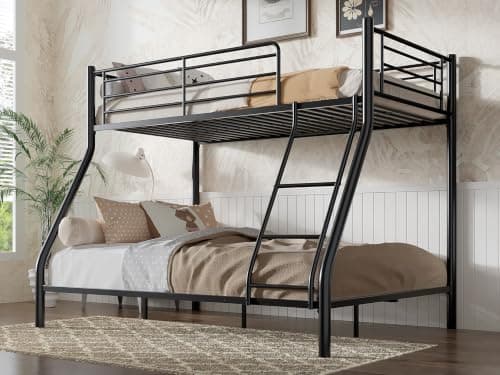 VECELO Twin Over Full Metal Bunk Bed The cheapest bed here and the only one outside Max & Lily that publishes a guardrail height, at 15 inches the tallest figure in the roundup. | A guest room, a short-term fix, or a tight budget | 7.2 | |
| 3 | 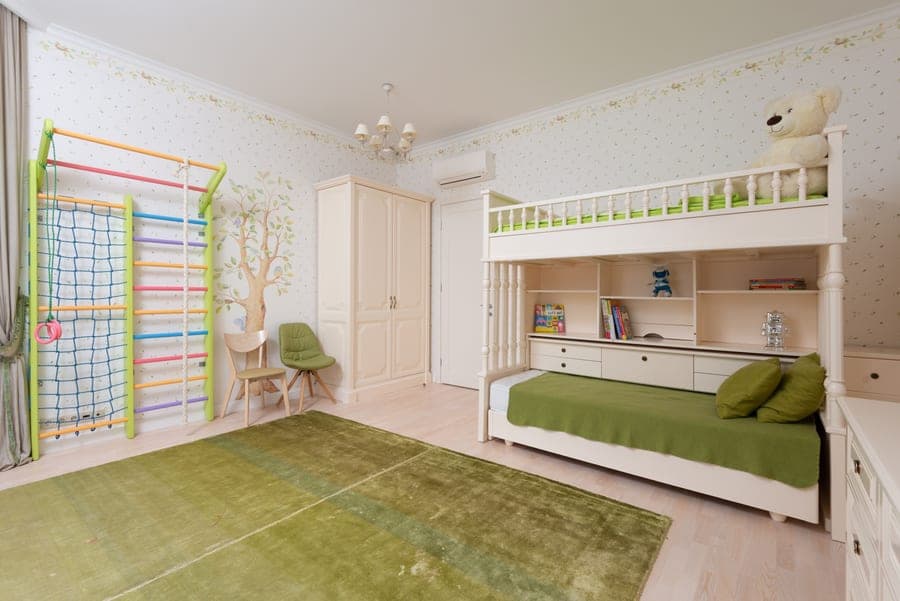 Harper & Bright Designs Twin Over Twin Metal Bunk Bed With Trundle The cheapest way into three beds, and the only budget pick here that publishes its rail height and its mattress ceiling together. | A guest room or a tight budget | 7.0 | |
| 4 | 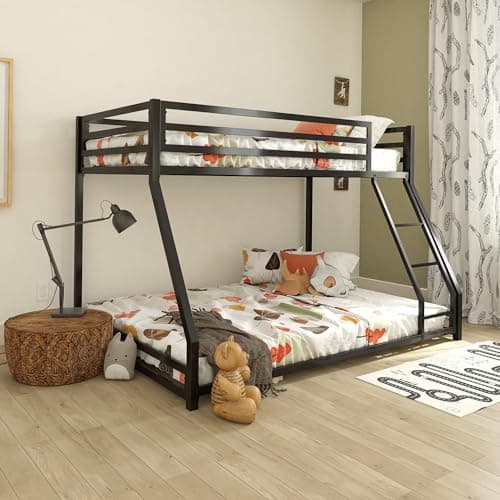 DHP Miles Metal Bunk Bed, Twin Over Full The twin-over-full metal frame with a built-in ladder, for when the bottom sleeper has outgrown a twin but the budget has not moved. | A growing age gap on a tight budget | 6.8 |
How we chose
We are a small publisher, not a testing lab. We don’t buy, assemble or sleep in the beds we write about, and we won’t pretend otherwise. What we do instead is read the published specifications and check them against the rules that actually govern children’s beds in the United States: the federal standard for children’s bunk beds (16 CFR Part 1513), the ASTM F1427 requirements it incorporates, and the American Academy of Pediatrics’ guidance on upper-bunk age. Where a manufacturer publishes no number, we write “not published by the manufacturer” rather than guess — that absence is itself worth knowing. We read owner feedback at volume for the things specs can’t tell you, and we label it as signal, not proof.
We earn a commission when you buy through our links. It never changes an ordering. Our full editorial policy.
The metal bunk we would buy first is the DHP Miles Low Metal Bunk Bed, because it publishes a 12.5-inch guardrail height, separate top and bottom weight limits, and a mattress specification — three numbers, on the cheapest kind of bed in this category. It suits a small room on a budget, and the bottom bunk sits close to the floor. If you need a full-size bottom mattress instead, the VECELO twin-over-full publishes the tallest rail in our whole registry at 15 inches, and no weight limit whatsoever.
That contrast is the story of metal bunks. They cost a fraction of solid pine, they arrive in fewer pieces, their metal slat decks need no box spring, and a surprising number of them publish the guardrail height that premium wood brands leave off the listing. In exchange, the stated capacities are roughly half what a solid-pine frame claims, and steel tube frames develop movement as the fasteners settle.
What we looked at
Published guardrail height above the sleeping deck, stated weight limit per bunk, manufacturer minimum age and the mattress-thickness ceiling — the same four numbers we ask of every bed. On metal frames we weight the mattress ceiling more heavily than usual, because metal bunks tend to publish a tight one: 6 inches is common, and a 6-inch ceiling is a real constraint once a child is nine or ten.
We also note whether anti-tip hardware ships in the box. On the VECELO it does, which is worth more than it sounds — the alternative is discovering on assembly day that the bracket is a separate purchase.
| Bed | Rail height | Stated weight limit | Mattress ceiling |
|---|---|---|---|
| DHP Miles Low Metal Bunk | 12.5 in above the deck | 200 lb top / 250 lb bottom | 6 in, per the frame specification |
| VECELO Twin Over Full Metal | 15 in on the top bunk | Not published | Not published |
| Harper & Bright Metal Trundle Bunk | 12.8 in | 220 lb top / 220 lb bottom / 200 lb trundle | 6 in top, 8 in bottom |
| DHP Miles Twin Over Full | Not published | Not published | Not published |
The 200 lb top bunk is the number to sit with
A 200 lb or 220 lb top-deck limit is fine for a child and it is not fine for a parent who climbs up to read at bedtime, which is a thing parents do without thinking about the sticker. Add the mattress weight to the sleeper’s weight — a 6-inch twin mattress is typically 20 to 30 lb of that total before anyone gets in.
Metal versus wood, in one paragraph
Wood is stiffer, quieter and rated higher; metal is cheaper, lighter and assembles faster. The reason this site does not treat metal as the budget compromise is that two of the four frames here publish a guardrail height, and most solid-pine bunks in our registry do not. A published 12.5-inch rail you can verify beats an unpublished rail on a nicer frame, if what you care about is the five-inch clearance rule. The full version of this argument, with the failure modes of each material, is on our metal vs wood comparison.
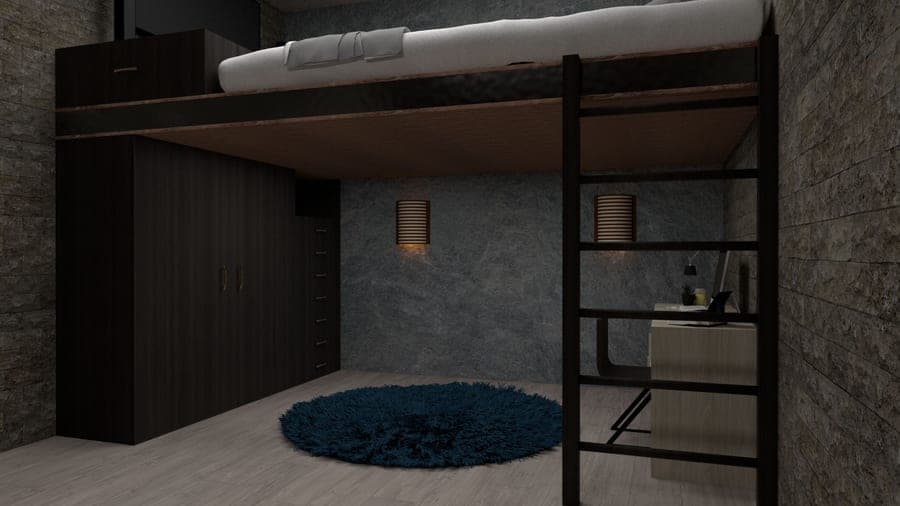
The creak, and what to do about it
Every metal bunk in this roundup will develop movement. Steel tube frames transmit load through bolted joints, the bolts settle into the powder coating, and within a few months you have a bed that announces every roll-over. This is not a defect and it is not dangerous on its own — it is maintenance. Re-tighten every fastener on the frame every few months, and specifically after the first fortnight, when the settling is fastest.
The thing to watch is that a loose joint changes the load path, and a changed load path is how a stated weight limit stops being true. Our assembly and stability guide covers the check in detail. On a metal frame it takes five minutes with an Allen key and it is the single highest-value thing you can do for a bunk after you have measured the rail.
The mattress is part of the purchase
Two of these frames publish a 6-inch mattress specification, and it is not a suggestion. The guardrail rule works downward from the top of the mattress: the rail has to stand at least five inches proud of the sleeping surface. A 12.5-inch rail with a 6-inch mattress leaves 6.5 inches of clearance and passes comfortably. The same rail with a 10-inch mattress leaves 2.5 inches and fails. On a metal bunk, buying the thick plush mattress is how you quietly defeat the one safety number the brand actually published for you — see mattress thickness and guardrails.
Most of these frames are also the budget end of the category, so the cheap bunk bed roundup overlaps with this one. For the other material, see the best wooden bunk beds.
Key takeaways
- Two of these four metal frames publish a guardrail height. Most solid-pine bunks in our registry do not.
- Stated capacities run 200-250 lb per deck, roughly half what solid pine claims. Include the mattress in that total.
- Metal slat decks need no box spring, which is part of why the frames sit low.
- Expect creak. Re-tighten every fastener after two weeks and then every few months.
- A published 6 in mattress ceiling is a hard limit, not a recommendation — it is what keeps the rail compliant.
The picks, in full
Every pick below carries the same spec block, so you can compare the numbers across this page and every other page on the site.
#1 · Small rooms on a budget
DHP Miles Low Metal Bunk Bed, Twin Over Twin
DHP
Publishes its guardrail height and both weight limits, which is more than most metal frames manage, and the bottom bunk sits on the floor.
| Guardrail height above mattress | 12.5 in above the deck |
|---|---|
| Stated weight limit (per bunk) | 200 lb top bunk / 250 lb bottom bunk |
| Manufacturer minimum age | Not published by the manufacturer |
| Mattress thickness ceiling | 6 in (the frame is specified for 6 in mattresses) |
| Materials / construction | Powder-coated metal frame with metal slats, no box spring required |
What works
- Publishes a guardrail height and separate top and bottom weight limits
- Metal slats support the mattress without a box spring
- Low profile with the bottom bunk close to the floor
- One of the least expensive bunks that still publishes real numbers
What doesn’t
- 200 lb top-bunk limit is half what the solid-wood options state
- Metal frames are more prone to creaking than pine as fasteners loosen
- The 6 in mattress specification is tight for an older child
The catch: The 200 lb top-bunk limit is the one to watch. It is fine for a child and it is not fine for a parent who climbs up to read at bedtime, which is a thing parents do without thinking about the sticker.
#2 · A guest room, a short-term fix, or a tight budget
VECELO Twin Over Full Metal Bunk Bed
VECELO
The cheapest bed here and the only one outside Max & Lily that publishes a guardrail height, at 15 inches the tallest figure in the roundup.
| Guardrail height above mattress | 15 in on the top bunk |
|---|---|
| Stated weight limit (per bunk) | Not published by the manufacturer |
| Manufacturer minimum age | Not published by the manufacturer |
| Mattress thickness ceiling | Not published by the manufacturer |
| Materials / construction | Heavy-duty steel frame, 22 slats with plastic mute clips |
What works
- 15 in of published rail height, taller than anything else in this roundup
- Anti-tip hardware is in the box rather than sold separately
- 60 in overall height is the shortest full-size bunk here, which helps under a low ceiling
- Costs less than a third of the solid-pine picks
What doesn’t
- No weight limit published at all, on either bunk
- No mattress ceiling published, so the 15 in rail is the only clearance figure you have
- Metal tube frames develop movement as fasteners settle and need re-tightening
- 22 slats is a thin foundation under a full-size mattress; expect sag sooner than on plywood
The catch: A published rail height and no published weight limit is a strange combination, and it is the wrong way around. Rail height you can measure yourself in ten seconds once the bed is up. Capacity you cannot measure at all, which makes it the number that actually needed printing.
#3 · A guest room or a tight budget
Harper & Bright Designs Twin Over Twin Metal Bunk Bed With Trundle
Harper & Bright Designs
The cheapest way into three beds, and the only budget pick here that publishes its rail height and its mattress ceiling together.
| Guardrail height above mattress | 12.8 in |
|---|---|
| Stated weight limit (per bunk) | 220 lb top bunk, 220 lb bottom bunk, 200 lb trundle |
| Manufacturer minimum age | Not published by the manufacturer |
| Mattress thickness ceiling | 6 in top bunk, 8 in bottom bunk (manufacturer recommendation) |
| Materials / construction | Powder-coated steel tube frame |
What works
- Publishes a rail height, three separate weight limits and a mattress recommendation for each deck
- Steel frame arrives in fewer pieces and assembles faster than any wood bunk here
- Removable ladder, and the trundle is rated for 200 lb
- By far the lowest price in this roundup
What doesn’t
- 12.8 in is the shortest rail here, and the 6 in top-bunk recommendation exists because of it
- 220 lb per bunk rules out most adults on the top deck and some on the bottom
- Steel tube frames develop movement as fasteners settle and need re-tightening every few months
- Metal slat decks transmit noise between bunks more than a wood frame does
The catch: Do the arithmetic before you buy a mattress. A 6 in mattress under a 12.8 in rail leaves 6.8 in of clearance, which is compliant. The 8 in mattress the same brand recommends for the bottom bunk leaves 4.8 in if you put it on top — below the federal 5 in minimum. The recommendation is deck-specific, and swapping the two mattresses around is enough to break it.
#4 · A growing age gap on a tight budget
DHP Miles Metal Bunk Bed, Twin Over Full
DHP
The twin-over-full metal frame with a built-in ladder, for when the bottom sleeper has outgrown a twin but the budget has not moved.
| Guardrail height above mattress | Not published by the manufacturer |
|---|---|
| Stated weight limit (per bunk) | Not published by the manufacturer |
| Manufacturer minimum age | Not published by the manufacturer |
| Mattress thickness ceiling | Not published by the manufacturer |
| Materials / construction | Powder-coated metal frame with metal slats, built-in ladder |
What works
- Full-size lower bunk at a metal-frame price
- Built-in ladder cannot be knocked out of position
- Metal slats mean no box spring on either level
- Compact footprint for the sleeping capacity
What doesn’t
- DHP publishes far less for this model than for the Miles low bunk
- Metal frames develop movement as bolts settle; expect to re-tighten
- No published mattress ceiling, so the clearance check is entirely yours
The catch: We could not find published guardrail, weight or mattress figures for this configuration, and the sister model publishes all three. Buy it knowing you will be measuring the rail yourself before anyone sleeps on the top.
Questions parents actually ask
Are metal bunk beds safe for kids?
A metal bunk sold for children in the United States has to meet the same federal standard as a wooden one — the same guardrail count, the same five-inch clearance above the mattress, the same continuous rail on the wall side. Material is not the safety variable; the published rail height, the mattress thickness and the weight limit are.
How much weight can a metal bunk bed hold?
Where these publish a figure it runs 200 to 250 lb per deck, and two of the four publish nothing. That is roughly half the 400 lb per surface that the solid-pine frames in our registry state. Treat an unpublished limit as unknown rather than generous.
Why do metal bunk beds creak?
Because load passes through bolted steel joints and the bolts settle into the powder coating over the first few weeks. Re-tighten every fastener after a fortnight and then on a regular cycle. A loose joint is a changed load path, which is the real reason to deal with it rather than just an irritation.
Do metal bunk beds need a box spring?
No. All four frames here use metal or steel slat decks designed to support the mattress directly, and the published mattress ceilings assume no box spring. Adding one would raise the sleeping surface and eat the guardrail clearance.
Are metal or wood bunk beds more sturdy?
Wood, generally — a solid pine frame is stiffer and quieter, and the pine bunks in our registry state 400 lb per sleeping surface against 200 to 250 lb on these. Metal’s advantages are price, weight, assembly time and, in two cases here, a guardrail height the wood brands did not bother to publish.
Sources
Read next
- Metal vs wood bunk beds
The full version of the material argument, with failure modes.
- Bunk bed weight limits
What a stated limit covers, and what it quietly does not.
- Bunk bed assembly and stability
The re-tightening cycle every metal frame needs.
- Mattress thickness and guardrails
Why a 6 in ceiling on a metal bunk is a hard limit.
Back to Bunk Beds.