Loft Beds
The best loft beds for younger kids
The question under this purchase is whether a loft bed is safe for a small child at all. The honest answer depends on the deck height, the guardrail and the child - and exactly one manufacturer in this roundup is willing to put an age on the listing.
We earn a commission from qualifying purchases made through links on this page, at no extra cost to you. How this site is funded.
Quick picks
The short version. Tap any row for the full write-up and its spec block.
| # | Product | Best for | Score | Price |
|---|---|---|---|---|
| 1 | 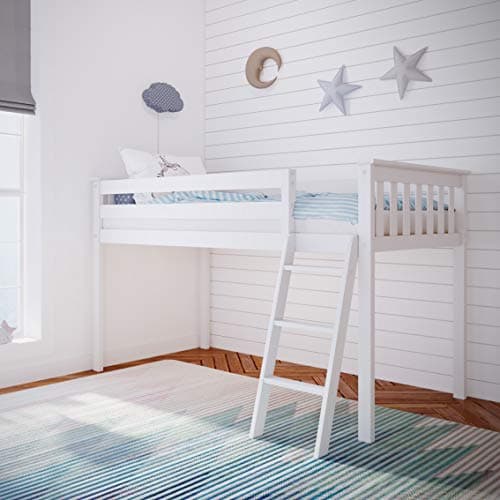 Max & Lily Twin Low Loft Bed A loft low enough to be a reasonable first loft, with the same 400 lb frame as the brand's bunks. | A first loft bed, and low ceilings | 7.9 | |
| 2 | 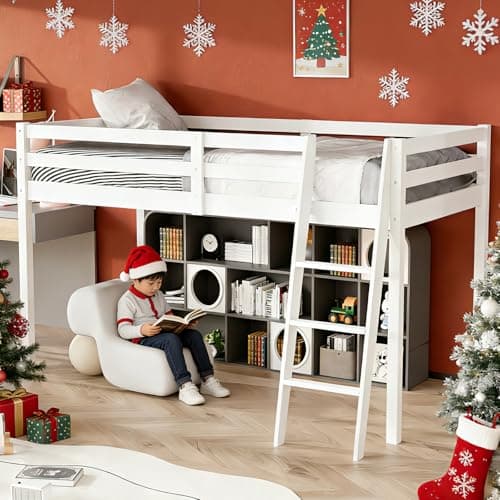 VINGLI 47 in Junior Low Loft Bed with Stairs The only stair loft we found that publishes its guardrail height, its weight capacity, its mattress recommendation and the five-inch clearance rule. | A first raised bed in a low-ceilinged room | 8.7 | |
| 3 | 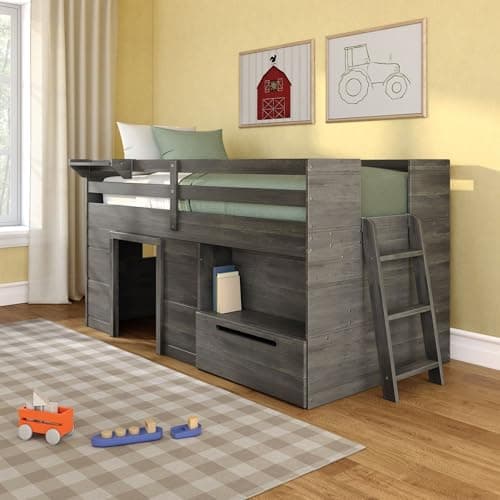 Max & Lily Twin Low Loft Bed with Storage Drawer Low loft with a deep drawer in the base — the honest answer when what you actually need is somewhere to put things. | Rooms short on drawer space | 8.0 | |
| 4 | 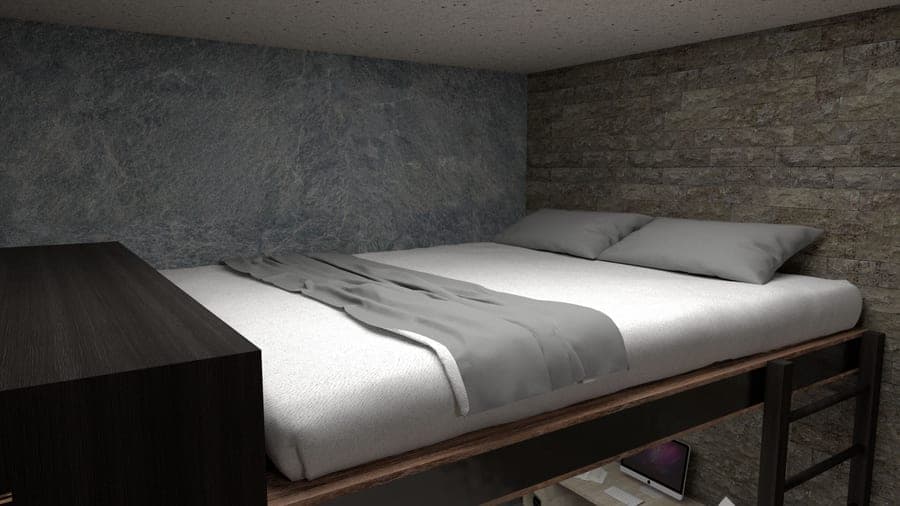 DHP Jett Junior Twin Metal Loft Bed The rare budget loft that publishes its weight limit, its mattress range and an age rule, in writing. | A first loft on a budget | 7.9 | |
| 5 | 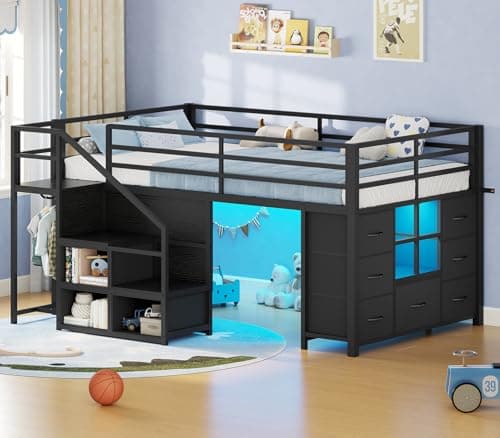 BTHFST Low Loft Bed with Stairs and 7 Drawers Stairs bolted to the frame rather than hooked on, two anti-tip kits in the box, and more drawers than any other loft here. | A small room that has to hold everything | 7.8 |
How we chose
We are a small publisher, not a testing lab. We don’t buy, assemble or sleep in the beds we write about, and we won’t pretend otherwise. What we do instead is read the published specifications and check them against the rules that actually govern children’s beds in the United States: the federal standard for children’s bunk beds (16 CFR Part 1513), the ASTM F1427 requirements it incorporates, and the American Academy of Pediatrics’ guidance on upper-bunk age. Where a manufacturer publishes no number, we write “not published by the manufacturer” rather than guess — that absence is itself worth knowing. We read owner feedback at volume for the things specs can’t tell you, and we label it as signal, not proof.
We earn a commission when you buy through our links. It never changes an ordering. Our full editorial policy.
The short answer
For a younger child, the loft bed to buy is the Max & Lily Twin Low Loft Bed. It is a low-profile solid New Zealand pine frame with a published 400 lb capacity and a GREENGUARD Gold certified finish, and the low deck is the whole point: the shorter the fall, the less the age question matters. It suits a first raised bed in a room with a normal or low ceiling.
The budget pick is the BTHFST Low Loft Bed with Stairs and 7 Drawers, a 41.5-inch-tall metal frame with stairs instead of a ladder, two anti-tip kits in the box and a published 4 to 6 in mattress recommendation. Stairs matter more than price at this age.
The age guidance, stated plainly
The American Academy of Pediatrics advises against children under six sleeping on an upper bunk, and the same reasoning applies to a loft deck. One frame on this page - the DHP Jett Junior - states the manufacturer’s own version of that rule on its listing: children under 6 should not use the upper bunk. Every other brand here stays silent on age, which means the AAP guidance is the only rule you get.
Are loft beds safe for younger children?
The risk in a loft bed is not the bed, it is the height of the fall and the chance of a sleeping child rolling over a rail. Three things change that risk, and all three are measurable before you buy.
The first is deck height. A junior or low loft puts the sleeping surface somewhere around 41 to 47 inches; a full-height loft puts it over 60. That difference is the single largest safety variable in this category and it costs nothing - low lofts are generally cheaper.
The second is guardrail clearance. The rail has to stand five inches above the top of the mattress, and that is a sum of two numbers: published rail height minus mattress thickness. The VINGLI junior loft publishes both - a 13.97 in full-length guardrail and a 6 in recommended mattress - and states on the listing that the sleeping surface must sit at least 5 in below the rail. That is the clearest statement of the rule we have seen on any listing in our registry.
The third is how the child gets up and down. Stairs are better than a ladder for a young child, particularly at night. Two frames here have them.
Deck heights and published numbers
| Bed | Deck height | Guardrail height | Mattress ceiling | Age guidance |
|---|---|---|---|---|
| Max & Lily twin low loft | Low profile, solid pine | Not published | Not published | Not published |
| VINGLI 47 in junior low loft with stairs | 47.24 in overall | 13.97 in full-length | 6 in recommended; surface must sit 5 in below the rail | Not published |
| Max & Lily twin low loft with storage drawer | Low profile, solid pine | Not published | Not published | Not published |
| DHP Jett junior twin metal loft | Junior height, powder-coated metal | Full-length rails, height not published | Over 4 in, not exceeding 6 in | Under 6 should not use the upper bunk |
| BTHFST low loft with stairs and 7 drawers | 41.5 in overall | Not published | 4 to 6 in recommended | Not published |
The BTHFST is the lowest frame here at 41.5 inches overall. The DHP Jett is the only one that puts an age in writing. The VINGLI is the only one that publishes the rail height and the mattress ceiling together, which is the pair that lets you check compliance on paper.
What the space underneath is for
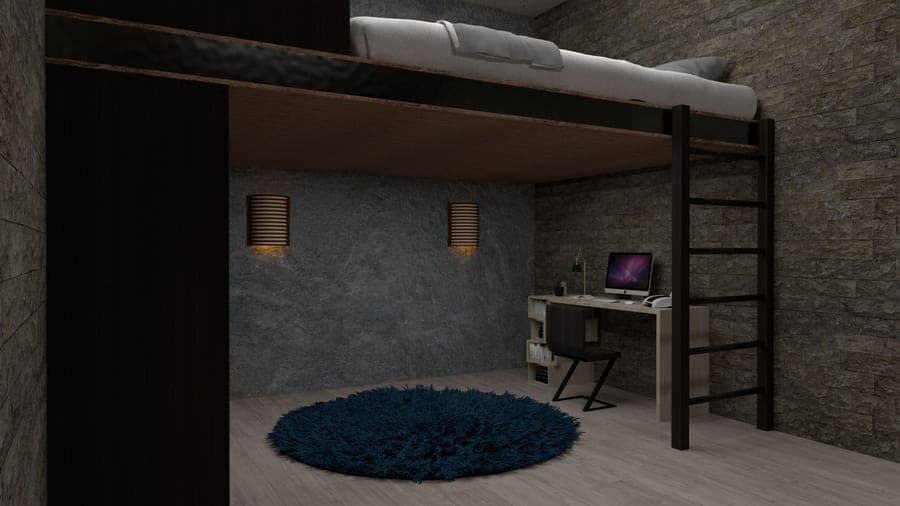
With a young child, a low loft usually buys play space rather than a desk - the clearance underneath a 41 to 47 inch frame is enough for a rug, a tent, a toy store or a reading corner, and not enough for a chair and a worktop. That is fine, and it is worth knowing before you buy a desk that will not fit.
Two frames here solve it differently by building storage into the bed: the BTHFST carries seven fabric drawers, three open cubbies and a clothes rail, and the Max & Lily storage model has a drawer in the base. Our guide to what fits under a loft bed works through the clearance arithmetic for desks, dressers and everything else.
Stairs, ladders and 2 a.m.
For a child under about eight, the night-time descent is the part to design around. A ladder requires facing the bed and climbing down backwards, half asleep. Stairs with a handrail do not. Two frames here have stairs, and the BTHFST pairs them with storage drawers in the treads.
Whichever you choose, put a light at the bottom and keep the route clear. Our ladder safety guide covers tread spacing, grip and what actually causes falls, and our loft bed age and safety guide goes further into the readiness question than a product page can.
Key takeaways
- The AAP advises against under-sixes on an upper bunk, and the same reasoning applies to a loft deck.
- Deck height is the biggest safety variable and it is the cheapest to change - low lofts sit around 41-47 in.
- One frame here states a manufacturer age rule. The rest leave the AAP guidance as the only rule you get.
- One publishes a rail height and a mattress ceiling together, and states the 5 in clearance requirement explicitly.
- Stairs beat a ladder for a young child at night. Two of these five have them.
The picks, in full
Every pick below carries the same spec block, so you can compare the numbers across this page and every other page on the site.
#1 · A first loft bed, and low ceilings
Max & Lily Twin Low Loft Bed
Max & Lily
A loft low enough to be a reasonable first loft, with the same 400 lb frame as the brand's bunks.
| Guardrail height above mattress | Not published by the manufacturer |
|---|---|
| Stated weight limit (per bunk) | 400 lb |
| Manufacturer minimum age | Not published by the manufacturer |
| Mattress thickness ceiling | Not published by the manufacturer |
| Materials / construction | Solid New Zealand pine, GREENGUARD Gold certified finish |
What works
- Low deck height works under an 8 ft ceiling with room to spare
- 400 lb rating is unusually high for a loft
- Space underneath takes a play tent, a reading nook or storage bins
- Ladder mounts on either side
What doesn’t
- Low height limits what fits underneath — a full desk usually will not
- Guardrail height is not published
- Solid pine is heavy for a piece you may want to reconfigure
The catch: Low loft means low clearance. Measure the chair back and the desk height together before assuming a workstation fits under it; on most low lofts, it does not.
#2 · A first raised bed in a low-ceilinged room
VINGLI 47 in Junior Low Loft Bed with Stairs
VINGLI
The only stair loft we found that publishes its guardrail height, its weight capacity, its mattress recommendation and the five-inch clearance rule.
| Guardrail height above mattress | 13.97 in full-length guardrail |
|---|---|
| Stated weight limit (per bunk) | 550 lb stated |
| Manufacturer minimum age | Not published by the manufacturer |
| Mattress thickness ceiling | 6 in recommended; listing states the surface must sit at least 5 in below the rail |
| Materials / construction | 100 percent solid pine with a white paint finish, one center beam, wood slat support; 78.98 x 40.55 x 47.24 in |
What works
- Publishes a 13.97 in guardrail height, which hardly any loft listing does
- Repeats the 5 in mattress-to-rail clearance rule in its own instructions
- 47.24 in overall height fits under a low ceiling and shortens any fall
- Solid pine rather than particle board, with a three-year warranty
What doesn’t
- 33 in from slat to floor limits what fits underneath to low furniture
- No minimum age published, so the climb is a judgment call
- The 550 lb figure is a frame capacity, not a per-sleeper rating
- Stairs add length - almost 79 in along the wall
The catch: Thirty-three inches of clearance underneath is the honest limit. It is enough for storage bins, a floor cushion or a low play table, and it is not enough for a desk and chair - if the point of the loft is a workspace underneath, this is the wrong height and a full loft is the right one.
#3 · Rooms short on drawer space
Max & Lily Twin Low Loft Bed with Storage Drawer
Max & Lily
Low loft with a deep drawer in the base — the honest answer when what you actually need is somewhere to put things.
| Guardrail height above mattress | Not published by the manufacturer |
|---|---|
| Stated weight limit (per bunk) | 400 lb |
| Manufacturer minimum age | Not published by the manufacturer |
| Mattress thickness ceiling | Not published by the manufacturer |
| Materials / construction | Solid New Zealand pine, GREENGUARD Gold certified finish |
What works
- Large drawer swallows out-of-season clothes or bulky toys
- Low height suits younger children and low ceilings
- Same solid pine frame and 400 lb rating as the rest of the range
- Storage is built in rather than bought separately
What doesn’t
- The drawer uses the space a desk or play area would have occupied
- Needs clearance in front of the bed to open
- Guardrail height is not published
The catch: Choosing the drawer means choosing against the play space. On a low loft there is only one volume underneath, and it goes to exactly one purpose.
#4 · A first loft on a budget
DHP Jett Junior Twin Metal Loft Bed
DHP
The rare budget loft that publishes its weight limit, its mattress range and an age rule, in writing.
| Guardrail height above mattress | Full-length guardrails (height not published) |
|---|---|
| Stated weight limit (per bunk) | 200 lb |
| Manufacturer minimum age | Manufacturer states children under 6 should not use the upper bunk |
| Mattress thickness ceiling | Over 4 in and not exceeding 6 in |
| Materials / construction | Powder-coated metal frame with built-in ladder |
What works
- Publishes a mattress range with both a floor and a ceiling, which almost nobody does
- States an age rule for the upper deck rather than leaving it to you
- Built-in ladder and full-length guardrails
- Short frame height for a loft, so the fall distance is smaller
What doesn’t
- 200 lb capacity is low for a bed a teenager might keep
- The 4-6 in mattress window rules out most mattresses on the market
- Metal frames need their fasteners re-checked periodically
The catch: The mattress window is genuinely narrow. Under 4 in and the guardrail geometry is wrong; over 6 in and the rail no longer clears it. You will be shopping for the mattress around the bed, not the other way round.
#5 · A small room that has to hold everything
BTHFST Low Loft Bed with Stairs and 7 Drawers
BTHFST
Stairs bolted to the frame rather than hooked on, two anti-tip kits in the box, and more drawers than any other loft here.
| Guardrail height above mattress | Not published by the manufacturer |
|---|---|
| Stated weight limit (per bunk) | Not published by the manufacturer |
| Manufacturer minimum age | Not published by the manufacturer |
| Mattress thickness ceiling | 4 to 6 in recommended by the manufacturer |
| Materials / construction | Heavy-duty metal frame with closely spaced slats, 7 fabric drawers, 3 open cubbies, clothes rail, RGB LED strip, 2 anti-tip kits; 78 x 55 x 41.5 in |
What works
- Stairs are fixed to the frame, so there is no wobble and nothing to re-hook
- Ships with two anti-tip kits rather than leaving anchoring to you
- 41.5 in tall - the lowest loft on this page
- Publishes a 4 to 6 in mattress window, which is the number that matters
What doesn’t
- No guardrail height published despite full-length rails being the claim
- No weight limit published at all
- 55 in wide because the stairs sit alongside, not at the end
- The LED strip and app control are features nobody needs on a bed
The catch: It tells you the mattress window and then goes quiet on the two numbers that would let you check it. A 4 to 6 in ceiling implies a guardrail of around 9 to 11 in, but the listing never states the rail height, so you are measuring it yourself on arrival. Do that before anyone sleeps up there.
Questions parents actually ask
Are loft beds safe for kids?
For children over six, a correctly assembled and anchored loft bed with a full-length guardrail standing five inches above the mattress is a normal children’s bed. For children under six the American Academy of Pediatrics advises against an upper sleeping deck, and one manufacturer on this page states the same rule itself. Deck height, guardrail clearance and the climb are the three things to check.
What age is a loft bed suitable for?
Six and over is the guidance that exists. Most listings publish no age at all, so treat the AAP figure as the default. Beyond age, judge the individual child: whether they wake and move at night, whether they can manage a ladder half asleep, and whether they can be trusted not to treat the deck as a climbing frame.
How tall is a low loft bed?
In our registry, frames sold as low or junior lofts run from about 41.5 inches to 47.24 inches overall. Full-height lofts go well past 60 inches. Always check the published figure rather than the word - neither term is regulated.
Do loft beds need to be anchored to the wall?
Yes, and it is more important than on a bunk because the footprint is narrower relative to the height. Several frames here include an anti-tip kit; where one is not supplied, fit an aftermarket kit into a stud or a proper plasterboard anchor. Our anchoring guide covers the fixings that actually hold.
What mattress thickness do low loft beds take?
Where manufacturers publish a figure it is usually 4 to 6 inches, because the guardrail has to stand five inches above the mattress. A thicker mattress eats that clearance directly. Never exceed a published ceiling to get a softer bed.
Sources
Read next
- Loft bed age and safety
The readiness question, in full.
- Best loft beds under $500
The same category filtered on price.
- What fits under a loft bed
Clearance arithmetic for desks and storage.
- Best bunk beds for low ceilings
If two children need beds rather than one.
Back to Loft Beds.