Loft Beds
The best loft beds with desks
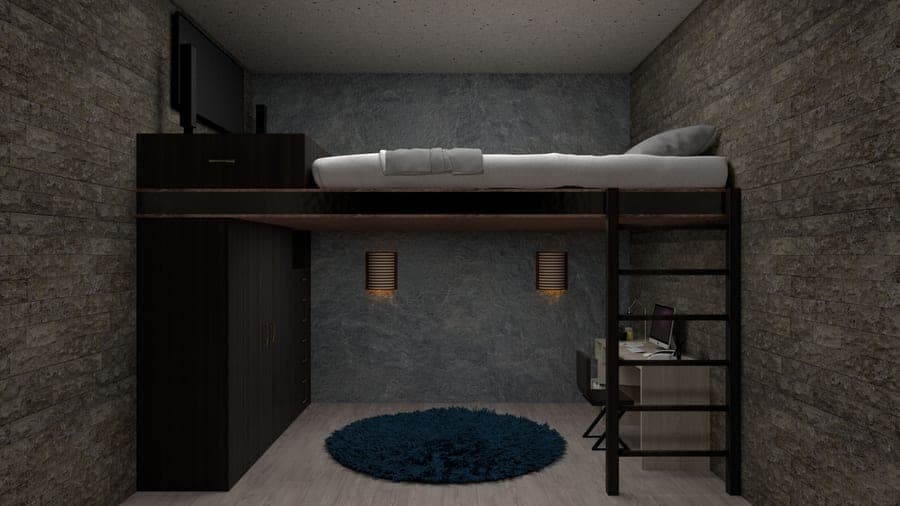
A desk under a bed is a brilliant use of space and a mediocre place to work, unless you deal with three things the listing never mentions: height, light and clearance.
We earn a commission from qualifying purchases made through links on this page, at no extra cost to you. How this site is funded.
Quick picks
The short version. Tap any row for the full write-up and its spec block.
| # | Product | Best for | Score | Price |
|---|---|---|---|---|
| 1 |  Max & Lily Full Size High Loft Bed with Desk and Bookcase A full-size loft with a real desk and bookcase built in — a teenager's whole room in one footprint. | Teens in a small bedroom | 8.3 | |
| 2 | Max & Lily Twin Low Loft Bed with Pull-Out Desk The pull-out desk solves the clearance problem that defeats most low lofts — it slides away when nobody is working. | Homework space in a room with no room for a desk | 8.0 | |
| 3 |  Adjustable Kids Desk Chair with Footrest The footrest is the whole point — it is what stops a child's legs dangling, and dangling legs are why they will not sit still. | Any child whose feet do not reach the floor | 8.0 | |
| 4 |  Rechargeable Motion-Sensor Night Light The cheapest safety upgrade for a bunk: light on the ladder before a foot goes on it. | A lit route down from the top bunk | 8.4 |
How we chose
We are a small publisher, not a testing lab. We don’t buy, assemble or sleep in the beds we write about, and we won’t pretend otherwise. What we do instead is read the published specifications and check them against the rules that actually govern children’s beds in the United States: the federal standard for children’s bunk beds (16 CFR Part 1513), the ASTM F1427 requirements it incorporates, and the American Academy of Pediatrics’ guidance on upper-bunk age. Where a manufacturer publishes no number, we write “not published by the manufacturer” rather than guess — that absence is itself worth knowing. We read owner feedback at volume for the things specs can’t tell you, and we label it as signal, not proof.
We earn a commission when you buy through our links. It never changes an ordering. Our full editorial policy.
The pitch is irresistible: a bedroom and a study in one footprint. It works, and it works properly only if you solve three problems that product photography carefully avoids.
Problem one: the desk height is usually wrong
Built-in loft desks tend to sit at adult height because the frame dictates it — the desk has to clear the child’s knees and the frame’s lower rail. Max & Lily publish 34.25 inches for their pull-out desk. Standard adult desk height is 29 to 30 inches. Kitchen counter height is 36.
A seven-year-old at a 34-inch desk works with their shoulders raised and their feet dangling, which is both uncomfortable and the reason they will not sit there. The fix is not a different bed — it is a chair that raises them to the right height and a footrest so their legs are supported. Our desk height guide has the numbers by age, and a good adjustable chair costs a fraction of the bed.
Measure before you assume
The desk height published by the manufacturer is the height of the work surface from the floor. Compare it against your child’s seated elbow height, not against a generic “kids desk” figure. The difference between a desk that gets used and one that becomes a shelf is usually three inches.
Problem two: it is dark under there
A loft deck is a ceiling over the desk, and the room’s main light is above it. Every loft-with-desk needs its own lighting, and almost none ship with it.
A clip-on or frame-mounted task light over the work surface is the answer, and the important property is that the light comes from in front of or beside the child rather than behind them — a light behind the head puts the child’s own shadow on the page. A warm-white light strip fixed to the underside of the deck works well and keeps the desk surface clear.
Problem three: chair clearance
The under-deck clearance figure a manufacturer publishes is measured to the frame. What you need to fit is a chair with a back, pushed out far enough for a child to sit down, with a child in it leaning back.
| Element | Typical requirement |
|---|---|
| Desk surface height | 24-30 in for primary age; 29-30 in for teens |
| Seated head clearance above the desk | At least 24 in for a child to sit upright |
| Chair back height | Add 12-18 in above the seat |
| Depth to pull the chair out | 24 in clear behind the desk edge |
Add those up and a low loft usually does not work as a study space. That is not a fault in the bed — it is why the pull-out desk exists, and why high lofts are the ones sold with bookcases.
The pull-out desk, which solves most of this
A desk that slides away when nobody is using it means the under-deck space is a desk when it needs to be and floor the rest of the time. On a low loft that is genuinely the difference between a usable bed and a compromised one, and it is why the Max & Lily pull-out model ranks where it does despite the desk being too tall out of the box.
The cost is a mechanism that loosens, and a work surface that is smaller than a fixed desk would be.
The alternative
If the numbers do not work — and in an eight-foot-ceilinged room with a primary-school child, they often do not — a low loft with a play area underneath plus a separate desk against another wall is a better room. We argue that case properly on loft bed vs separate desk and bed.
The picks, in full
Every pick below carries the same spec block, so you can compare the numbers across this page and every other page on the site.
#1 · Teens in a small bedroom
Max & Lily Full Size High Loft Bed with Desk and Bookcase
Max & Lily
A full-size loft with a real desk and bookcase built in — a teenager's whole room in one footprint.
| Guardrail height above mattress | Not published by the manufacturer |
|---|---|
| Stated weight limit (per bunk) | 400 lb |
| Manufacturer minimum age | Not published by the manufacturer |
| Mattress thickness ceiling | Not published by the manufacturer |
| Materials / construction | Solid pine with non-toxic finish |
What works
- Full-size mattress on top, so it does not get outgrown at 14
- Desk and bookcase are part of the frame, not add-ons
- 400 lb capacity covers an adult-sized teenager
- Replaces a bed, a desk and a bookcase in one purchase
What doesn’t
- High deck needs ceiling height — check before ordering
- Heavy, and effectively permanent once built
- A high loft is not appropriate for a young child
The catch: A full-size high loft is a serious piece of furniture and a serious fall height. It belongs to an older child, and the AAP's under-6 guidance for upper bunks is the floor here, not the ceiling — most parents would set the bar considerably higher for a loft this tall.
#2 · Homework space in a room with no room for a desk
Max & Lily Twin Low Loft Bed with Pull-Out Desk
Max & Lily
The pull-out desk solves the clearance problem that defeats most low lofts — it slides away when nobody is working.
| Guardrail height above mattress | Not published by the manufacturer |
|---|---|
| Stated weight limit (per bunk) | 400 lb |
| Manufacturer minimum age | Not published by the manufacturer |
| Mattress thickness ceiling | Not published by the manufacturer |
| Materials / construction | Solid New Zealand pine, GREENGUARD Gold certified finish |
What works
- Desk surface measures 41 in wide by 22.75 in deep at 34.25 in high
- Pulls away completely, so the space underneath is not permanently a desk
- Desk and ladder can both be assembled on either side
- Same 400 lb frame rating as the plain low loft
What doesn’t
- 34.25 in is a tall work surface for a young child without a raised chair
- Pull-out mechanism is one more thing to loosen over time
- Guardrail height is not published
The catch: That 34.25 in desk height is adult counter height, not kid desk height. A seven-year-old will be working with their shoulders up around their ears unless you pair it with a properly raised seat and a footrest.
#3 · Any child whose feet do not reach the floor
Adjustable Kids Desk Chair with Footrest
Various (search by feature)
The footrest is the whole point — it is what stops a child's legs dangling, and dangling legs are why they will not sit still.
| Guardrail height above mattress | Not applicable |
|---|---|
| Stated weight limit (per bunk) | Not published by the manufacturer |
| Manufacturer minimum age | Not published by the manufacturer |
| Mattress thickness ceiling | Not applicable |
| Materials / construction | Adjustable seat height and depth with an adjustable footrest ring |
What works
- Adjustable footrest keeps thighs supported and feet planted
- Seat depth adjustment matters more for children than seat height
- Grows through several years of homework
- Cheaper than a full adult ergonomic chair
What doesn’t
- Weight limits are seldom published
- More adjustments means more things to slip out of position
- Casters on hard floors move more than a child needs
The catch: Adjustability is only worth paying for if you actually re-adjust it. Put a note in your calendar for the start of each school year, or you have bought an expensive fixed chair.
#4 · A lit route down from the top bunk
Rechargeable Motion-Sensor Night Light
Various (search by spec)
The cheapest safety upgrade for a bunk: light on the ladder before a foot goes on it.
| Guardrail height above mattress | Not applicable |
|---|---|
| Stated weight limit (per bunk) | Not applicable |
| Manufacturer minimum age | Not published by the manufacturer |
| Mattress thickness ceiling | Not applicable |
| Materials / construction | Rechargeable LED with adhesive or magnetic mount |
What works
- Lights the ladder and the floor at the bottom of it automatically
- Warm color temperature does not wake the room the way a white light does
- No wiring, so it mounts anywhere on the frame
- Costs less than almost any other change you can make to a bunk
What doesn’t
- Rechargeable means remembering to recharge it
- Adhesive mounts fail on textured or painted surfaces
- Motion sensors can trigger from the bed and wake the sleeper
The catch: This is a generic category rather than a single model — search on the specification (rechargeable, motion sensor, warm white) rather than on a brand, because the brands turn over constantly and the spec does not.
Questions parents actually ask
What height should a desk under a loft bed be?
Matched to the child, not to the bed: roughly 24 inches for a six-year-old rising to 29-30 inches for a teenager. Built-in loft desks are often 34 inches, which needs a raised chair and a footrest to work for a younger child.
Is it dark under a loft bed?
Yes, and almost none ship with lighting. Fit a task light in front of or beside the child so they do not cast a shadow on their own work.
How much clearance do you need under a loft bed for a desk?
Enough for the desk height plus at least 24 inches of seated head clearance above it, plus room to pull a chair out. Most low lofts do not have it.
Are pull-out desks on loft beds any good?
They solve the clearance problem neatly on a low loft, at the cost of a smaller surface and a mechanism that loosens over time.
Can you put your own desk under a loft bed?
Often, and it is frequently the better option — you can choose the right height. Measure the under-deck clearance and the chair path before buying either.
Sources
Read next
- Kids desk height guide
The seated-elbow measurement that decides a desk.
- Loft bed vs separate desk and bed
When splitting them makes the better room.
- What fits under a loft bed
Measured clearances for desks, storage and play.
Back to Loft Beds.