Bunk Beds
Bunk bed with desk vs loft bed with desk
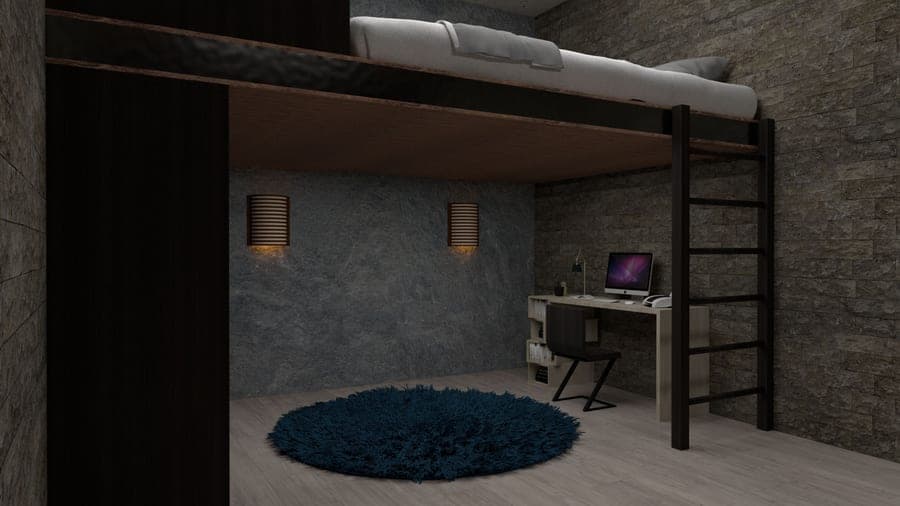
Search for a bunk bed with a desk and most of what comes back is a loft bed. That is not a mistake in the listings - it is the geometry of the thing.
We earn a commission from qualifying purchases made through links on this page, at no extra cost to you. How this site is funded.
How we chose
We are a small publisher, not a testing lab. We don’t buy, assemble or sleep in the beds we write about, and we won’t pretend otherwise. What we do instead is read the published specifications and check them against the rules that actually govern children’s beds in the United States: the federal standard for children’s bunk beds (16 CFR Part 1513), the ASTM F1427 requirements it incorporates, and the American Academy of Pediatrics’ guidance on upper-bunk age. Where a manufacturer publishes no number, we write “not published by the manufacturer” rather than guess — that absence is itself worth knowing. We read owner feedback at volume for the things specs can’t tell you, and we label it as signal, not proof.
We earn a commission when you buy through our links. It never changes an ordering. Our full editorial policy.
The short answer
If two children have to sleep in the room, buy a bunk bed with a desk — the Harper & Bright Designs Twin Over Full Bunk Bed with Desk is the one in our registry that does it, and the desk is an end-panel workstation rather than a full study. If only one child sleeps in the room, buy a loft bed with a desk instead. You give up the second mattress and you get the entire footprint of the bed back as desk and shelving, which is a far better desk than any bunk can offer.
The decision is almost never about taste. It is about whether the room has to hold two sleepers, and about whether your ceiling can carry a full-height loft — see loft bed ceiling height before you commit to one.
Why most “bunk bed with desk” results are loft beds
A bunk bed puts a second mattress where a desk would go. That is the whole of it. The space under a top bunk on a twin-over-twin frame is occupied by a sleeping child, so the only place a manufacturer can put a desk is on the end of the bed, hanging off the frame, or along one side of a twin-over-full where the lower mattress is narrower than the upper footprint.
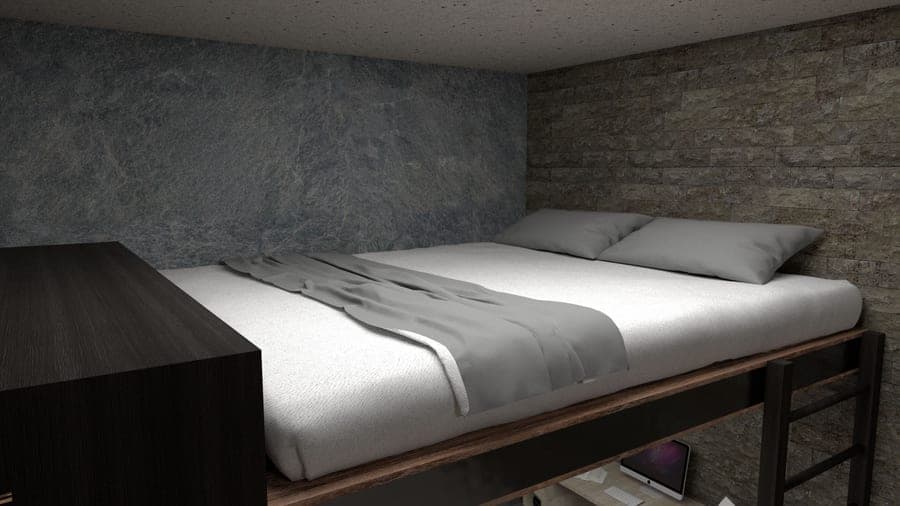
A loft bed has nothing underneath but air. Take the lower mattress away and you get a bay roughly 75 inches long and 38 to 54 inches wide, and manufacturers fill it with an L-shaped desk, a bookcase, a wardrobe or all three. That is why the search results blur: the loft bed is the product that actually solves “bed over desk”, and the industry has spent a decade optimizing it for that query.
So the honest version of the question is not which product is better. It is: does this room need two beds or one? Everything else follows from that answer, and if the answer is two beds, the realistic options are a bunk with a small end desk, or a bunk plus a separate desk somewhere else in the room.
| Bunk with desk | Loft with desk | |
|---|---|---|
| Sleepers | Two | One |
| Desk size | An end-panel or side workstation, narrower than a standalone desk | A full-width or L-shaped desk the length of the bed |
| Ceiling needed | Standard bunk height - works under an 8 ft ceiling | Full-height lofts need the arithmetic run; low lofts do not |
| Storage under | Whatever the lower bunk does not use | Drawers, shelves or a wardrobe, usually built in |
| Who sits there | The child on the lower bunk loses headroom to the desk run | One child, with no competing use for the space |
The bunk case: two sleepers, one room, homework somewhere
The Harper & Bright Designs twin-over-full with a desk publishes 300 lb for the upper bunk and 350 lb for the lower, which is a real number on a frame at this price and the kind of figure we care about more than the photograph. The desk is the compromise: it is a workstation attached to the bed, not a desk you would choose on its own merits, and a second child in the room still has nowhere to work.
The alternative two-sleeper answer is often better value. Buy a bunk with no desk at all, pick the model with the clearest published guardrail and weight numbers, and put a separate desk on the opposite wall. A small-space desk takes about 36 inches of wall and costs a fraction of the premium an integrated desk adds to a bunk frame. It is also replaceable when the child outgrows it, which a built-in desk is not.
What a bunk-with-desk genuinely wins on is a long, narrow room where there is no second wall to give a desk. If the only free surface in the room is the end of the bed, the end of the bed is where the desk has to be.
The loft case: one sleeper, and a desk worth having
Three of our registry lofts are built around a desk, and they differ in the thing that matters most: how much ceiling they need. The Max & Lily Twin High Loft Bed with Bookcase and Desk is specified for a room with an eight-foot ceiling and carries 400 lb per bed. The Max & Lily Full Size High Loft Bed with Desk and Bookcase does the same job over a full mattress, which matters for a teenager who has stopped fitting a twin. The DICTAC Full Loft Bed with L-Shaped Desk and Storage Drawers publishes 13.11 in full-length guardrails and a 4-6 in mattress recommendation for the upper deck — a published rail height on a budget loft is unusual enough to be worth saying out loud.
The catch nobody puts in the listing photograph: a desk under a loft is a desk under a ceiling. Sitting headroom under the deck is typically 40-something inches on a high loft, which is fine for a child at a keyboard and tight for an adult helping with homework. A low loft has even less, which is why a low loft with a pull-out desk exists as a separate product category.
Run the clearance arithmetic before you buy either one
Ceiling height minus the height of the top deck minus the mattress you intend to put on it is the headroom a child gets sitting up in bed. Thirty inches is comfortable, twenty-four is livable, and anything under that means they hit their head at some point every week. The same subtraction decides whether a desk fits underneath — our bunk bed ceiling height guide shows the arithmetic with real numbers.
The specs that decide it, in order
Ceiling height first. It is the only constraint you cannot buy your way out of. Measure floor to ceiling, and measure again under a ceiling fan or a sloped section if the bed is going there.
Guardrail height second. Federal construction rules put the top of the guardrail no less than 5 inches above the top of the mattress on a child’s bunk. A loft deck is a bunk deck for this purpose. Any published rail figure is a number you can subtract your mattress thickness from before the bed arrives; where a brand publishes nothing, that check becomes yours to run with a tape measure, as we set out in guardrail height requirements.
Desk depth third. A desk shallower than about 20 inches will not take a laptop and an open book at the same time, which is the actual test of a homework surface. Our kids desk dimensions guide has the depth figures by what the child is doing.
Weight limit fourth, and read it per surface rather than as a single number. A 400 lb per-surface frame is a frame that will still be right when the child is seventeen; a 175 lb upper deck is one you will replace.
What we would buy
Two children, standard ceiling, no second wall for a desk: the twin-over-full with the built-in desk, with the understanding that the desk is a bonus rather than a study.
Two children and any free wall at all: a plain bunk with better published safety numbers, plus a separate desk. This is the option we would take most often, and it is cheaper.
One child, eight-foot ceiling: a high loft with a desk and bookcase. It is the only configuration in this comparison that gives a child a desk they will still want to use at fifteen.
One child, low ceiling: a low loft with a pull-out desk, or a standard bed and a real desk. Do not force a full-height loft under a seven-foot ceiling to get the desk — you will take the headroom off the sleeping deck, which is the one place it is not negotiable.
Key takeaways
- Most bunk-bed-with-desk search results are loft beds, because a bunk puts a mattress where the desk would go.
- Two sleepers in the room means a bunk, and the desk will be an end-panel workstation rather than a study.
- A bunk with no desk plus a separate desk is usually cheaper and gives a better work surface.
- One sleeper means a loft, and the loft gives you the bed's entire footprint as desk and shelving.
- Ceiling height decides the shortlist before any other spec - run the subtraction before you shop.
The twin-over-full with a desk is the only genuine bunk-with-desk here, and whether that beats a loft with a proper desk is settled in bunk bed with desk vs loft bed with desk.
Drawers are one of three ways a bunk can carry storage, and the trade each one makes in floor length is set out in our comparison of stairs, drawers or a trundle.
If what you actually want is storage rather than a safer climb, weigh the stair drawers against base drawers and a trundle in bunk beds with storage compared.
Once you have settled the bunk question either way, the shortlist of setups that work for two children in one room is in best beds for two kids sharing a room.
If the reason you are here is two children and one bedroom specifically, the configuration-led version of this roundup is best beds for two kids sharing a room.
If a low ceiling rather than a young child is what brought you here, run the clearance arithmetic in bunk bed ceiling height first.
Width and length are only half the fit problem; the vertical version, including the ceiling fan rule, is in bunk bed ceiling height.
A bunkie board is one of several things that are not in the box, and the full list of what you still have to buy is in do bunk beds come with mattresses.
The safety half of the same question, broken down into the four things that actually go wrong, is in are bunk beds dangerous.
If the bed you already own has a ladder and stairs are not an option, the checks that make a ladder as safe as it can be are in bunk bed ladder safety.
If the bed you choose has clearance underneath but no drawers, the aftermarket route and how to measure for it are in under-bed storage for kids rooms.
The bed is the first decision in a shared room and not the last one; the zoning and storage that follow it are in how to organize a shared kids room.
What we'd buy
Every pick below carries the same spec block, so you can compare the numbers across this page and every other page on the site.
A shared room that also has to be a study
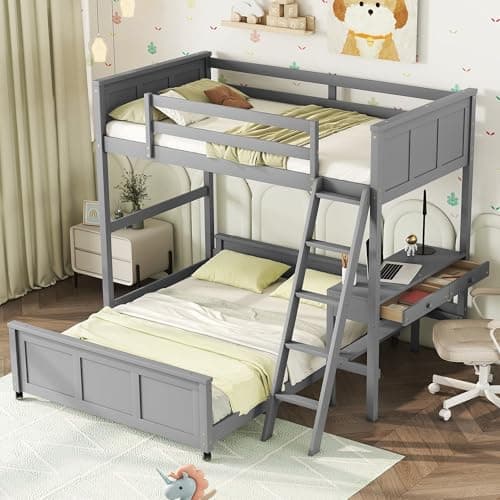
Harper & Bright Designs Twin Over Full Bunk Bed with Desk
Harper & Bright Designs
An L-shaped layout that turns the bottom bunk sideways and puts a desk under the twin, so two children and a homework station share one frame.
| Guardrail height above mattress | Not published by the manufacturer |
|---|---|
| Stated weight limit (per bunk) | 300 lb upper, 350 lb lower |
| Manufacturer minimum age | Not published by the manufacturer |
| Mattress thickness ceiling | Not published by the manufacturer |
| Materials / construction | Solid pine and MDF with iron alloy bolts, slat system included |
What works
- 300 lb upper and 350 lb lower published, comfortably above the cheapest staircase bunks
- Desk with drawers is part of the frame rather than a separate purchase
- Bottom bed can be detached and placed elsewhere in the room
- 12-month warranty stated on the listing
What doesn’t
- L-shaped footprint occupies a corner rather than a wall, which is harder to plan around
- No guardrail height and no mattress ceiling published
- The desk sits under the top bunk, so seated headroom is a figure you have to verify yourself
- Two boxes that may not arrive together
The catch: An L-shaped bunk needs a corner with two clear walls and no door or radiator in the way, which is a much fussier requirement than a rectangle against one wall. Draw it on the floor in masking tape before you order. This is the pick most often returned for not fitting the room it was bought for.
A teenager in a room with an eight-foot ceiling
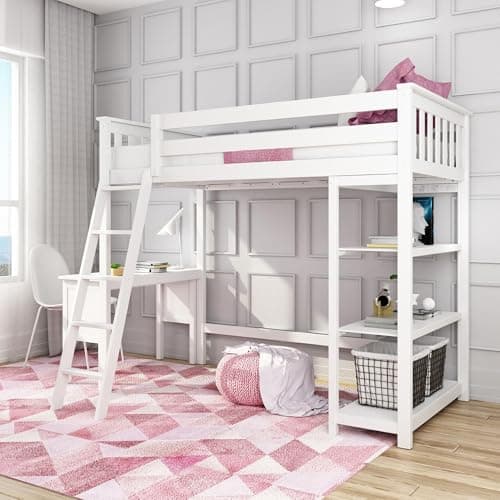
Max & Lily Twin High Loft Bed with Bookcase and Desk
Max & Lily
A complete study station under a twin deck, with a published 68.5 in overall height that fits under a low ceiling where most high lofts do not.
| Guardrail height above mattress | Not published by the manufacturer |
|---|---|
| Stated weight limit (per bunk) | 400 lb per bed |
| Manufacturer minimum age | Not published by the manufacturer |
| Mattress thickness ceiling | Not published by the manufacturer |
| Materials / construction | Solid New Zealand pine, solid wood slats with a metal support bar, low-VOC finish |
What works
- Desk and bookcase both included, so the room is finished rather than half-built
- 68.5 in overall height is low for a high loft and is published explicitly as suiting low ceilings
- 51.5 in of published under-bed height, measured rather than implied
- Desk installs facing in or out, and the ladder goes on either side
What doesn’t
- Twin deck only, so it will not take an adult guest
- No mattress ceiling published, which on a loft bed is the guardrail clearance figure
- Total footprint with the ladder is 81.5 in by 59.5 in - the ladder is not free
- At the top of the price range for a twin loft
The catch: Everything about this bed is published except the two numbers this site cares about most: guardrail height and mattress thickness. On a loft bed there is no bottom bunk to fall onto, so the rail is the entire safety system, and the brand that prints 14 inches on its bunk beds prints nothing here. Measure it on arrival and buy the mattress afterward.
Teens in a small bedroom
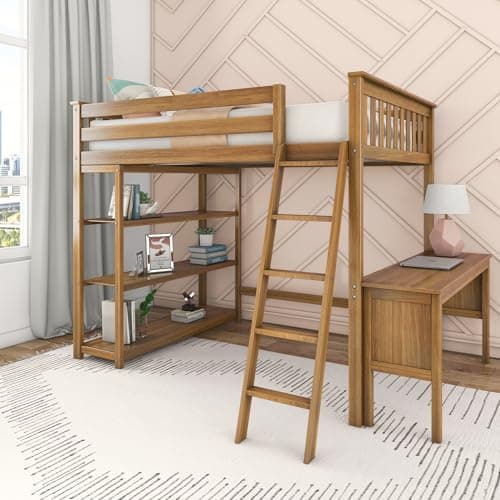
Max & Lily Full Size High Loft Bed with Desk and Bookcase
Max & Lily
A full-size loft with a real desk and bookcase built in — a teenager's whole room in one footprint.
| Guardrail height above mattress | Not published by the manufacturer |
|---|---|
| Stated weight limit (per bunk) | 400 lb |
| Manufacturer minimum age | Not published by the manufacturer |
| Mattress thickness ceiling | Not published by the manufacturer |
| Materials / construction | Solid pine with non-toxic finish |
What works
- Full-size mattress on top, so it does not get outgrown at 14
- Desk and bookcase are part of the frame, not add-ons
- 400 lb capacity covers an adult-sized teenager
- Replaces a bed, a desk and a bookcase in one purchase
What doesn’t
- High deck needs ceiling height — check before ordering
- Heavy, and effectively permanent once built
- A high loft is not appropriate for a young child
The catch: A full-size high loft is a serious piece of furniture and a serious fall height. It belongs to an older child, and the AAP's under-6 guidance for upper bunks is the floor here, not the ceiling — most parents would set the bar considerably higher for a loft this tall.
A teenager's first desk-and-bed setup on a tight budget
DICTAC Full Loft Bed with L-Shaped Desk and Storage Drawers
DICTAC
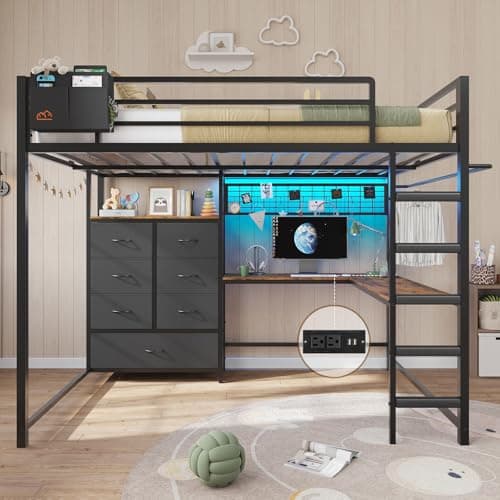
The cheapest full-size loft here, and the only one that publishes both a guardrail height and a recommended mattress thickness - which is the pairing that matters.
| Guardrail height above mattress | 13.11 in full-length heightened guardrails |
|---|---|
| Stated weight limit (per bunk) | Not published by the manufacturer |
| Manufacturer minimum age | Not published by the manufacturer |
| Mattress thickness ceiling | 4-6 in recommended for the upper deck |
| Materials / construction | Square heavy-duty metal frame with buckled metal slats; FSC-certified wood desk and shelves |
What works
- Publishes a rail height and a mattress recommendation together, which nothing else in this roundup does
- 13.11 in of rail over a 6 in mattress leaves 7 in of clearance, comfortably over the federal bunk-bed minimum
- L-shaped desk, seven fabric drawers, a shelf and a charging station with two outlets, type-C and USB
- Anti-tip nails and ladder covers supplied rather than sold as accessories
What doesn’t
- No weight limit published anywhere on the listing, on a bed sold for teenagers
- The 4 to 6 in mattress recommendation is restrictive even by loft-bed standards
- 72.2 in tall, so it needs real ceiling height
- Fabric drawers and a grid panel are not built to last the way a wooden carcass would
The catch: A 4 to 6 inch mattress is thin. It is the right call for guardrail clearance and the wrong call for a fifteen-year-old's back, and there is no way to have both on this frame. If the teenager is tall or a side sleeper, price in a decent 6-inch foam mattress and accept that you cannot go thicker.
Questions parents actually ask
Can you get a bunk bed with a desk underneath?
Not in the usual sense. A bunk bed has a second mattress underneath the top bunk, so there is no bay for a desk. What manufacturers sell as a “bunk bed with desk” is either a loft bed, which sleeps one, or a bunk with a desk attached to the end panel or along the side of a twin-over-full frame.
Is a loft bed with a desk better than a bunk bed with a desk?
For one child, yes — the desk is far bigger, because it occupies the whole footprint of the bed rather than an end panel. For two children it is not an option at all, since a loft sleeps one. The number of sleepers settles the question before any comparison of desk quality.
How much ceiling height do you need for a loft bed with a desk?
Enough that the child has roughly 30 inches between the top of the mattress and the ceiling, plus sitting headroom under the deck for the desk. Take your ceiling height, subtract the published deck height and the mattress thickness, and check what is left before you order.
What desk depth do you need under a loft bed?
About 20 inches or more if a laptop and an open book have to share the surface. Many integrated loft desks are shallower than that, so check the published depth rather than the photograph — the photographs are shot with a single slim laptop on an empty desk.
Is a built-in desk cheaper than buying a bunk and a desk separately?
Usually not. The premium an integrated desk adds to a bunk frame is typically more than a decent standalone kids desk costs, and the standalone desk can be replaced when the child outgrows it while the built-in cannot.
Sources
Read next
- Best loft beds with desks
The one-sleeper answer, ranked.
- Best twin over full bunk beds
Where the bunk-with-desk frames live.
- Bunk bed ceiling height
The subtraction that decides your shortlist.
- Loft bed vs separate desk and bed
Whether to combine them at all.
Back to Bunk Beds.