Desks & Storage
How to organize a shared kids room
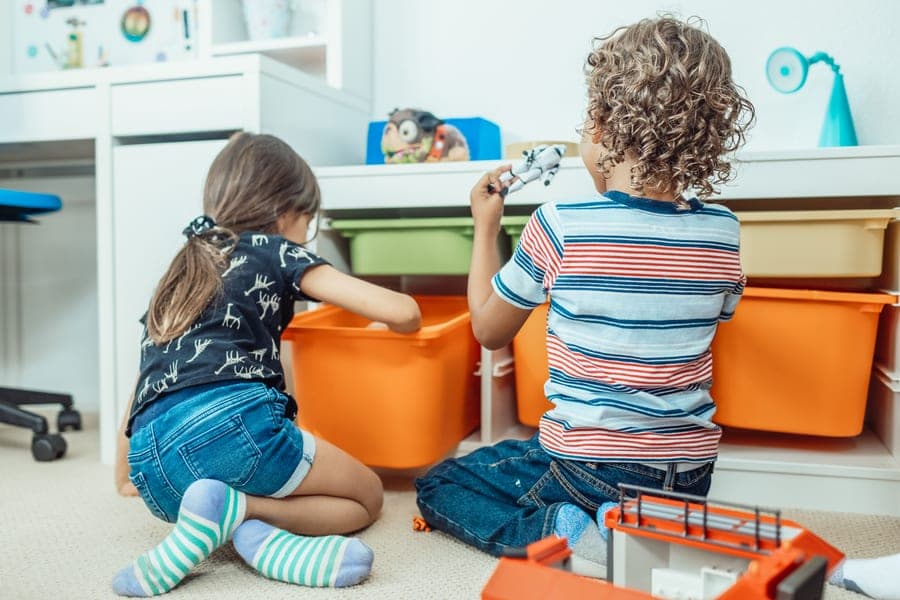
Two children in one room is a boundary problem before it is a storage problem. Give each one something that is unambiguously theirs and most of the rest resolves.
We earn a commission from qualifying purchases made through links on this page, at no extra cost to you. How this site is funded.
The short answer
Organize a shared room by child, not by category. Give each child their own labeled storage — their own bins, their own shelf, their own drawer — and put only genuinely shared things in the communal middle. Most of the daily friction in a shared room is about ownership rather than tidiness, and a system that answers “whose is this?” answers most of it.
The practical shape: bunk the beds against one wall to free the floor, give each child a column of Collapsible Fabric Storage Cubes or a side of a bookcase, and put a HOOBRO Toy Box Storage Chest Bench — 330 lb published upper-surface capacity — in the shared zone as both seating and the communal toy box.
Start with the floor plan, not the furniture
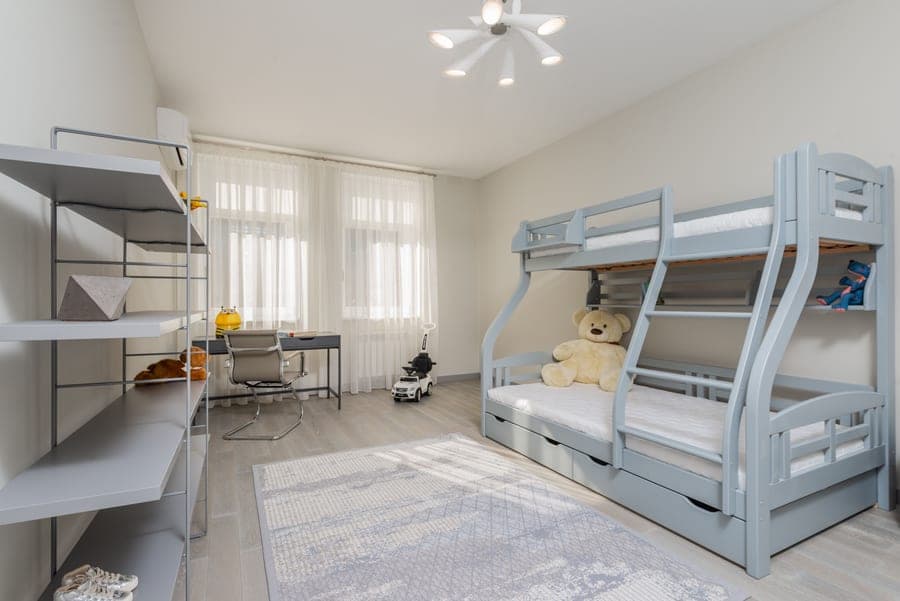
Two children in a 10 by 12 room have about 120 square feet. Two separate twin beds take roughly 42 of them out of the middle. A bunk takes 18 against a wall. That is 24 square feet — a fifth of the room — returned to the part of the room children actually use, and it is why almost every successful shared room starts with a bunk.
The shortlist, with the published safety numbers, is in best beds for two kids sharing a room. If the room is big enough to keep two separate beds, keep them — the independence is worth real floor area, and bunk beds vs two twin beds makes that case.
Once the bed is placed, the rest of the room divides into three zones and the whole system follows from them.
| Zone | Belongs to | What lives there |
|---|---|---|
| Sleep | Each child, individually | The bed, a light, a shelf or pocket for the things they want within reach |
| Own | Each child, individually | Clothes, their own toys, their own books - labeled with their name or color |
| Shared | Both | Communal toys, the bench, the floor, the bookcase's lower shelves |
One storage system per child
This is the rule that does the most work, and the easiest way to implement it is color. Each child gets a color, and every bin, label and basket that belongs to them is that color. It removes the negotiation from tidying and it works for children too young to read.
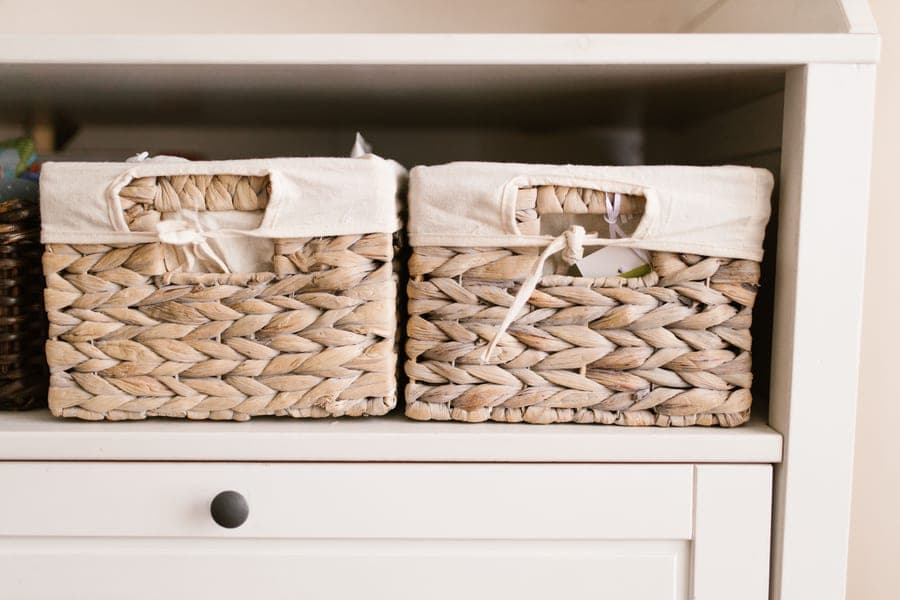
Fabric cubes in a shelving unit are the cheapest way to do it: a column each, two or three cubes per child, labeled. They collapse when not needed and cost little enough to replace when a child outgrows the arrangement.
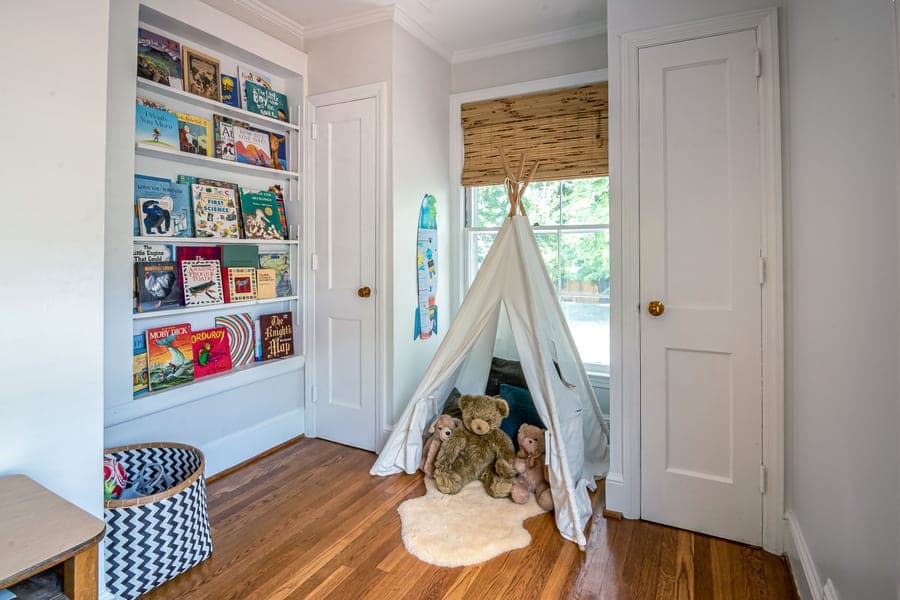
A tall bookcase split down the middle is the second option — the Humble Crew Kids Bookshelf has six tiers, so three each, with the lower tiers going to the younger child because that is what they can reach. Anchor it; a bookcase in a room where two children chase each other is the classic tip-over, and the reasoning is in anchoring kids furniture to the wall.
Under-bed drawers split the same way: one each, not a communal pool. The measuring method is in under-bed storage for kids rooms.

The shared zone, and the one piece of furniture it needs
Some things genuinely belong to both children — the building blocks, the train set, the board games — and they need a home that is obviously communal rather than parked in one child’s column.
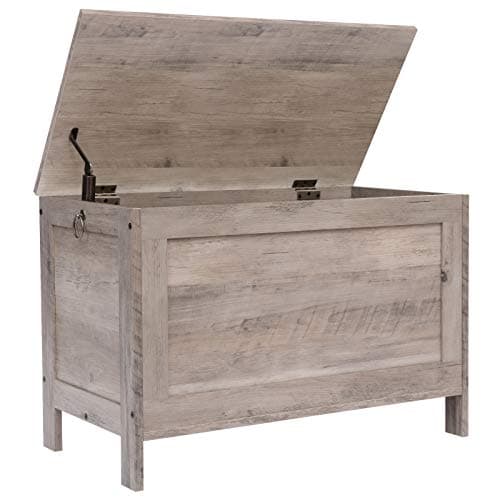
A storage bench does this better than a toy box, because it is also somewhere to sit, which a shared room usually lacks. The HOOBRO Toy Box Storage Chest Bench publishes 330 lb for the upper surface, which means two children and an adult reading a story is within spec. Put it at the end of the beds or under the window and it becomes the natural place for shared things.
The lid is the thing to check. CPSC’s storage-chest warning sets out why: a lid needs a support that holds it open in any position, and latches or locks that could trap a child inside should not be there. The fuller discussion, and the benches that get it right, are in best kids storage benches.
Give each child one place that is theirs alone
Not a zone, not a side of the room — one specific, physical, uncontested thing. A shelf, a box with a lid, a drawer. Children sharing a room give up almost all their privacy, and a single container nobody else opens does a surprising amount of work. It does not need to be big; it needs to be theirs.
Making two different schedules work in one room
A shared room usually means two bedtimes, two wake times, and one of each waking the other. Three things help.
Blackout at the window. It handles the early sleeper going down while it is light and the early riser waking at 5 a.m., and it does both for both children at once. It is the single highest-value purchase in a shared room — the mechanism is in blackout and kids sleep.
Individual light. A clip-on reading light or a low night light per child means one can read while the other sleeps, without the ceiling light coming on. On a bunk, run the cord tight down the post, or use a battery light for a younger child.
A sound floor. A fan or white noise at low volume raises the threshold at which one child’s movement wakes the other. It is unglamorous and it works.
Homework in a shared room
Two desks rarely fit, and two children rarely need a desk at the same age anyway. The sequence that works: one desk, placed for the older child, with the younger one working at the kitchen table until they need their own. When they do, the second desk is usually a narrow one along the remaining wall.
If the room genuinely cannot take a desk, a loft bed for one child converts their bed footprint into a workspace, which is the most efficient trade available in a small shared room. The options are in best kids desks for small spaces.
The maintenance rule
A shared room needs a reset, and the reset has to be short enough to happen. Five minutes before bed, both children, everything goes back in the box with their color on it. Shared things go in the bench.
What makes this work is that the system answers every question without an adult. If a child has to ask where something goes, the labeling has failed, and the fix is a better label rather than a firmer rule.
Key takeaways
- Bunk the beds first - it returns about a fifth of a typical room to the floor.
- Organize by child, not by category. A color per child answers 'whose is this?' without an adult.
- Shared things go in one communal container, ideally a bench you can also sit on.
- Give each child one small place that is theirs alone. It matters more than its size suggests.
- Blackout curtains are the highest-value purchase in a shared room, because they fix both bedtimes at once.
What we'd buy
Every pick below carries the same spec block, so you can compare the numbers across this page and every other page on the site.
Cube shelving and under-bed storage
Collapsible Fabric Storage Cubes
Various (search by size)
The cheapest storage that actually gets used, because a child can carry one to where the mess is.
| Guardrail height above mattress | Not applicable |
|---|---|
| Stated weight limit (per bunk) | Not published by the manufacturer |
| Manufacturer minimum age | Not published by the manufacturer |
| Mattress thickness ceiling | Not applicable |
| Materials / construction | Non-woven fabric or cotton canvas with carry handles |
What works
- Light enough for a small child to lift and carry full
- Collapses flat when not needed
- Fits standard 11 in cube shelving and most under-bed gaps
- Costs very little per bin
What doesn’t
- Non-woven fabric bins sag and tear within a couple of years
- No published load rating anywhere in the category
- Opaque, so everything gets forgotten in them
The catch: Non-woven bins are disposable — cheap, and they sag, fray and end up in a bin liner. Cotton canvas costs roughly double and lasts several times as long, which makes it the cheaper option over any real period.
Pre-readers and early readers
Humble Crew Kids Bookshelf, 6-Tier
Humble Crew
Front-facing tiers at toddler height, which is the difference between books being read and books being shelved.
| Guardrail height above mattress | Not applicable |
|---|---|
| Stated weight limit (per bunk) | Not published by the manufacturer |
| Manufacturer minimum age | Not published by the manufacturer |
| Mattress thickness ceiling | Not applicable |
| Materials / construction | Engineered wood frame with reinforced steel dowels |
What works
- Front-facing display means a child picks by cover, not by spine
- Low enough for a two-year-old to serve themselves
- Narrow footprint against a wall
- Holds a genuinely useful number of picture books
What doesn’t
- Front-facing storage is inefficient — it holds fewer books per foot
- Outgrown once a child reads chapter books
- Engineered wood, not solid
The catch: Front-facing shelving trades capacity for visibility. It is the right trade for a three-year-old and the wrong one for a nine-year-old with a hundred books.
A bench adults will actually sit on
HOOBRO Toy Box Storage Chest Bench
HOOBRO
Publishes a 330 lb top capacity, which is the highest stated figure here and the only one that comfortably covers an adult.
| Guardrail height above mattress | Not applicable |
|---|---|
| Stated weight limit (per bunk) | 330 lb upper surface capacity, published |
| Manufacturer minimum age | Not published by the manufacturer |
| Mattress thickness ceiling | Not applicable |
| Materials / construction | Thick particleboard with reinforced construction and safety hinges |
What works
- 330 lb published top capacity is roughly double the nearest stated figure
- Safety hinges described as preventing sudden closures
- Two side rings for carrying it loaded
- 29.9 x 15.7 x 18.9 in, published, and shallow enough for a hallway or a bed foot
What doesn’t
- Particleboard, which does not survive being soaked or dropped
- No published minimum age and no child-specific safety testing claimed
- Sold as general furniture, so the toy-chest provisions are not its design brief
- No ventilation holes mentioned
The catch: It is the strongest seat here and the least child-specific product here. The listing sells it as a shoe bench and an entryway chest as readily as a toy box, which tells you where the design attention went. Check the hinge holds mid-travel yourself before it goes in a toddler's room.
Bunk beds and any bed with clearance
Rolling Under-Bed Storage Drawers
Various (search by height)
Turns the dead space under a bottom bunk into the drawers the room does not otherwise have.
| Guardrail height above mattress | Not applicable |
|---|---|
| Stated weight limit (per bunk) | Not published by the manufacturer |
| Manufacturer minimum age | Not published by the manufacturer |
| Mattress thickness ceiling | Not applicable |
| Materials / construction | Plastic or fabric body on low-profile casters |
What works
- Uses space that is otherwise completely wasted
- Wheels mean a child can pull it out without help
- Lower cost per unit of storage than any piece of furniture
- No assembly to speak of
What doesn’t
- Clearance under a low bunk is often less than the drawers need
- Casters catch on carpet and thick rugs
- Plastic bodies crack at the corners with rough handling
The catch: Measure the clearance first, and measure it under the bed at its lowest point, not at the edge. Low bunks in particular often have less room under them than a standard under-bed drawer needs.
Questions parents actually ask
How do you organize a bedroom for two kids?
Bunk or otherwise consolidate the beds to free floor space, then give each child their own labeled storage — a color each works for pre-readers — and keep a single communal container for genuinely shared things.
How do you divide a shared kids room?
Into three zones rather than two halves: a sleep zone, an individual-belongings zone for each child, and a shared zone. Trying to split a small room down the middle usually wastes floor area and produces a border dispute.
How do you store toys in a shared bedroom?
Personal toys go in each child’s own labeled bins; shared toys go in one communal box or bench. Keep daily toys at eye level in open bins and push occasional ones under the bed, where they are out of sight and out of the way.
How do you handle two different bedtimes in a shared room?
Blackout the window so light is not a cue, give each child their own low light so one can read while the other sleeps, and run a fan or white noise at low volume to raise the threshold at which movement wakes the other.
Can two kids share a room with one desk?
Usually yes, at least for a few years, because children rarely need a desk at the same age. Place the one desk for the older child and add a second narrow one later. A loft bed for one child is the most space-efficient way to find a second workspace.
Sources
Read next
- Best beds for two kids sharing a room
The bed that frees the floor in the first place.
- Best kids storage benches
The communal container, with the lid rules.
- Under-bed storage for kids rooms
Splitting the under-bed space between two children.
- Blackout and kids sleep
Two bedtimes, one window.
- Best kids dressers
One dresser, two children, and the anchor.
Back to Desks & Storage.