Toddler Beds
What is the best bed for a 5 year old?
Five is the awkward year: out of the toddler bed, under the age the AAP wants on a top bunk, and growing fast enough that buying twice is a real risk.
We earn a commission from qualifying purchases made through links on this page, at no extra cost to you. How this site is funded.
The short answer
For most five-year-olds the right bed is a twin with integrated guardrails — the Max & Lily Twin Bed with Guard Rails publishes 400 lb capacity on solid pine and takes the child from five to eighteen without a second purchase. It is the buy-once answer, and at five that matters more than it does at two.
If the room is shared, a low bunk works provided the five-year-old sleeps on the bottom — the American Academy of Pediatrics advises against children younger than six on a top bunk, and five is five. If the room is tiny and single-occupancy, a junior loft is worth considering, with the same age caveat applied honestly.
Why five is the awkward year
A toddler bed is built around a crib mattress at 28 by 52 inches, and the federal definition describes it as intended for children up to 50 lb. A typical five-year-old is close to both numbers: 44 inches tall against a 52-inch mattress, and approaching the weight figure.
At the same time, the top bunk — the thing every five-year-old with an older sibling wants — is off the table, because the AAP guidance on children under six is about coordination on a ladder and staying put while asleep, not about how sensible this particular child is.
So the five-year-old bed has to be bigger than a toddler bed, lower than a top bunk, and ideally the last bed you buy before adulthood. Those three conditions narrow the field considerably.
| Option | Published capacity | Lasts until | Rail |
|---|---|---|---|
| Max & Lily Twin Bed with Guard Rails | 400 lb | Adulthood | Integrated, removable later |
| Max & Lily Twin Over Twin Low Bunk Bed | 400 lb per surface | Adulthood, if the room stays shared | 14 in on the top deck; five-year-old sleeps below |
| DHP Jett Junior Twin Metal Loft Bed | 200 lb | Early teens | Full-length, height not published |
| Delta Children Canton Toddler Bed | Not published | Around five - already running out | Integrated toddler rails |
1. A twin with integrated guardrails — the default
The Max & Lily Twin Bed with Guard Rails is the bed we would buy for most five-year-olds, and the reason is longevity. It is a standard twin, so it takes standard sheets and a standard mattress forever. The rails are part of the frame, so they were there when the bed was built rather than clamped on afterward, and they come off when the child stops needing them.
Four hundred pounds of published capacity on solid New Zealand pine with a GREENGUARD Gold certified finish is a specification that does not need revisiting at twelve or at seventeen. Against a toddler bed at perhaps a third of the price, it is roughly the same money per year of use and a great deal less hassle.
The catch: a twin is 38 by 75 inches against a toddler bed’s 28 by 52, which is a significantly larger object in a small bedroom, and the bed sits higher off the floor. For a child who still rolls out, keep the rails on — the timing for removing them is in when to stop using a toddler bed rail.
2. The bottom bunk of a low bunk — for a shared room
If a sibling is in the room, a low bunk solves the floor-area problem and gives the five-year-old the bottom deck. The Max & Lily Twin Over Twin Low Bunk Bed publishes a 14 in guardrail, 400 lb per sleeping surface and an 8 in mattress ceiling, and the low overall height means that when the younger child does graduate to the top, the fall distance is shorter than on a full-height bunk.
The thing to be clear about with a five-year-old in the room: the top bunk is not a reward and not a rota. It is an age rule, and it stays an age rule until the child is six and shows the readiness signals in top bunk age readiness. Saying so once, clearly, is easier than relitigating it every month.
3. A junior loft — for a small single room
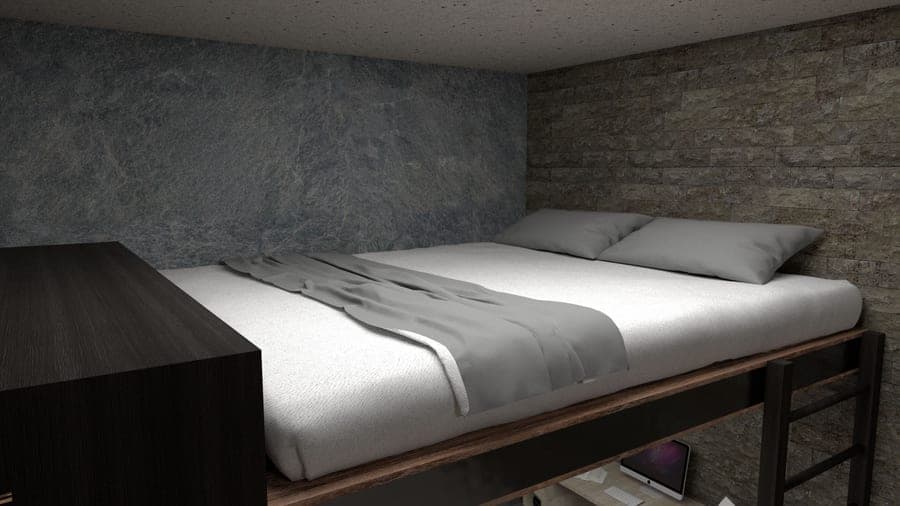
A junior loft is a loft bed with a lower deck than an adult one, and the DHP Jett Junior Twin Metal Loft Bed is the example in our registry: 200 lb capacity, full-length guardrails with the height not published, and a mattress specified at over 4 and not exceeding 6 inches.
It is the most space-efficient option here, because it gives back the whole footprint of the bed as play or storage space. It is also the one where the age question is genuinely open: DHP themselves state that children under six should not use the upper bunk, and a junior loft deck is an upper sleeping surface. We would read that as the manufacturer saying not yet for a five-year-old, and we would wait.
The 200 lb capacity is also the lowest in this group, which means it is a bed with an end date somewhere in the early teens.
4. Staying in the toddler bed — for a while longer
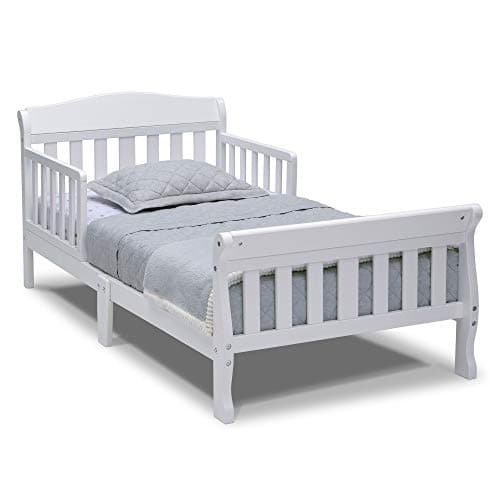
If the child is small for five and the bed still fits, there is no rule that says it has to change. The Delta Children Canton Toddler Bed and its siblings are low, familiar and entirely adequate until the child is close to the end of the mattress.
The two signals that it is over: the child’s feet are near the end of a 52-inch mattress, or they are approaching the 50 lb figure in the federal toddler-bed definition. Either one means the next bed is due. We go through the handover in when to move from a toddler bed to a twin, and the regulatory background is in toddler bed safety standards.
Five is under six, and the rule has no exceptions worth making
The AAP advises that children younger than six should not sleep on the top bunk. It comes up constantly with five-year-olds, usually because an older sibling has one, and the honest answer is that a guardrail does not compensate for the thing the guidance is actually about. A year is not very long. Put them on the bottom until then.
What to get right, whichever bed you choose
A waterproof mattress protector. Five is well inside the range where night-time accidents happen, and a protector is the difference between a two-minute change and a ruined mattress.
A night light on the route to the door. A five-year-old navigating a dark room to a bathroom is the most common night-time hazard in the house, and it costs almost nothing to fix.
Rails, if they still roll. There is no age at which a rail becomes embarrassing, and a child who has fallen out once will sleep worse for weeks.
A room dark enough to sleep in. Five-year-olds are put to bed in daylight for half the year. Blackout at the window does more for bedtime resistance at this age than anything you can say — see blackout and kids sleep.
A mattress sized to the frame, not to the budget. If the bed is a loft or a bunk deck, the published mattress ceiling is a guardrail-clearance rule rather than a suggestion, as we work through in mattress thickness and guardrails.
Key takeaways
- A twin with integrated guardrails is the buy-once answer at five, and 400 lb published capacity means it never needs replacing.
- A five-year-old goes on the bottom bunk. The AAP's under-six guidance is about coordination, not maturity.
- A junior loft is the most space-efficient option, but DHP's own guidance says under-sixes should not use an upper deck.
- Staying in the toddler bed is fine until the child nears the end of a 52 in mattress or the 50 lb figure in the federal definition.
- Whichever bed you buy: a waterproof protector, a night light, rails if they still roll, and a dark room.
Every bed here is sold against a federal rule most listings never mention, and what that rule actually requires is in toddler bed safety standards.
The two products are certified differently, and the toddler-bed side of that is explained in toddler bed safety standards.
For the age where this question comes up most often, and the four beds that fit it, see best bed for a 5 year old.
What we'd buy
Every pick below carries the same spec block, so you can compare the numbers across this page and every other page on the site.
Parents who want to buy once
Max & Lily Twin Bed with Guard Rails
Max & Lily
Skips the toddler bed entirely: a low twin with rails on it, so you buy one frame instead of two.
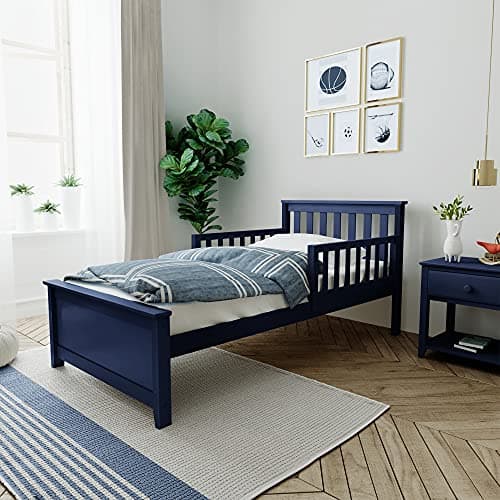
| Guardrail height above mattress | Not published by the manufacturer |
|---|---|
| Stated weight limit (per bunk) | 400 lb |
| Manufacturer minimum age | Not published by the manufacturer |
| Mattress thickness ceiling | Not published by the manufacturer |
| Materials / construction | Solid New Zealand pine, GREENGUARD Gold certified finish |
What works
- A twin mattress from day one means no second bed purchase at five
- Rails come off when they stop being needed
- 400 lb capacity will outlast childhood
- Solid pine rather than a plastic-clad toddler frame
What doesn’t
- A twin footprint is much bigger than a toddler bed
- Costs several times what a crib-mattress toddler bed costs
- Higher off the floor than a toddler bed
The catch: It is a twin, which means it is a twin-sized object in the room from the day your two-year-old moves in. If the room is small, the toddler bed genuinely buys you three years of floor space.
Younger siblings sharing a room
Max & Lily Twin Over Twin Low Bunk Bed
Max & Lily
The clearest published safety numbers of any bunk we looked at, on a frame low enough that a fall is a short one.
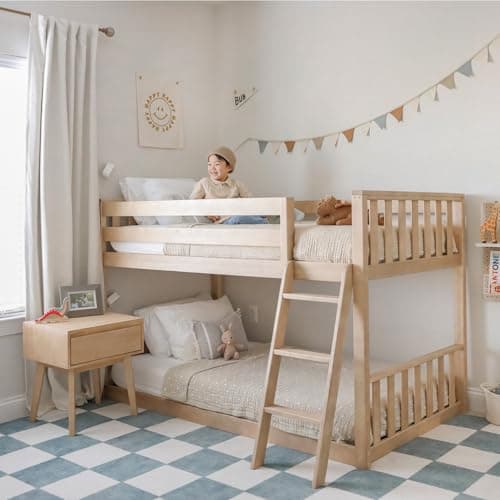
| Guardrail height above mattress | 14 in above the deck |
|---|---|
| Stated weight limit (per bunk) | 400 lb per sleeping surface |
| Manufacturer minimum age | Not published by the manufacturer |
| Mattress thickness ceiling | 8 in maximum (5 in recommended) |
| Materials / construction | Solid New Zealand pine, GREENGUARD Gold certified finish |
What works
- Publishes a guardrail height, a weight limit and a mattress ceiling — most brands publish one of the three
- 400 lb per surface is the highest stated capacity in this roundup, and it holds through the teen years
- Low overall height means the top deck sits well under a standard bunk
- Reversible, removable ladder with grooved treads and rounded edges
What doesn’t
- The 8 in mattress ceiling rules out most plush mattresses
- Solid pine is heavy to move once assembled
- No minimum age published, so the AAP's under-6 guidance is the only age rule you get
The catch: That 8 in ceiling is not a suggestion. Put a 10 in mattress on the top deck and the 14 in rail drops to 4 in of clearance, which is below the federal 5 in minimum. The bed stops being compliant and nobody tells you.
A first loft on a budget
DHP Jett Junior Twin Metal Loft Bed
DHP
The rare budget loft that publishes its weight limit, its mattress range and an age rule, in writing.
| Guardrail height above mattress | Full-length guardrails (height not published) |
|---|---|
| Stated weight limit (per bunk) | 200 lb |
| Manufacturer minimum age | Manufacturer states children under 6 should not use the upper bunk |
| Mattress thickness ceiling | Over 4 in and not exceeding 6 in |
| Materials / construction | Powder-coated metal frame with built-in ladder |
What works
- Publishes a mattress range with both a floor and a ceiling, which almost nobody does
- States an age rule for the upper deck rather than leaving it to you
- Built-in ladder and full-length guardrails
- Short frame height for a loft, so the fall distance is smaller
What doesn’t
- 200 lb capacity is low for a bed a teenager might keep
- The 4-6 in mattress window rules out most mattresses on the market
- Metal frames need their fasteners re-checked periodically
The catch: The mattress window is genuinely narrow. Under 4 in and the guardrail geometry is wrong; over 6 in and the rail no longer clears it. You will be shopping for the mattress around the bed, not the other way round.
A straightforward crib-to-bed step
Delta Children Canton Toddler Bed
Delta Children
The plain, sturdy wooden toddler bed that shows up on every shortlist, and it earns the spot on build rather than features.
| Guardrail height above mattress | Not published by the manufacturer |
|---|---|
| Stated weight limit (per bunk) | Not published by the manufacturer |
| Manufacturer minimum age | Not published by the manufacturer |
| Mattress thickness ceiling | Uses a standard crib mattress |
| Materials / construction | Wood frame with non-toxic finish |
What works
- Low, simple and unfussy — nothing to break
- Takes the crib mattress already in the room
- Integrated side rails on both sides
- Widely stocked, so replacement parts are findable
What doesn’t
- Neither a guardrail height nor a weight limit is published
- No conversion path — it is a toddler bed and then it is done
- Plain styling, if that matters to you
The catch: Delta does not publish a weight limit for this bed anywhere we could find. For a low toddler frame that matters less than it would on a bunk, but it is still a number a manufacturer should be willing to state.
Questions parents actually ask
What size bed should a 5 year old have?
A twin, at 38 by 75 inches. A toddler bed is built around a 52-inch crib mattress and most five-year-olds are close to running out of it, while a twin is a bed they will still fit as an adult.
Can a 5 year old sleep on a top bunk?
The American Academy of Pediatrics advises against children younger than six on the top bunk, so no. The bottom bunk is fine. The concern is coordination on the climb and staying put while asleep, neither of which a guardrail addresses.
Does a 5 year old still need a bed rail?
Only if they still roll out, and plenty do. A rail is not an age marker — a bed with integrated rails that detach later lets you decide on behavior rather than on a birthday.
Is a loft bed safe for a 5 year old?
We would not put one there yet. A loft deck is an upper sleeping surface, and manufacturers including DHP state that children under six should not use the upper bunk. A low twin gives the same security with none of the height.
When should a child move out of a toddler bed?
When they are close to the end of the 52-inch mattress or approaching the 50 lb figure in the federal toddler-bed definition, whichever comes first. For most children that lands somewhere between four and six.
Sources
Read next
- When to move from a toddler bed to a twin
The signals that the toddler bed is finished.
- Top bunk age readiness
The year you are waiting for, and what else matters.
- Best low bunk beds
If the room is shared.
- Toddler bed safety standards
Where the 50 lb figure comes from.
Back to Toddler Beds.